
Flat Die Pelleting Machine
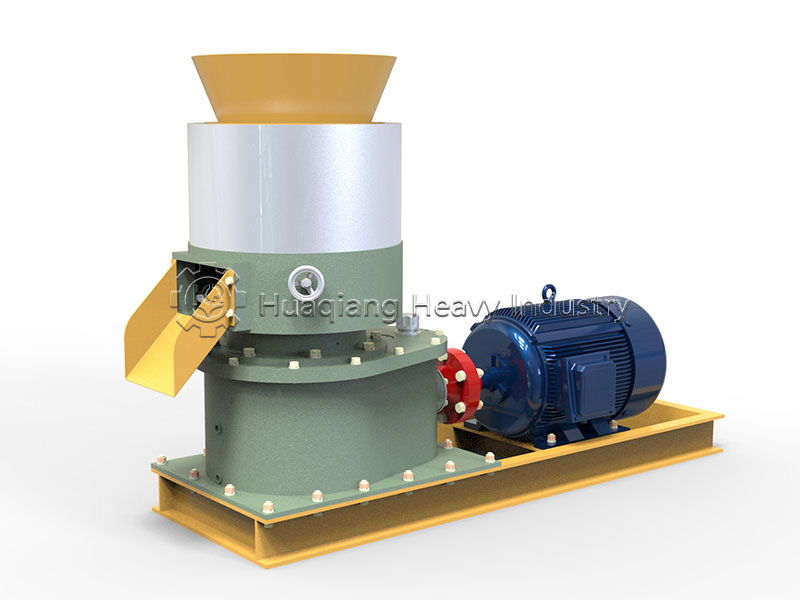
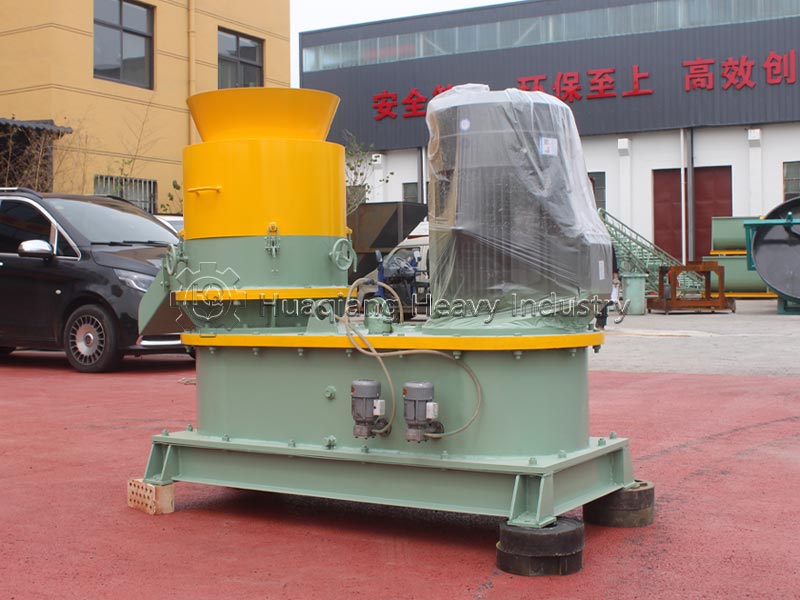
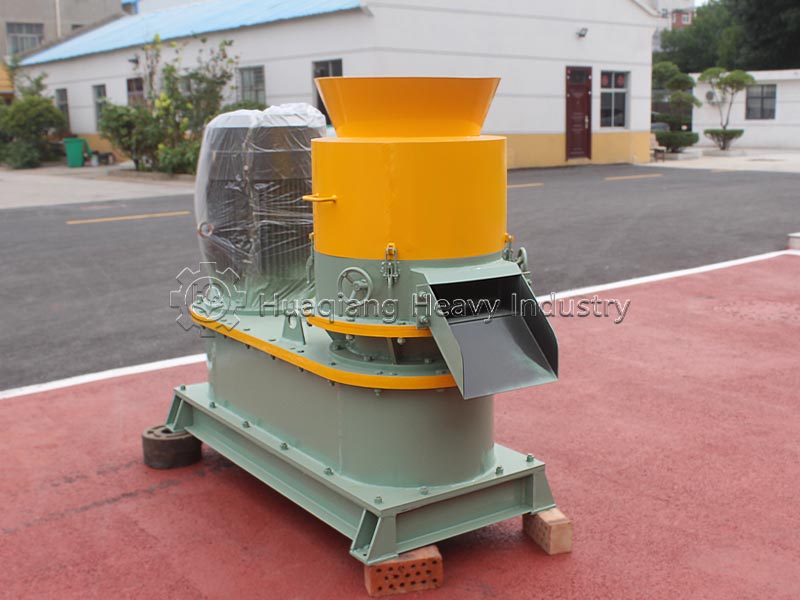
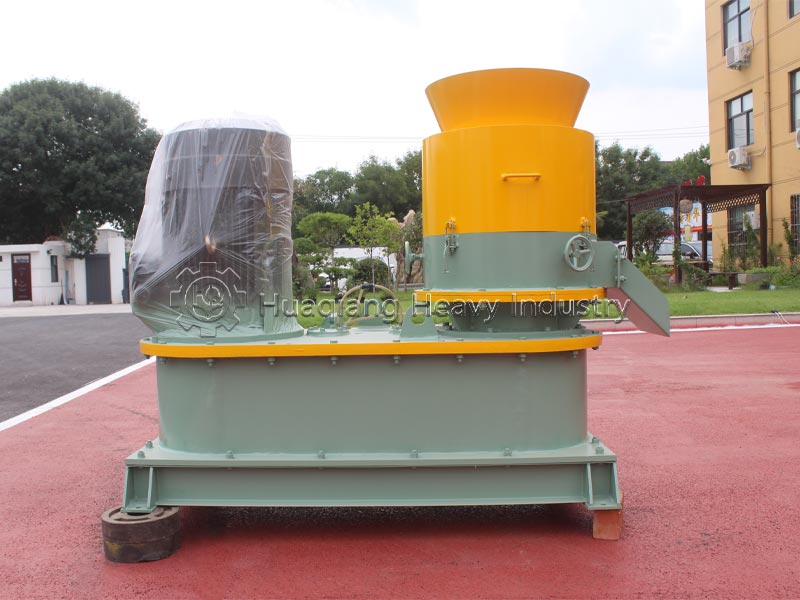
The flat die pelleting machine is an extrusion-type granulation machine specifically designed for the characteristics of organic materials. It is particularly effective when processing materials such as fermented chicken, sheep, and cattle manure, which are characterized by high fiber content and fluctuating moisture levels. The machine features a simple, straightforward core design: a horizontally placed circular die plate perforated with holes, and several pressure rollers that roll across the plate, forcing the material through the holes. Cutters positioned underneath then slice the extruded material into cylindrical granules. The entire process requires no added water or steam; both feeding and discharge occur at ambient temperature. This ambient-temperature process is crucial for bio-organic fertilizer production, as it preserves the activity of microbial inoculants added to the fermented material, resulting in a finished product with higher biological efficacy. Compact in size and simple to operate, the flat die pelleting machine is a popular choice for small-to-medium-sized organic fertilizer processing plants and on-site fertilizer workshops at livestock farms.
Working Principle of Flat Die Pelleting Machine
The flat die pelleting machine relies on mechanical compression to force material through die holes for shaping. Upon entering the granulation chamber, the material lands on a horizontally mounted circular die plate, which rotates at a constant speed driven by a motor. Pressure rollers positioned above the die plate are driven to rotate by the friction generated between the material and the plate, maintaining a minimal gap between the rollers and the die surface. As material is drawn into the space between the rollers and the die, the rollers compress and compact it, forcing it into the die holes. Inside the holes, the material is pushed forward by subsequent material; after undergoing a compression phase, it is extruded from the underside of the die plate in the form of cylindrical strands. Cutters mounted beneath the die plate are set at a specific distance from its underside; when the extruded material exceeds this distance, it is sliced off to form uniform cylindrical granules, which then fall into the collection unit below. The entire process is purely mechanical, involving limited temperature rise and requiring no added liquids or binders.
Suitable Raw Materials of Flat Die Pelleting Machine
The flat die pelleting machine demonstrates outstanding adaptability to organic materials compared to similar equipment, excelling particularly in processing materials with high fiber content.
Livestock and poultry manure: Fermented and decomposed chicken, pig, sheep, cattle, and duck manure, etc. These materials are characterized by high fiber content and a loose texture; the flat-die extrusion process effectively compacts them into granules.
Agricultural waste: Pulverized straw, rice husks, peanut shells, sawdust, spent mushroom substrate, etc.; these can be granulated either alone or mixed with manure.
Organic fertilizer blends: Powdered organic fertilizer mixtures consisting of fermented organic matter combined with appropriate amounts of humic acid, peat, oilseed cake, etc.
Bio-organic fertilizer: Produced by adding functional microbial agents to organic materials and extruding/granulating at ambient temperature, which effectively preserves the activity of the microbes.
Low-concentration compound fertilizer: Granular fertilizer with low nutrient content, made by mixing organic fertilizer with small amounts of urea, ammonium phosphate, and potash.
Animal feed: Pelletizing compound feed, concentrated feed, and aquatic feed represents another mature application for flat die pelleting machine.
Biomass fuel: Compressing biomass powders—such as sawdust and straw—into fuel pellets.
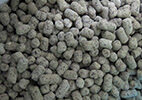
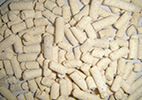
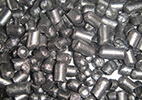
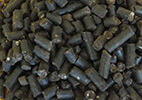
Basic Raw Material Requirements
Moisture content: Flat die pelleting machines accommodate a wide range of material moisture levels, a major advantage when processing organic fertilizers. Generally, the input material should have a moisture content between 25% and 38%. Material that is too dry is difficult to extrude and results in loose, fragile granules; material that is too wet causes granules to stick together after extrusion and results in insufficient structural strength, making them prone to deformation. In actual production, fermented organic materials typically fall within this moisture range, allowing them to be fed directly into the machine without additional drying or wetting.
Fineness: Material fineness affects granule surface finish and granulation stability. Generally, the maximum particle size after pulverization should not exceed 8mm, with at least 60% of the material passing through a 4mm sieve. Organic materials do not need to be pulverized extremely finely; retaining a certain amount of short fiber actually enhances granule strength.
Impurity control: Hard foreign objects—such as iron scraps or stones—must not be mixed into the material, as they can damage the die plate and press rollers. Iron removal and screening treatments are recommended prior to feeding.
Production Capacity Range of Flat Die Pelleting Machine
Flat die pelleting machine specifications range from small household models to medium- and large-scale industrial units, allowing users to flexibly select the right model based on their processing volume.
| Model | KP-210 | KP-260 | KP-400 | KP-500 |
| Capacity (t/h) | 0.2-0.3 | 0.4-0.5 | 1-1.2 | 2-5 |
| Pelleting Rate (%) | >95% | >95% | >95% | >95% |
| Rotation Speed(r/min) | 370 | 260 | 260 | 125 |
| Power(Kw) | 7.5 | 11 | 30 | 55 |
Have Any Problem? Please, Contact
Integrity
Adhere to honesty and trustworthiness, be responsible to customers, employees, partners, and society, and establish long-term trust relationships.
Win win
Establish win-win relationships with all stakeholders such as customers, suppliers, and employees to share the fruits of enterprise development.