
Bucket Elevator
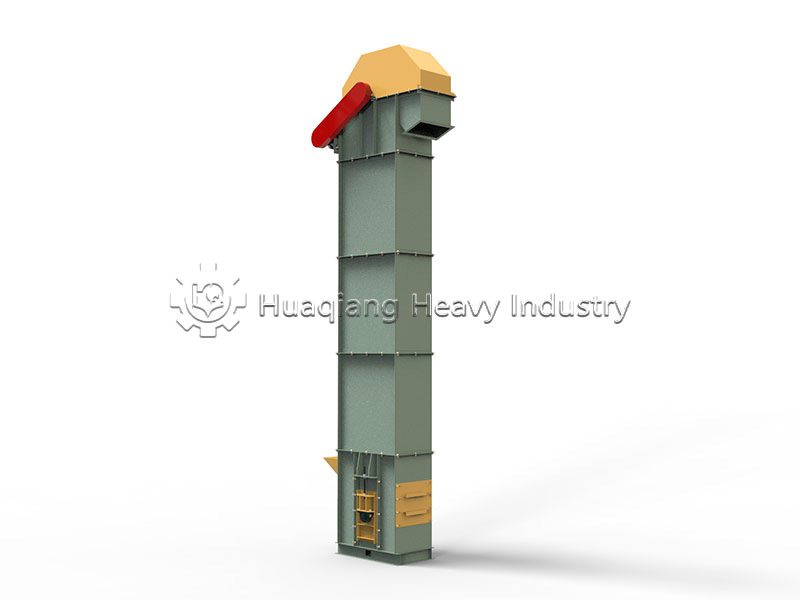
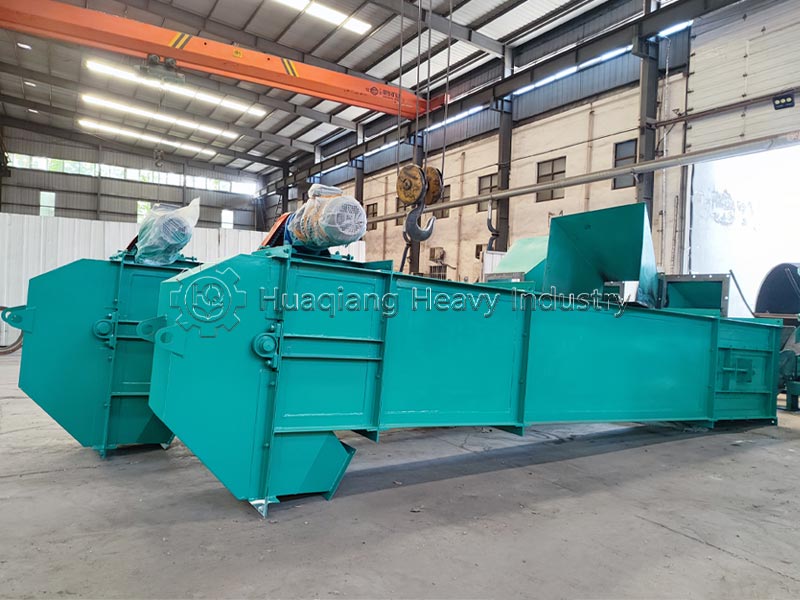
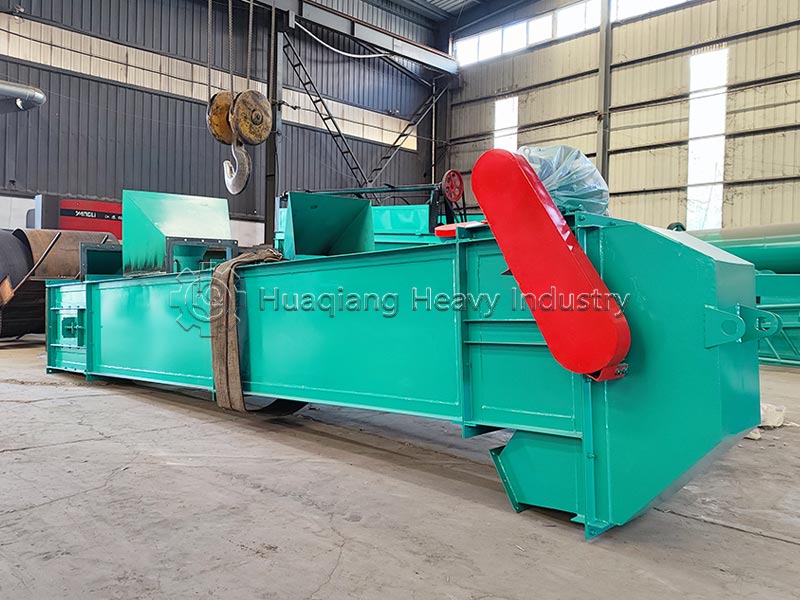
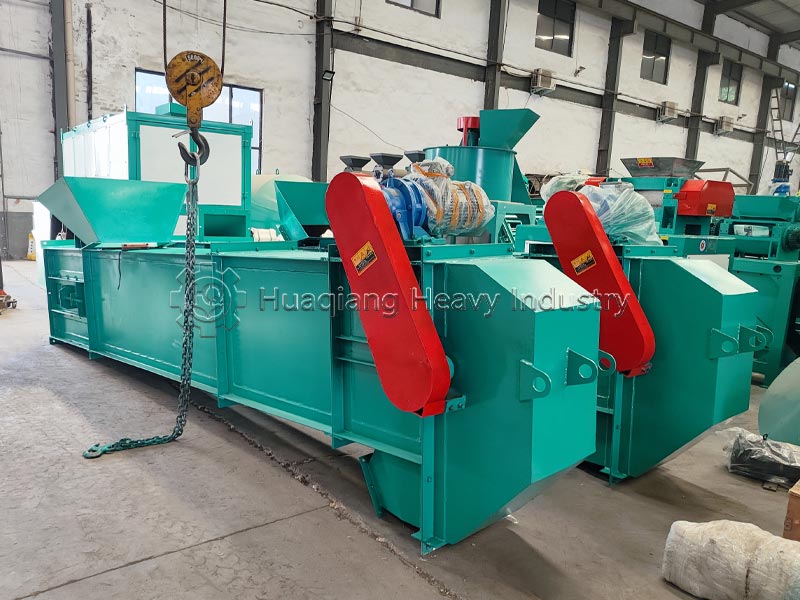
A bucket elevator is a specialized piece of equipment used in the fertilizer industry for continuously lifting powdery or granular materials vertically or at large angles. It uses a series of buckets fixed to a traction belt or chain to scoop or feed materials from the bottom, lifting them to the top where they are discharged under centrifugal force or gravity. In organic fertilizer and compound fertilizer production lines, bucket elevators undertake the vertical transfer task connecting upper and lower levels of equipment, such as lifting mixed materials to the hopper above the granulator or lifting finished granules to the inlet of the packaging machine. The equipment has a compact structure, small footprint, large lifting height, and good sealing performance, making it a key lifting equipment for fertilizer companies to achieve a three-dimensional production layout.
Working Principle
Materials enter the machine base through the bottom inlet and are scooped or fed into the buckets by the continuously running buckets fixed to the traction belt or chain. The drive motor drives the top drive wheel to rotate through a reducer, causing the traction belt or chain to circulate, lifting the buckets filled with material to the top. As the hopper passes the top drive wheel, the material is thrown out by the combined forces of centrifugal force and gravity, and discharged through the discharge port into the next stage. The empty hopper returns to the bottom along the other side of the barrel with the traction component, where it is reloaded, thus completing the continuous vertical lifting cycle.
Equipment Composition
Casing: Composed of a head cover, intermediate cylinder, and bottom base, using welded steel plates or flange connections, a fully enclosed structure to prevent dust escape.
Traction Components and Hoppers: The traction component is a high-strength rubber belt or plate chain; the hoppers are stamped or welded steel plates, fixed at equal intervals to the traction component.
Drive Unit: The motor drives the top main shaft and drive wheel via a reducer, driving the traction component. Variable frequency speed control can be configured.
Top Drive Wheel and Bottom Idler Wheel: The drive wheel is a rubber-coated roller or sprocket; the bottom idler wheel has a tensioning device to adjust the tension of the traction component.
Tensioning Device: Located on the bottom base, it maintains appropriate tension in the traction component by adjusting a screw or counterweight to prevent slippage and deviation.
Inlet/Outlet: The bottom inlet connects to the feeding equipment; the top outlet connects to the receiving equipment or material handling equipment. Anti-reverse and safety devices: Equipped with a backstop to prevent reverse rotation and material spillage during shutdown; observation windows and maintenance doors facilitate maintenance.
Performance characteristics
High lifting height: Single unit lifting height can reach tens of meters, meeting the vertical conveying needs of multi-story factories and high-tower layouts.
Small footprint and space saving: Vertically arranged, the cross-section occupies only a few square meters, saving a significant amount of factory space compared to inclined belt conveyors.
Sealed and environmentally friendly: Fully enclosed casing; materials are lifted within a sealed space, preventing dust leakage and ensuring a clean environment.
Large conveying capacity: Bucket capacity and spacing can be designed as needed, with hourly conveying capacities ranging from several tons to hundreds of tons.
Wide range of materials adaptable: Can lift powdery, granular, and small lump materials; suitable for organic fertilizer, compound fertilizer, and feed.
Reliable operation: Mature structure, standardized parts, convenient maintenance, suitable for long-term continuous operation.
Have Any Problem? Please, Contact
Integrity
Adhere to honesty and trustworthiness, be responsible to customers, employees, partners, and society, and establish long-term trust relationships.
Win win
Establish win-win relationships with all stakeholders such as customers, suppliers, and employees to share the fruits of enterprise development.