
Mobile Belt Conveyor
Mobile belt conveyors are widely used in the fertilizer industry due to their flexibility, stable operation, and ease of maintenance. Compared to fixed belt conveyors, they require no civil engineering foundation and can be repositioned at any time to adapt to the seasonal production and product switching needs of fertilizer companies. Key components such as rollers, idlers, and conveyor belts are made of industrial-grade materials, ensuring wear resistance and durability. The machine has low power consumption and low energy consumption, resulting in economical overall operating costs. It is a reliable choice for fertilizer companies to achieve flexible material conveying.
Working Principle
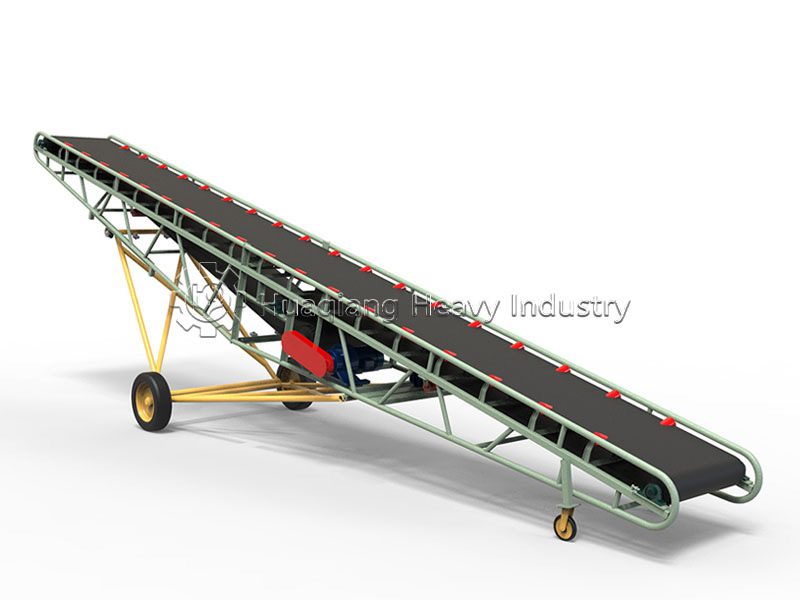
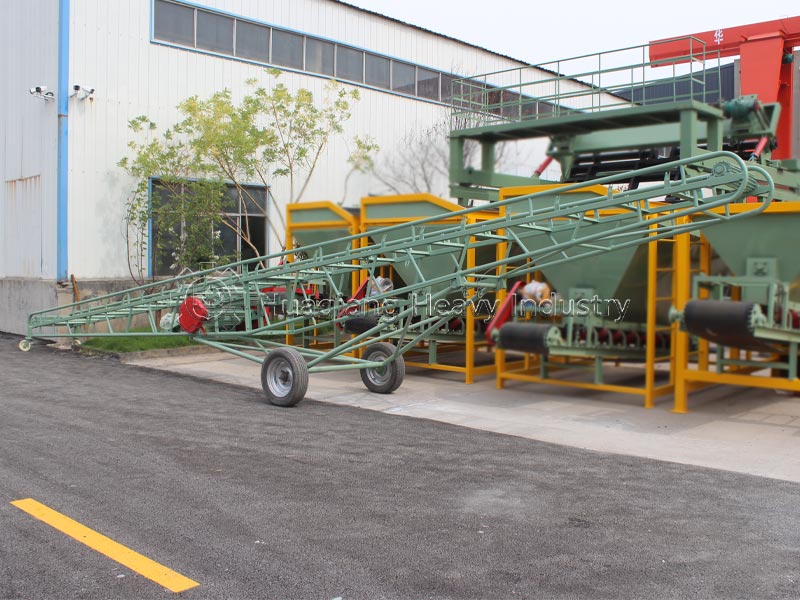
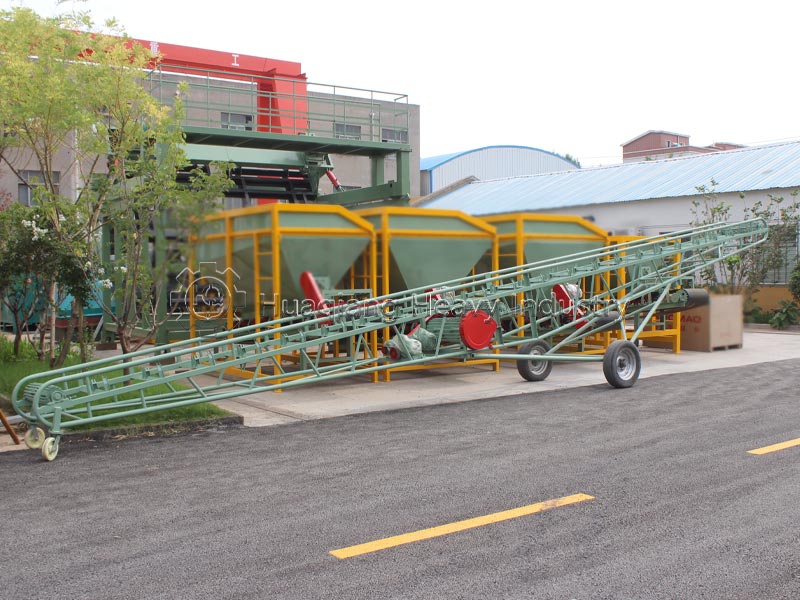
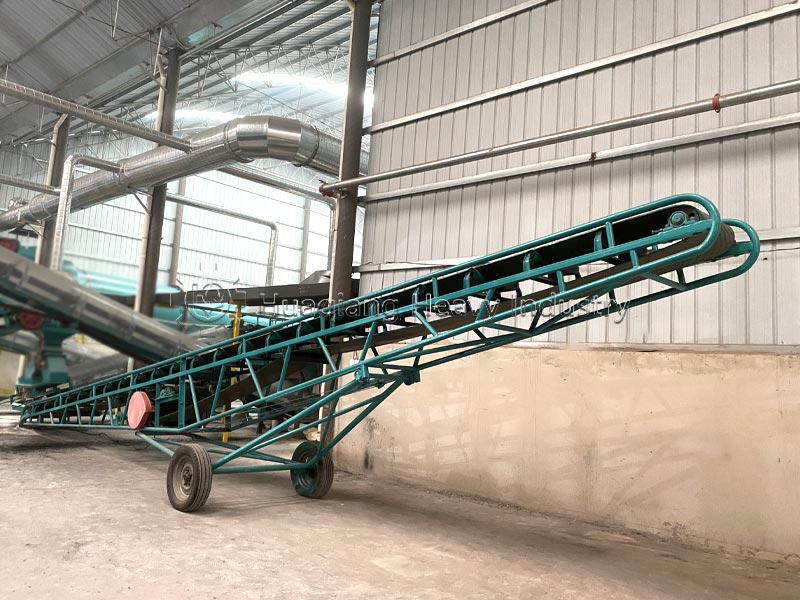
The motor drives the head roller through a reducer. The friction between the roller and the conveyor belt causes the belt surface to circulate. Material lands on the conveyor belt at the tail end and moves at a uniform speed with the belt surface to the head for discharge. The equipment tilt angle can be adjusted manually or electrically within a certain range to change the discharge point height. The entire machine is mounted on a movable chassis, with a traction rod at the front and steering wheels at the rear, allowing for flexible and convenient movement. The conveying process is quiet and stable, with no dust emission, effectively maintaining the integrity of granular fertilizer.
Performance Characteristics
High Mobility: No fixed installation required; can be moved to any desired location for operation, adapting to diverse conveying tasks.
Robust and Durable Frame: The frame is welded from structural steel, and the rollers and idler bearings are well-sealed, ensuring a long service life.
Extremely Low Energy Consumption: The motor power is only a few kilowatts, resulting in low electricity costs during continuous operation and economical operation.
Simple Maintenance: Daily maintenance only requires checking the conveyor belt tension and roller lubrication; no complex maintenance procedures are required.
Safe Operation: The conveyor belt operates at a slow speed and is equipped with an emergency stop switch and protective cover, ensuring safe use.
Multi-Scene Adaptability: Can be used in indoor workshops or outdoor storage yards, adapting to different environments.
Maintenance Methods
Before each use, check the conveyor belt surface for damage and remove any hardened materials adhering to the belt surface. Check the drive roller for any peeling rubber and the tail roller for any stuck material.
Weekly: Check the idler rollers for flexible rotation; replace any that are not rotating promptly to prevent wear through the conveyor belt.
Monthly: Check the conveyor belt tension; adjust it using the tail tension screw if it is loose, tightening both sides evenly.
Quarterly: Check the traveling wheel bearings and lifting mechanism, and add grease as needed. Change the gearbox lubricating oil annually and check the motor insulation. Repair or replace the conveyor belt promptly when edge wear or local damage is observed.
Have Any Problem? Please, Contact
Integrity
Adhere to honesty and trustworthiness, be responsible to customers, employees, partners, and society, and establish long-term trust relationships.
Win win
Establish win-win relationships with all stakeholders such as customers, suppliers, and employees to share the fruits of enterprise development.