
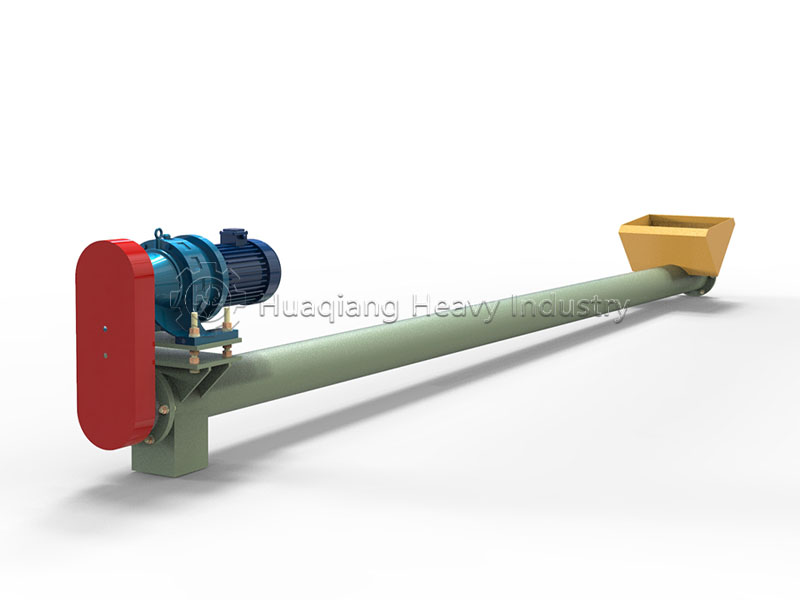

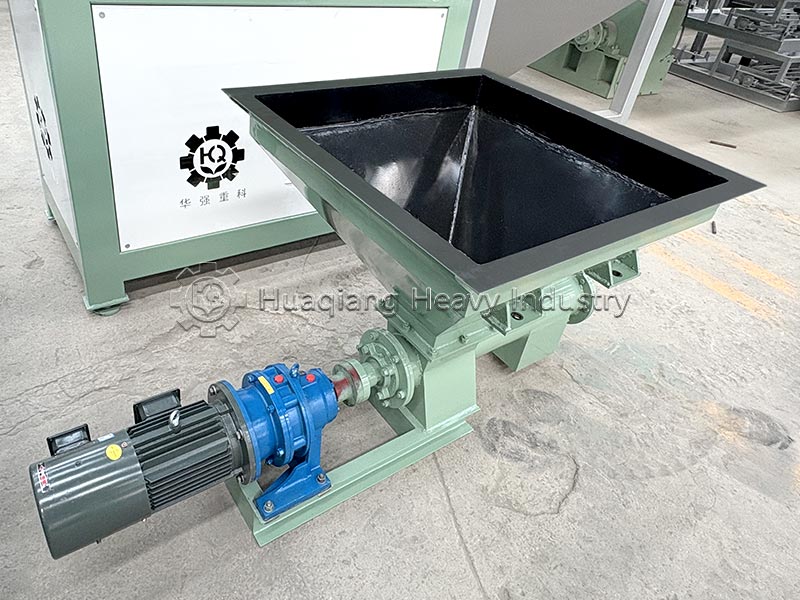
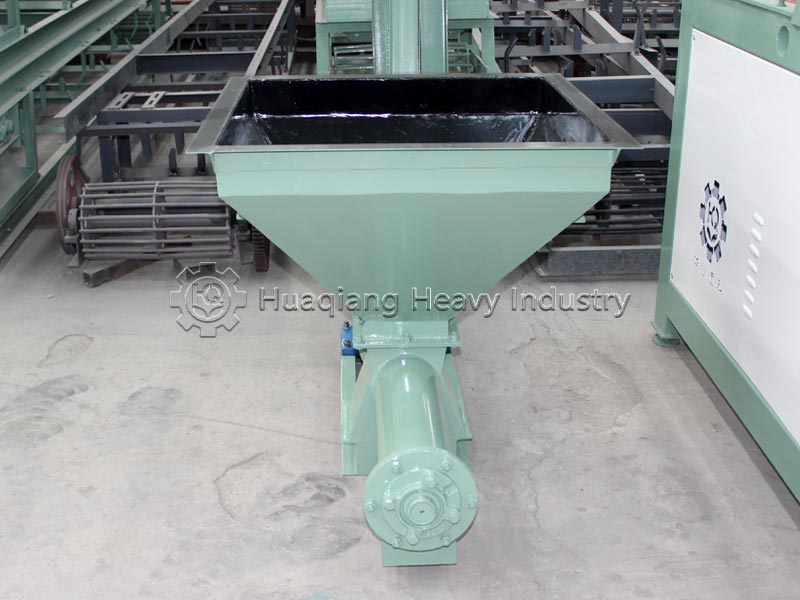
Screw Conveyor
The screw conveyor serves as a vital link between various stages of a fertilizer production line, connecting equipment for crushing, mixing, granulating, drying, cooling, and screening into a seamless process. Its enclosed conveying design is particularly suitable for handling odor-emitting materials in organic fertilizer production, effectively controlling workshop odors. Depending on the specific conveying requirements, various blade and trough configurations can be selected to enable functions such as metered feeding, multi-point discharge, and inclined lifting.
Working Principle
Material is conveyed via axial thrust generated by rotating spiral blades. Inside the enclosed trough, the material is pushed smoothly by the blades without tumbling or generating dust. Conveying capacity can be adjusted in real-time via variable frequency drive to match the throughput of upstream and downstream processes. Multiple conveyors can be connected in series to change conveying directions or cover long distances. For inclined conveying, the material is lifted by overcoming gravity through friction against the blades and trough walls.
Process Advantages
Enclosed conveying controls dust and odors, improving the workshop working environment.
Adjustable conveying capacity accommodates production line fluctuations and various formula requirements.
Supports multi-point feeding and discharge, allowing a single conveyor to serve multiple pieces of equipment.
Compact structure with a small footprint, facilitating installation in confined spaces.
Smooth operation and low energy consumption result in cost-effective overall operation.
Selection Guide
Screw conveyor selection depends on material characteristics to determine the appropriate blade type and material. Use solid-flight blades for powdery materials, and ribbon or paddle blades for sticky or moist materials.
Conveying length and inclination angle determine the number of intermediate hanger bearings and the required motor power. Horizontal conveying distance generally should not exceed 40 meters, and the inclination angle should be within 20 degrees; vertical conveying requires a specialized model.
Conveying capacity is determined by blade diameter, pitch, and rotational speed; select the model based on the production line’s maximum capacity while allowing for a safety margin. Stainless steel should be used for corrosive materials, while blades handling highly abrasive materials require a hard-faced wear-resistant layer. Inlet and outlet dimensions must align with the connection points of upstream and downstream equipment.
Have Any Problem? Please, Contact
Integrity
Adhere to honesty and trustworthiness, be responsible to customers, employees, partners, and society, and establish long-term trust relationships.
Win win
Establish win-win relationships with all stakeholders such as customers, suppliers, and employees to share the fruits of enterprise development.