
Hydraulic Compost Turning Machine
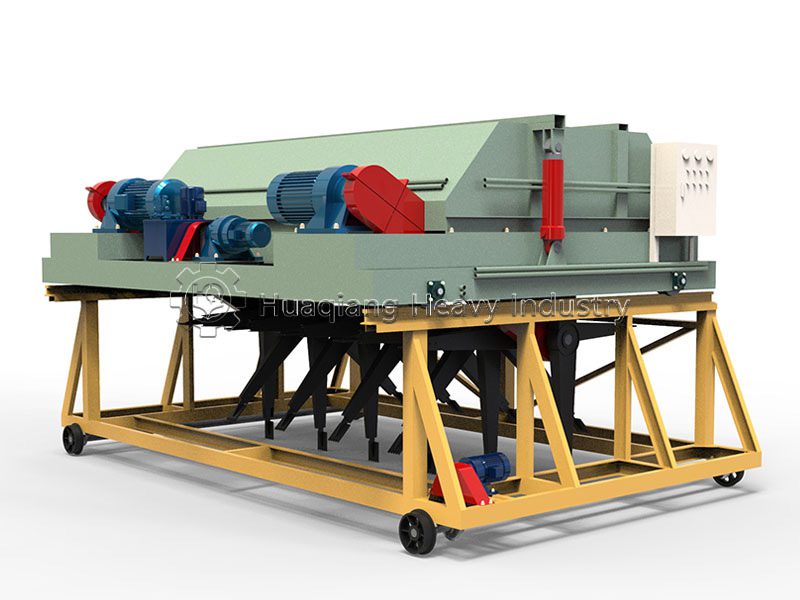
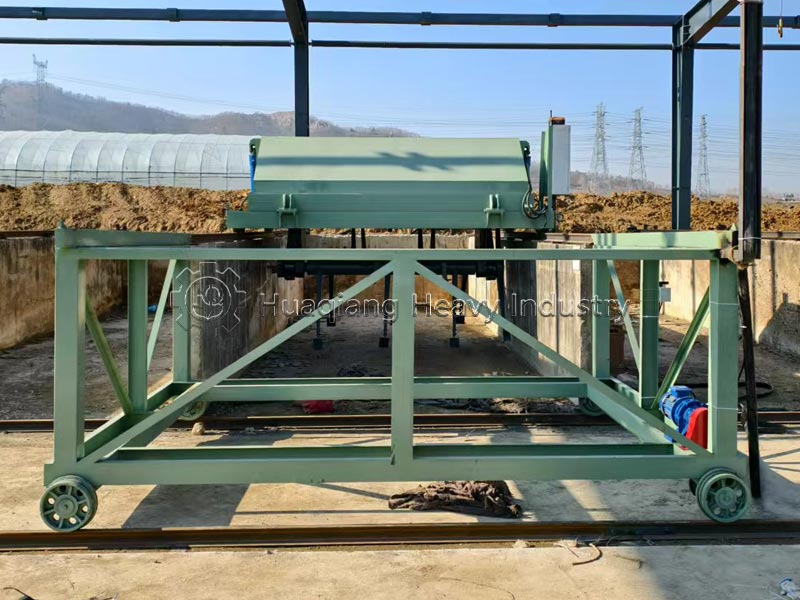
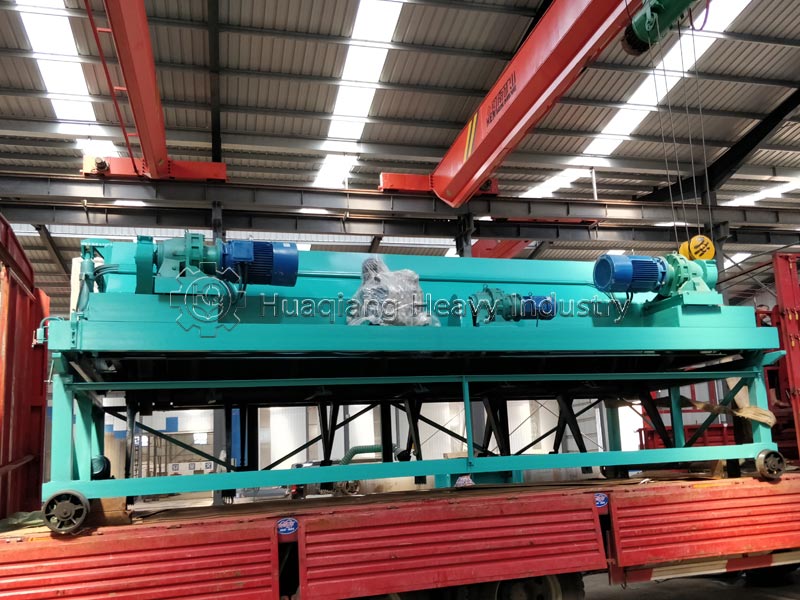
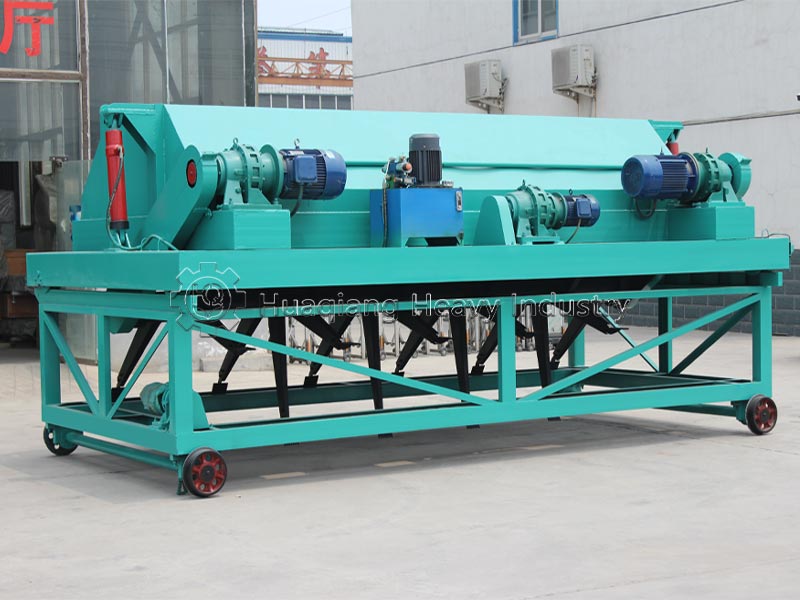
The hydraulic trough compost turner is a heavy-duty turning machine designed for large-scale aerobic fermentation of organic solid waste. Addressing the limitations of traditional mechanically driven turners—such as poor load adaptability and insufficient control precision—this equipment utilizes a fully hydraulic drive architecture to comprehensively upgrade its travel, lifting, and turning systems. Featuring a gantry-style structure that straddles the fermentation channel and runs on rails mounted on both sides, the machine leverages the flexible transmission characteristics of hydraulics to precisely regulate turning depth and travel speed, ensuring smooth and controllable operation. An integrated hydraulic overload protection mechanism automatically relieves pressure and provides cushioning if the machine encounters hard obstructions, significantly reducing the risk of damage to the toothed rollers and transmission components. It is particularly well-suited for medium-to-large organic fertilizer plants and solid waste treatment projects requiring high daily processing capacities and continuous operation; while retaining the benefits of trough-type fermentation—such as a compact footprint and excellent thermal insulation and temperature control—it significantly enhances operational reliability and long-term cost-efficiency.
Working Principle of the Hydraulic Compost Turning Machine
The hydraulic trough compost turning machine utilizes hydraulic energy as its primary power source, achieving efficient coordination between travel and turning actions through a multi-circuit hydraulic control system. An integrated hydraulic pump station supplies high-pressure fluid: one circuit powers the travel hydraulic motors, driving the wheels along the channel rails at a steady speed (which can be steplessly adjusted via flow control valves), while another circuit drives the turning spindle motor, rotating the turning roller shaft that spans the width of the trough. Wear-resistant turning teeth, arranged in a spiral pattern on the roller shaft, cut into the base of the material pile, scooping up the material and throwing it upwards and backwards. As the material falls back into the channel after being aerated, broken up, and subjected to heat exchange, its overall position gradually shifts forward, enabling the continuous turning of the entire batch of material within the trough.
Equipment Composition of the Hydraulic Compost Turning Machine
Gantry Frame Assembly: Features a gantry-style structure welded from high-strength structural steel. Equipped with guide-constrained wheel sets on both sides that lock onto the fermentation channel’s rails, the machine offers high torsional rigidity to withstand lateral impact forces during turning operations. The frame includes pre-configured mounting interfaces for auxiliary components such as dust removal and spraying systems.
Turning Roller Assembly: Utilizes a full-width shaft structure spanning the entire fermentation channel. The shaft surface is fitted with multiple sets of replaceable, wear-resistant high-manganese steel turning teeth arranged in a multi-start helical pattern. The tooth profile and arrangement angle are optimized to balance material breakup and axial conveying efficiency, minimizing “dead zones” where material remains unturned.
Hydraulic Power Unit: An integrated system combining the hydraulic tank, variable-displacement piston pump, control valve manifold, and cooling/filtration modules. It employs an independent circuit design to supply stable pressurized fluid to various branches and features built-in real-time monitoring and warning functions for oil temperature and level.
Travel Drive Mechanism: Comprises a low-speed, high-torque hydraulic motor paired with a planetary reduction gear. It directly drives the travel wheels on both sides, ensuring a short drive train and low energy loss. It allows for stepless speed regulation within the rated range and includes a rail-clearing mechanism to reduce the risk of jamming.
Dual-Cylinder Lifting Mechanism: Features symmetrically arranged double-acting hydraulic cylinders paired with guide columns to ensure the smooth vertical lifting and lowering of the turning roller. The lifting range accommodates standard material layer heights and includes dual limit devices to prevent over-travel.
What are the characteristics of the hydraulic compost turning machine during the processing of fermentation materials?
Flexible Adaptation to Material Layer Depth: The dual-cylinder synchronous lifting mechanism precisely controls the turning roller’s penetration depth. This allows for real-time adjustments based on changes in material volume during different fermentation stages, ensuring uniform turning and oxygenation of both upper and lower material layers while preventing abnormal wear caused by the teeth scraping the channel bottom.
Stepless travel speed control: The hydraulic motor-driven travel system supports continuous speed adjustment. During the initial heating phase, slow-speed turning enhances material breakup and oxygen incorporation, accelerating the rise in pile temperature; during the maturation phase, high-speed operation shortens the turning time per channel and boosts the overall processing capacity of the line.
Stable operation with minimal impact: The hydraulic system offers inherent vibration absorption and cushioning. Power output transitions smoothly during load fluctuations, resulting in significantly lower vibration and noise levels compared to mechanical drive models, while also reducing long-term impact stress on the channel structure.
Strong adaptability to heavy-duty conditions: Hydraulic motors deliver high output torque, maintaining stable rotational and travel speeds even when handling heavy loads—such as high-moisture, high-density, viscous materials or deep compost piles—making the system ideal for continuous, large-scale industrial composting operations.
What raw materials can the hydraulic trough compost turner process?
Livestock and poultry waste: Includes mixtures of fresh manure and bedding from large-scale operations (cattle, pig, chicken, sheep, duck, etc.). It efficiently processes high-fiber cattle manure and chicken manure prone to compaction, preventing uneven fermentation caused by material clumping.
Agricultural processing by-products: Includes chopped straw, rice husks, peanut shells, corn cobs, sugarcane bagasse, and spent mushroom substrate. These can be mixed with livestock manure in specific ratios for channel fermentation; the turning process thoroughly breaks up long-fiber materials, promotes homogenization, and accelerates maturation.
Landscape organic waste: Includes wood chips from municipal and landscape pruning, fallen leaves, and grass clippings. After high-temperature aerobic fermentation in the trough, these materials are converted into landscaping substrates or soil conditioners; adjustable depth settings accommodate materials with varying particle sizes.
Urban and rural organic household waste: Includes sorted kitchen waste, fruit and vegetable scraps from farmers’ markets, and residues from food waste pre-treatment. Despite complex material composition and fluctuating moisture content, the equipment’s variable speed control and overload protection adapt to these diverse characteristics, enabling safe, harmless fermentation processing.
Industrial organic waste residues—such as spent grains from brewing, vinegar dregs, traditional Chinese medicine residues, sugar mill filter mud, and food processing by-products—exhibit significant variations in viscosity and moisture content; the hydraulic system allows for flexible adjustment of output torque and travel speed, ensuring consistent turning and aeration performance.
Specifications of the Hydraulic Trough Compost Turner
| Model | Main Motor | Walking Motor | Moving Motor | Hydraulic Pump Motor |
| FPY4 | 22kw | 1.5kw | 1.1kw | 4kw |
| FPY5 | 30kw | 1.5kw | 1.5kw | 4kw |
| FPY6 | 37kw | 2.2kw | 1.5kw | 4kw |
Have Any Problem? Please, Contact
Integrity
Adhere to honesty and trustworthiness, be responsible to customers, employees, partners, and society, and establish long-term trust relationships.
Win win
Establish win-win relationships with all stakeholders such as customers, suppliers, and employees to share the fruits of enterprise development.