
Belt Conveyor
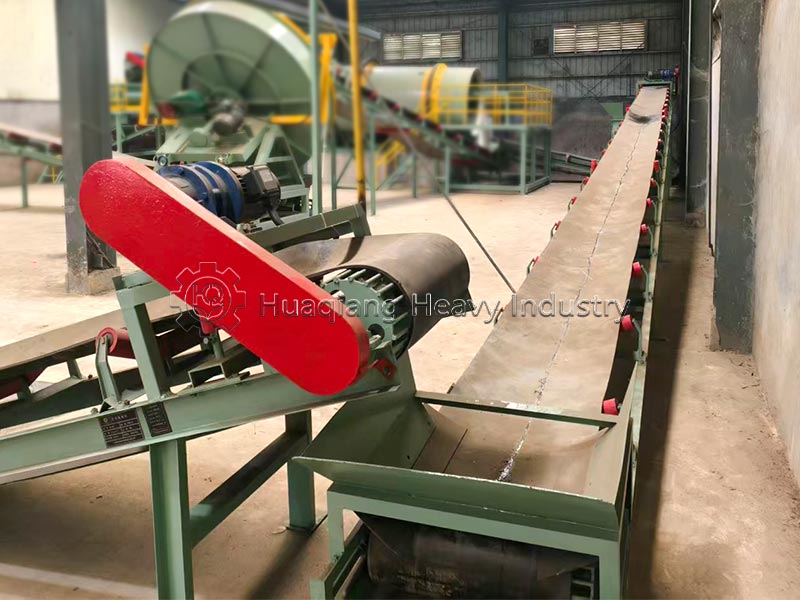
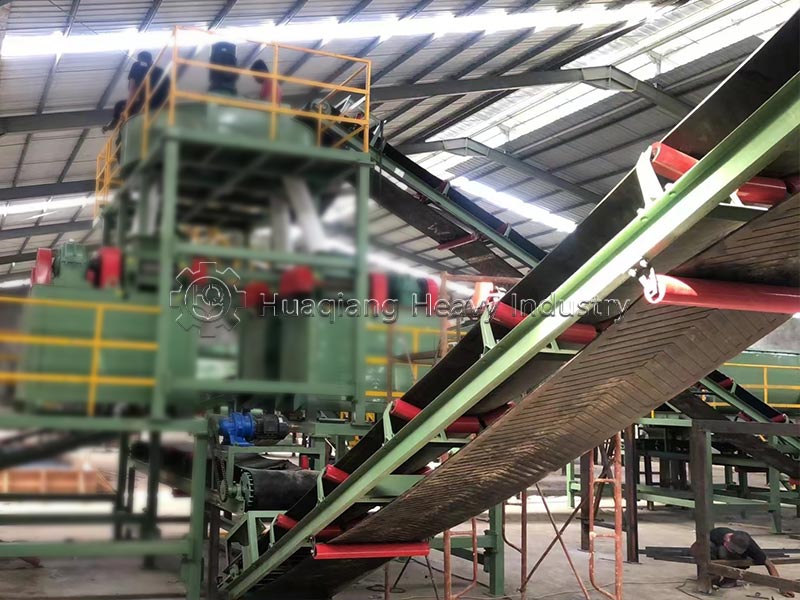
Belt conveyors play a crucial role in the material flow of modern fertilizer production lines. They connect various independent process equipment into an organic whole, ensuring the smooth and orderly flow of materials according to the process flow. From raw material receiving, batching, crushing, and mixing, to granulation, drying, cooling, screening, and finally finished product warehousing, belt conveyors provide continuous, stable, and efficient conveying services. Their flexible route layout capabilities and large capacity make them an essential conveying equipment for fertilizer production lines with capacities exceeding 10,000 tons.
Working Principle
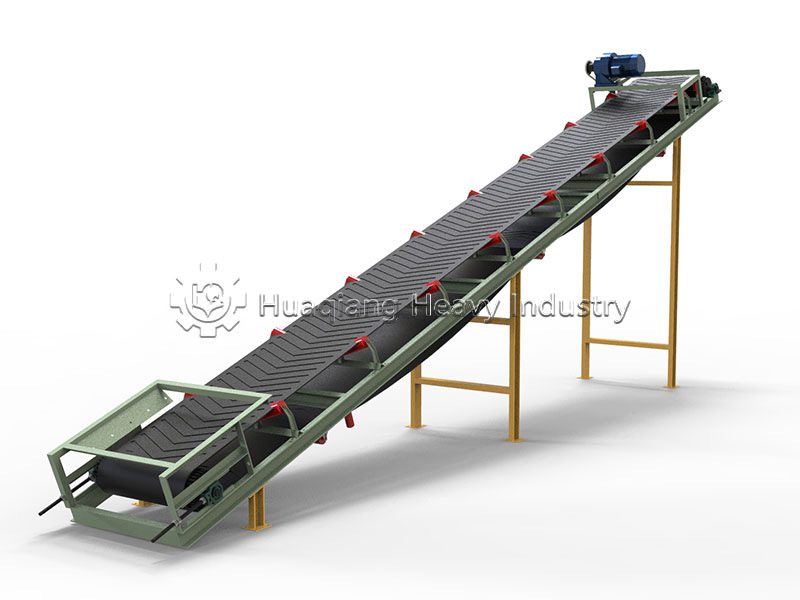
Belt conveyors are powered by a drive unit. Traction is transmitted through the friction between the drive rollers and the conveyor belt, enabling continuous movement of the conveyor belt and the material on it. Multiple sets of idlers support the conveyor belt, forming a trough-shaped bearing surface to increase conveying capacity. The equipment can be designed as horizontal, inclined, or a combination of these configurations, achieving spatial direction changes through convex and concave arc sections. At transfer points, materials smoothly transition to the next section of the belt via chutes, achieving long-distance relay conveying.
Process Advantages
Serving as the main process line, connecting all equipment to ensure continuous and automated production across the entire line.
Strong capacity for large-scale, long-distance conveying, suitable for large-scale centralized production.
Materials are not damaged during conveying, maintaining good particle integrity and resulting in a high yield.
Flexible route layout; optimal paths can be designed based on workshop and equipment locations.
Low operating costs; significantly lower cost per ton compared to truck or loader transport.
How to Select a Model
Belt width selection is determined based on the maximum particle size and conveying capacity of the material. Commonly used belt widths for powdery and granular fertilizers are 500mm, 650mm, 800mm, and 1000mm, with belt speeds typically ranging from 0.8 to 2.0 m/s.
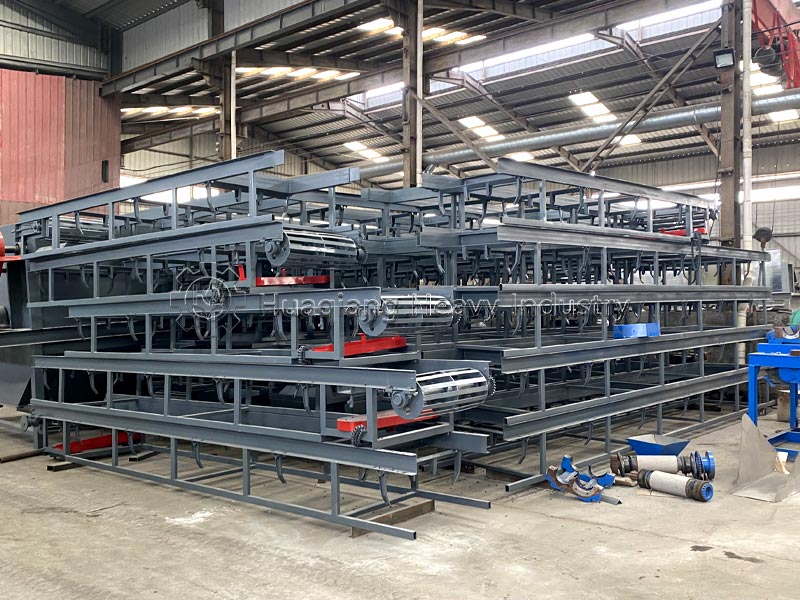
Drive power calculations must consider conveying length, lifting height, conveying capacity, and running resistance. High-strength nylon or steel cord conveyor belts should be selected for long-distance or steep-angle conveying.
When conveying upwards at an incline, the angle should generally not exceed 18 degrees. For angles exceeding this, patterned belts or sidewalls should be used. In environments with corrosive gases, the frame and idler supports should be treated with anti-corrosion measures. Open conveyors require dust covers throughout the entire line. Feed chutes and buffer rollers should be installed at the feed points, and head cleaners and empty section cleaners should be installed at the discharge points.
When selecting equipment, the interface dimensions of upstream and downstream equipment must be considered uniformly to ensure smooth material transfer without spillage.
Have Any Problem? Please, Contact
Integrity
Adhere to honesty and trustworthiness, be responsible to customers, employees, partners, and society, and establish long-term trust relationships.
Win win
Establish win-win relationships with all stakeholders such as customers, suppliers, and employees to share the fruits of enterprise development.