

Chain Compost Turning Machine
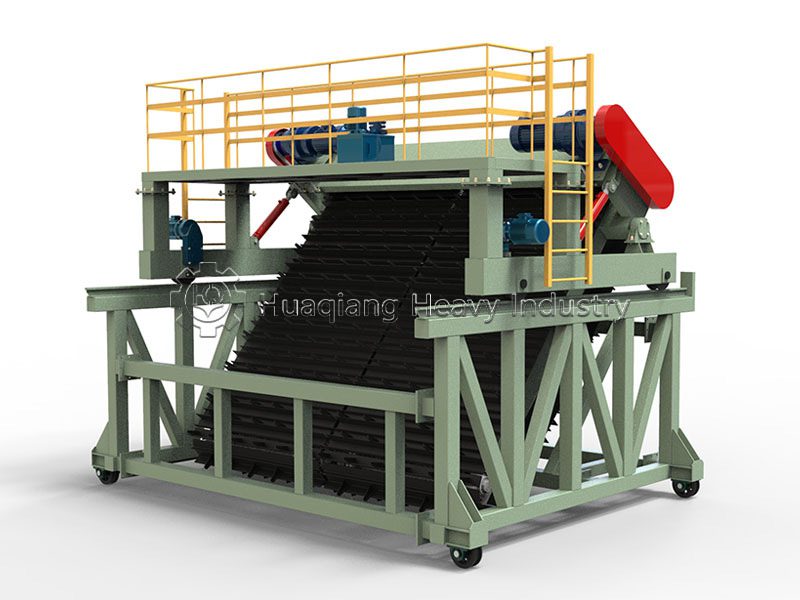
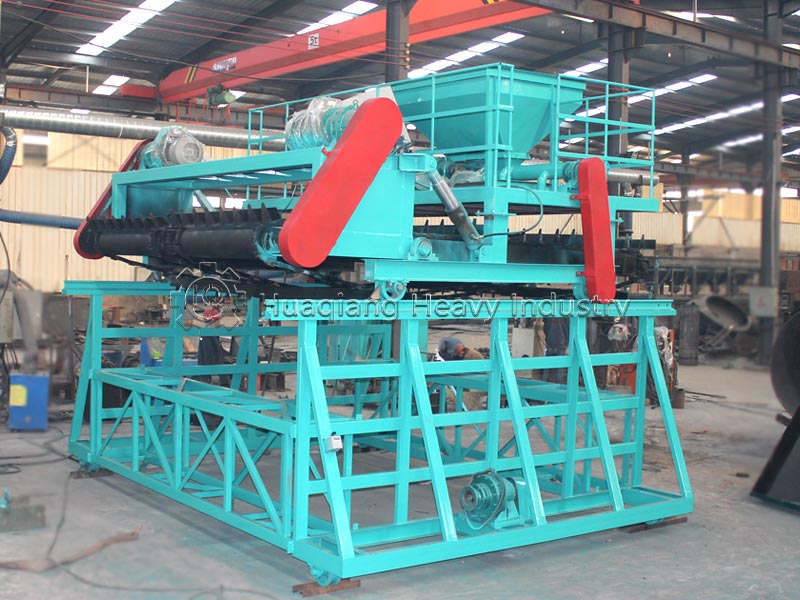
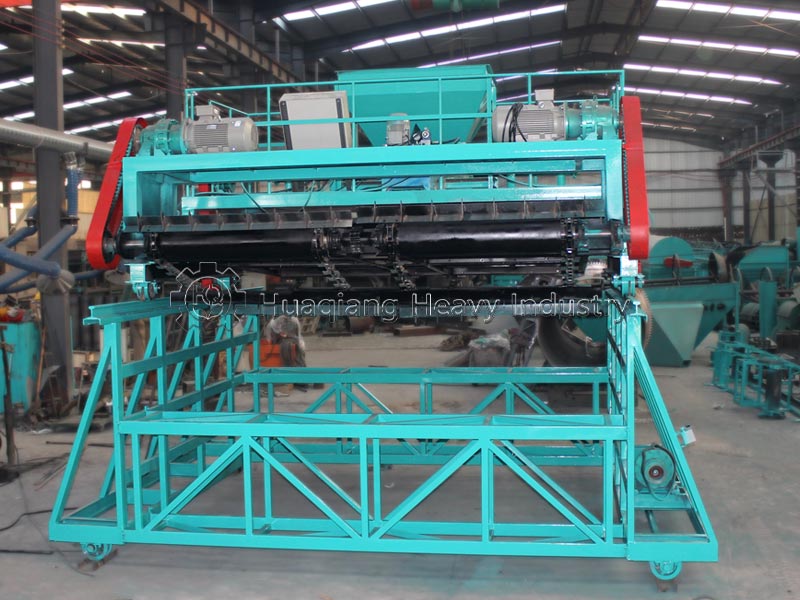
The chain compost turner is a type of turning equipment used in trough aerobic fermentation processes, employing chain drive and scraper turning. Unlike the double-spiral compost turner, which relies on rotating spiral blades for cutting, the chain compost turner uses two circular chains to drive multiple sets of transverse scrapers within the material layer, scooping up, turning, and pushing the material from the bottom of the trough towards the discharge end. The chain and scraper structure is simple and durable, allowing for deep turning, reaching deep into the trough to turn over the entire layer of material. After turning, the material is neatly positioned and clearly layered. The equipment travels along the tracks of the fermentation trough, with adjustable turning depth and travel speed, suitable for processing various types of livestock and poultry manure and straw mixtures. The chain compost turner has fewer transmission components, easy replacement of wear parts, and low maintenance costs, making it widely used in small and medium-sized trough composting projects.
Working Principle of the Chain Compost Turner
The chain compost turner works based on the cyclical movement of the chain-driven scrapers. The equipment spans the fermentation trough, and the traveling mechanism drives the frame to move slowly forward along the tracks on both sides. The turning mechanism consists of two ring chains and multiple sets of transverse scrapers. Driven by a motor, the chains circulate along guide rails. When the scrapers reach the lower layer, they adhere to the bottom of the trough, cutting into the material from the bottom and scooping up the entire layer, pushing it along the chain’s direction. After being carried to a certain height by the scrapers, the material flips backward under gravity and the pressure of subsequent material, falling towards the discharge end. After completing its push, the scrapers continue along the chain to the upper layer and return, starting the next turning cycle. The turning depth is controlled by adjusting the gap between the scrapers and the trough bottom, and the walking speed determines the thoroughness of the turning and the displacement distance. After the machine completes one pass along the trough, the material is exchanged between upper and lower layers, and the entire machine is smoothly pushed towards the discharge end.
Equipment Composition of Chain Compost Turning Machine
Frame and Walking Mechanism: A transverse frame welded from structural steel, with wheels at both ends supporting the fermentation trough track. The walking motor drives the wheels through a reducer; the speed is adjustable, causing the frame to move forward at a constant speed along the trough.
Chain-type composting mechanism: Composed of two high-strength annular chains, multiple sets of transverse scrapers, and guide rails. The scrapers are fixed at equal intervals on the chains, which circulate along the guide rails. The scrapers are made of wear-resistant steel plates, can be individually disassembled and replaced, and their width covers the width of the trough.
Composting drive system: The motor drives the drive sprocket through a reducer, causing the chain and scrapers to circulate. The drive system has high torque output, ensuring stable operation of the scrapers in high-density materials.
Tension and adjustment mechanism: The chain is equipped with a tensioning device to adjust the chain tension and prevent chain slippage or tooth skipping during operation. The gap between the scraper and the bottom of the trough is adjustable as a whole to adapt to different pile heights.
Electrical control system: The control cabinet integrates composting start/stop, travel speed regulation, and limit protection functions, and can be configured with automatic reciprocating operation programs.
What are the characteristics of a chain compost turning machine when fermenting raw materials?
Deep Turning and Thorough Bottom Turning: The scraper runs close to the bottom of the trough, scooping up the bottom material completely, leaving no dead corners and effectively preventing the formation of anaerobic zones due to long-term material accumulation at the bottom.
Neat Material Displacement and Clear Layering: The scraper pushes material with consistent displacement each time, allowing the material to move forward segment by segment within the trough. This orderly feeding and discharging ensures precise control over fermentation days.
Simple and Durable Structure, Easy Maintenance: The chain and scraper structure is simple, without complex spiral blades and gearboxes. Only the scraper and chain are vulnerable parts, making replacement quick and inexpensive.
Good Adaptability to Long-Fiber Materials: The scraper pushing method prevents fiber entanglement, ensuring smooth operation when processing mixtures with high straw content, eliminating the need for frequent shutdowns for cleaning.
Low Operating Power Consumption: The chain drive is highly efficient, consuming less power than spiral turning for the same volume of material, resulting in lower long-term electricity costs.
Uniform Oxygen Supply and Consistent Fermentation: After being turned up by the scraper, the material returns to its original position, ensuring sufficient exchange between layers and uniform oxygen supply, resulting in consistent fermentation within the trough.
What raw materials can a chain-type compost turning machine ferment?
Livestock and poultry manure: Chicken manure, pig manure, cow manure, sheep manure, duck manure, etc. The chain-type compost turner can stably turn cow manure with high fiber content and pig manure that is prone to clumping.
Agricultural crop straw: Corn stalks, rice stalks, wheat stalks, etc., are crushed and mixed with manure before being fed into the tank. The scraper-driven material feeding method is highly adaptable to long-fiber materials and is not prone to tangling.
Mushroom residue and edible fungi waste: Waste mushroom bags are removed from their bags, broken up, and then fed into the tank for fermentation. The scraper-driven turning method ensures even and reliable fermentation.
Gardening and landscaping waste: Shredded branches, fallen leaves, grass clippings, etc., are mixed with manure for fermentation. The scraper-driven turning method can handle large, loose materials.
Industrial organic waste: Sugar factory filter mud, distiller’s grains, and traditional Chinese medicine residue, etc., are mixed with auxiliary materials and moisture-adjusted before being fed into the tank for fermentation.
Biogas residue and sludge: Biogas residue from biogas projects and dewatered sludge from urban sewage treatment plants are mixed with straw as an auxiliary material and then subjected to high-temperature aerobic fermentation to achieve harmless treatment.
Have Any Problem? Please, Contact
Integrity
Adhere to honesty and trustworthiness, be responsible to customers, employees, partners, and society, and establish long-term trust relationships.
Win win
Establish win-win relationships with all stakeholders such as customers, suppliers, and employees to share the fruits of enterprise development.