
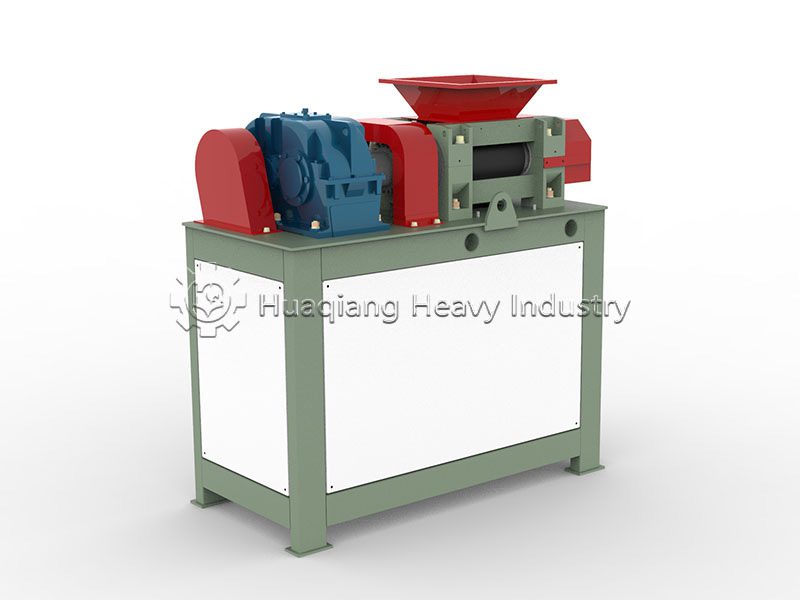
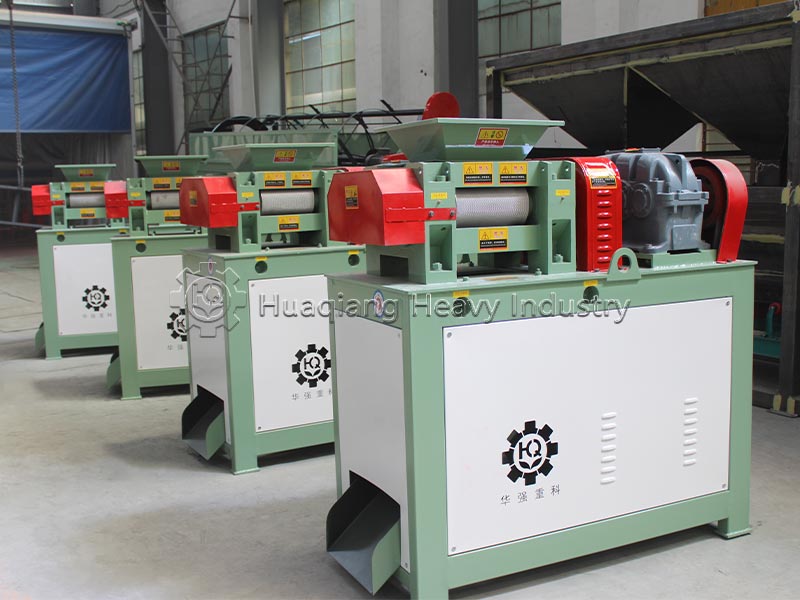
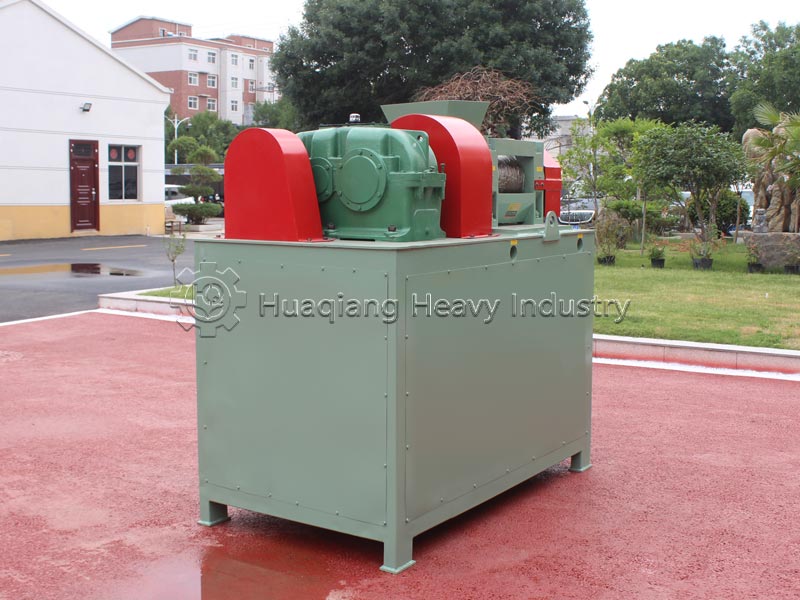
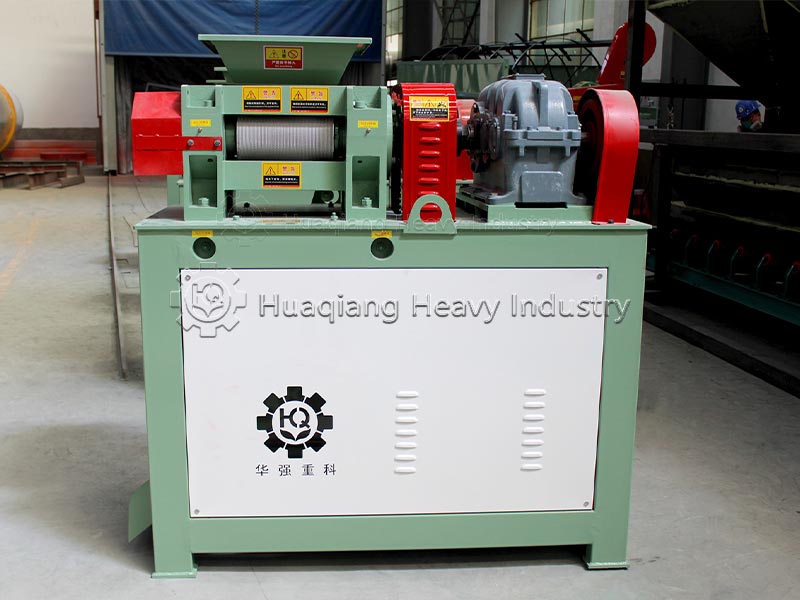
Double Roller Press Granulator
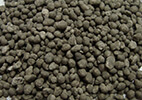
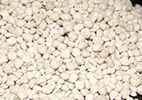
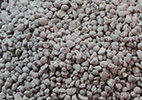
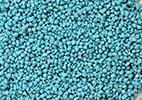
The double roller press granulator is a piece of equipment that uses mechanical pressure to directly compress dry powder materials into granules. Its key features are that it requires no specific material selection, no added water, and no drying process. Whether processing compound fertilizers, chemical powders, or metallurgical dust, it transforms loose powder into compact, uniform granules using a roller system and applied pressure. The equipment is easy to operate and offers a wide production capacity range, with suitable models available for outputs ranging from a few hundred kilograms to over ten tons per hour.
Suitable Raw Materials for Double Roller Press Granulator
This machine is highly adaptable to various raw materials; as long as the material possesses a certain level of fineness and flowability, most can be directly granulated via fertilizer compaction machine. Common applicable materials by industry include:
Fertilizers: Urea, ammonium chloride, ammonium sulfate, monoammonium phosphate (MAP), diammonium phosphate (DAP), potassium chloride, potassium sulfate, superphosphate, various compound fertilizer powders, and organic-inorganic mixtures.
Chemicals: Activated carbon powder, molecular sieve raw powder, catalyst powder, desiccant raw powder, pigments, and additives.
Metallurgy and Mineral Powders: Dust collector ash, concentrate powder, iron concentrate powder, manganese ore powder, ferrosilicon powder, rolling mill scale, and powders for cold-pressed pellets.
Feed and Pharmaceuticals: Feed additives, yeast powder, traditional Chinese medicine powder, vitamin carriers, etc.
Basic Raw Material Requirements
Fineness: Generally, at least 60% of the material should pass through an 80-mesh screen; higher fineness results in smoother granule surfaces and greater strength.
Moisture Content: The ideal moisture content for dry granulation is typically 5%–12%. Material that is too dry is difficult to compact, while material that is too wet tends to stick to the rollers; moisture levels can be adjusted by adding small amounts of water or dry powder depending on the specific material.
Flowability: For materials with poor flowability (such as pure organic fiber materials), it is recommended to mix them with inorganic materials or use a model equipped with a forced-feeding device.
Adhesiveness: Materials with inherent binding properties can be granulated directly; for materials lacking sufficient adhesiveness, a small amount of binder (such as bentonite or starch) can be added—the required dosage is far lower than that of wet granulation processes.
Operating Procedures of Double Roller Press Granulator
The fertilizer roller granulator is simple to operate on a daily basis. The standard operating procedure is as follows:
Pre-start checks: Check that the hydraulic oil level is within the marked range; inspect all fastening bolts for looseness; ensure no foreign matter is adhering to the roll surfaces; manually rotate the rolls one full turn to confirm there are no obstructions; and check the condition of the screen mesh.
No-load startup: Start the lubricating oil pump first, followed by the main motor, and finally the feeding screw. Run the machine without load for 3–5 minutes, observing the ammeter for stability, the hydraulic pressure for normal readings, and listening for any abnormal noises.
Feed adjustment: Once no-load operation is normal, gradually increase the feed rate while monitoring changes in main motor current and hydraulic pressure. If pressure is low, increase the hydraulic station setting; if pressure is too high or current fluctuates significantly, reduce the feed rate.
Stable operation: After reaching the target output, maintain a balance between the feed rate and the main motor speed. Conduct periodic checks during operation: ensure granule appearance is uniform, screening efficiency is good, bearing temperatures are normal (generally not exceeding 65°C), and the hydraulic system is free of leaks.
Shutdown and cleanup: Stop the feed first; once the material between the rolls has been cleared, stop the main motor and hydraulic station. Before finishing the shift, clean residual material from the roll surfaces and clear any blockages in the screen mesh. If the machine is to be shut down for an extended period, apply anti-rust oil to the roll surfaces.
Production Capacity Range of Double Roller Press Granulator
A full range of equipment specifications is available, covering everything from small-scale pilot machines to large-scale production lines, allowing users to select the model that best suits their expected output.
| Model | DZJ-I 1.0 | DZJ-I 2.0 | DZJ-I 3.0 | DZJ-I 3.0 |
| Capacity (t/h) | 1-1.5 | 1.5-2.5 | 2-3 | 3-4 |
| Power (Kw) | 11 | 18.5 | 22 | 45 |
| Roller Dimension(mm) | ø150×220 | ø150×300 | ø186×300 | ø300×300 |
| Feed Material Size(mm) | <=0.5 | <=0.5 | <=0.5 | <=0.5 |
| Output Granules Size(mm) | ø2.5-ø10 | ø2.5-ø10 | ø2.5-ø10 | ø2.5-ø10 |
| Gearbox Model | ZLY-160 | ZLY-160 | ZLY-180 | ZLY-224 |
| Rotation Speed (r/min) | 60 | 60 | 60 | 60 |
Have Any Problem? Please, Contact
Integrity
Adhere to honesty and trustworthiness, be responsible to customers, employees, partners, and society, and establish long-term trust relationships.
Win win
Establish win-win relationships with all stakeholders such as customers, suppliers, and employees to share the fruits of enterprise development.