
Double Screws Compost Turning Machine
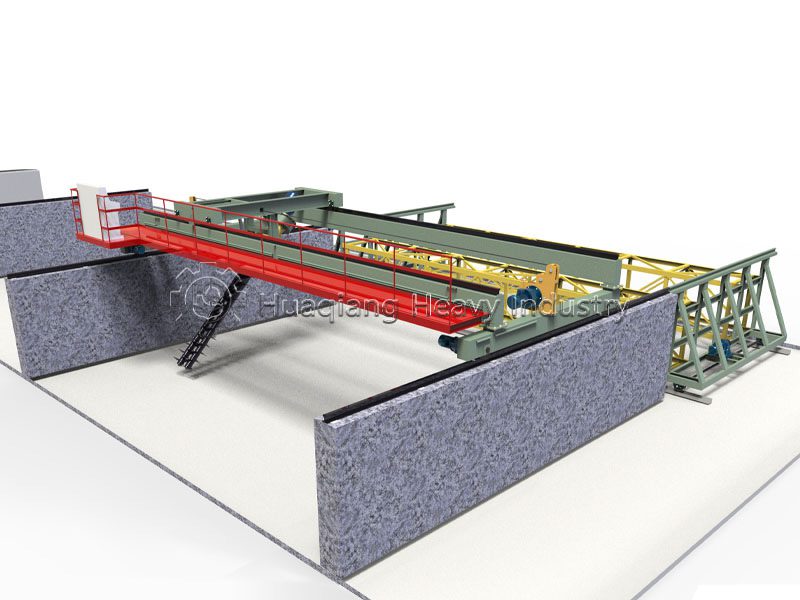
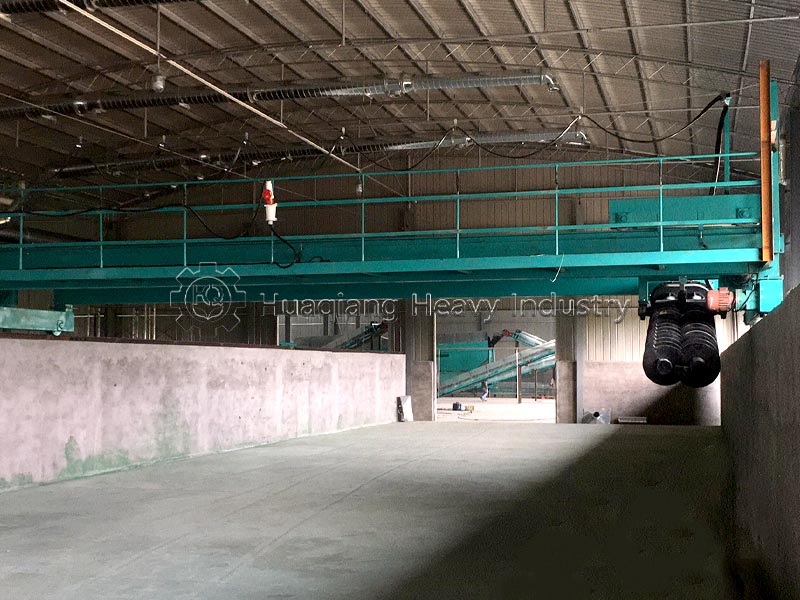
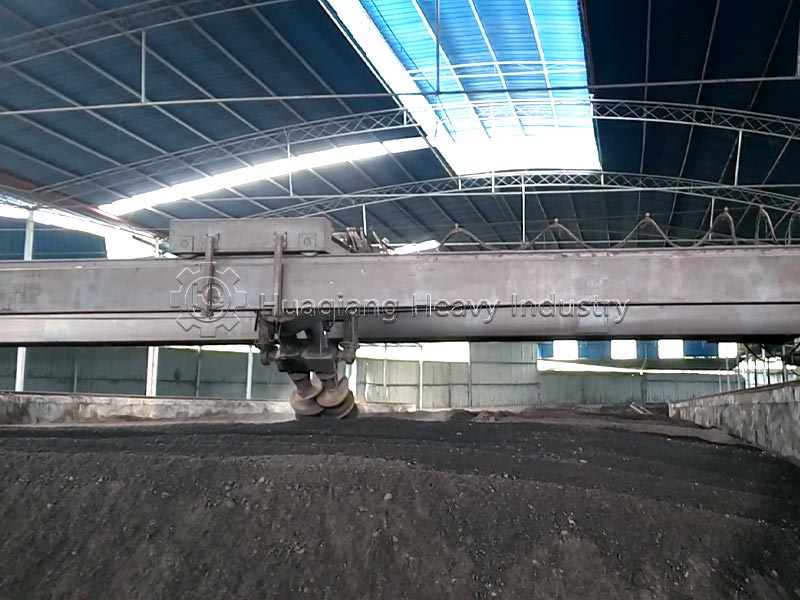
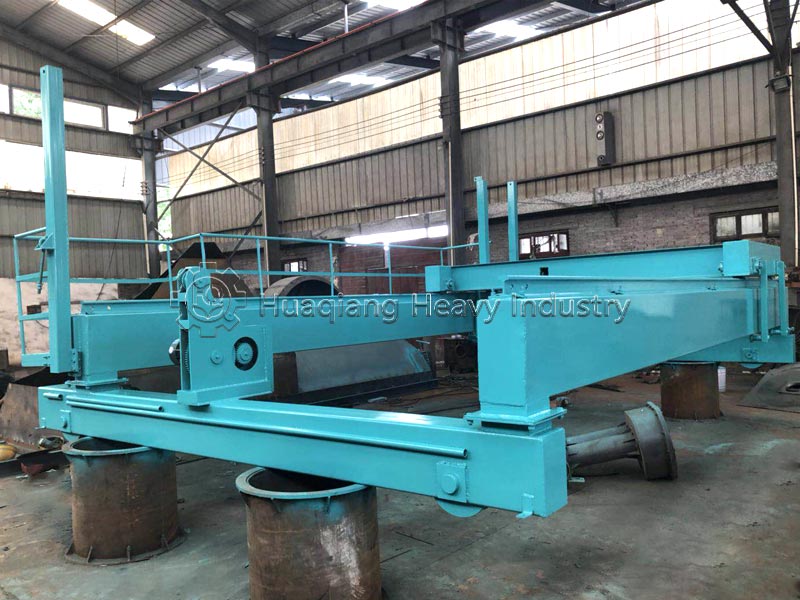
The double screws compost turning machine utilizes two parallel rotating shafts equipped with continuous spiral blades as its core mechanism to turn, mix, and displace materials within the fermentation tank. The twin-screw structure exerts strong shearing and kneading forces, ensuring thorough exchange between material layers and effectively eliminating localized anaerobic conditions and temperature stratification during fermentation. The equipment travels automatically along rails mounted on the tank walls; the penetration depth of the spiral blades, travel speed, and screw rotation speed are independently adjustable. This allows for precise control of material retention time within the tank, resulting in uniform decomposition of the discharged product. For organic fertilizer manufacturers seeking standardized fermentation processes and consistent product quality, the double screws compost turning machine offers a precision-oriented solution for tank-based fermentation, suitable for various medium-to-large-scale composting projects.
Fermentation Process of the Double Screws Compost Turning Machine
Precision formulation of raw materials. Raw materials—such as livestock manure and crushed straw—are weighed according to a set recipe and thoroughly mixed in a mixer. During this process, the moisture content is adjusted to 55%–65%, and the carbon-to-nitrogen (C/N) ratio is balanced to between 25:1 and 30:1. The prepared mixture is evenly loaded into one end of the fermentation tank by a loader or distribution vehicle, piled to a preset height, and leveled at the surface.
Static heating phase. No turning takes place during this stage, allowing aerobic microorganisms to naturally proliferate and metabolize under optimal conditions. Heat generated by microbial activity causes the internal temperature to rise above 50°C within 24 to 48 hours; the turner remains inactive to accelerate this temperature rise.
High-temperature turning phase. The double screws compost turning machine begins scheduled operations. The machine travels slowly along the tank rails while the two screw shafts rotate at set speeds. The spiral blades lift material from the tank bottom, shearing and mixing it, while simultaneously generating axial thrust to advance the material toward the discharge end by a fixed increment. The turner completes one or two full passes daily, maintaining the internal temperature between 55°C and 70°C for a duration of 7 to 10 days.
During the maturation and stabilization phase, the temperature gradually drops below 40°C, and the turning frequency is reduced to once every two or three days. As the material is slowly turned, it undergoes deep organic matter degradation and humification, while moisture content further evaporates to approximately 30%. With each turning cycle, the material moves steadily toward the discharge end; after traversing the full length of the fermentation channel over 15 to 20 days, the material removed from the discharge end is fully matured organic fertilizer.
What are the advantages of the fermentation process using a double screws compost turning machine?
High degree of material homogenization. The continuous shearing and kneading action of the twin-screw blades ensures a thorough exchange between the inner and outer layers of the material during each turning cycle, resulting in highly uniform distribution of temperature, moisture, and microorganisms. Screw-based turning provides continuous, progressive mixing, minimizing fermentation disparities across the channel’s width and length, and ensuring consistent maturity in the discharged product.
Stable high-temperature maintenance. As the screw blades lift material from the bottom of the channel, they create continuous aeration channels within the material mass, allowing air to penetrate to the bottom and preventing the oxygen deficiency often caused by surface-only turning. Oxygen distribution within the channel is uniform, keeping aerobic microorganisms active throughout the process; temperature fluctuations during the high-heat phase are minimal, ensuring reliable sterilization.
Flexible fermentation cycle management. The pitch and rotational speed of the screw shafts determine the distance the material moves toward the discharge end with each turn, allowing for displacement control with centimeter-level precision. Operators can flexibly adjust the material’s residence time in the channel by modifying the travel speed and screw rotation speed.
Energy and labor efficiency. The double screws compost turning machine consumes relatively little energy per turning cycle; a single operator can manage multiple fermentation channels, reducing daily labor requirements. The turning process takes place entirely within the channel, preventing material spillage; when combined with channel ventilation and deodorization systems, the workshop environment remains clean, facilitating compliance with environmental standards.
What are the application areas for the double screws compost turning machine?
In the production of commercial organic fertilizers and bio-organic fertilizers, the twin-screw turner is the preferred fermentation equipment for manufacturers seeking consistent product quality. Branded organic fertilizers adhere to strict standards regarding maturity, moisture content, and appearance; the dual-screw turning mechanism ensures uniform fermentation conditions for materials within the composting channel, resulting in minimal batch-to-batch variation—making it ideal for medium-to-large-scale production lines with an annual output exceeding 10,000 tons.
In the realm of large-scale livestock and poultry waste management—where facilities such as large pig and dairy farms generate concentrated waste streams—dual-screw turners efficiently mix high-moisture manure with bulking agents and turn the material effectively, facilitating rapid, harmless treatment and conversion into fertilizer.
In the co-composting of municipal sludge and food waste, dewatered sludge from wastewater treatment plants and sorted food waste must be mixed with bulking agents (such as crop stalks) for high-temperature aerobic fermentation. The double screws compost turning machine’s powerful shearing and mixing capabilities thoroughly blend viscous sludge with loose bulking agents, eliminating anaerobic pockets and ensuring safe, complete decomposition.
In the field of industrial organic waste valorization, industrial by-products—such as sugar mill filter mud, pharmaceutical residues, and spent grains—feature complex compositions; double screws compost turning machines can uniformly mix these materials with conditioning agents, achieving harmless treatment and fertilizer conversion through a precisely controlled channel-based fermentation process, thereby expanding the range of feedstocks suitable for this method.
Parameters of the double screws compost turning machine
| Model | Main Motor | Small Car Moving Motor | Big Car Moving Motor | Hydraulic Pump Motor |
| SLP-10m | 15KW | 1.5KWX2 | 1.5KWX2(4) | 4KW |
| SLP-12m | ||||
| SLP-15m | ||||
| SLP-20m |
Have Any Problem? Please, Contact
Integrity
Adhere to honesty and trustworthiness, be responsible to customers, employees, partners, and society, and establish long-term trust relationships.
Win win
Establish win-win relationships with all stakeholders such as customers, suppliers, and employees to share the fruits of enterprise development.