
Hydraulic Roller Granulator
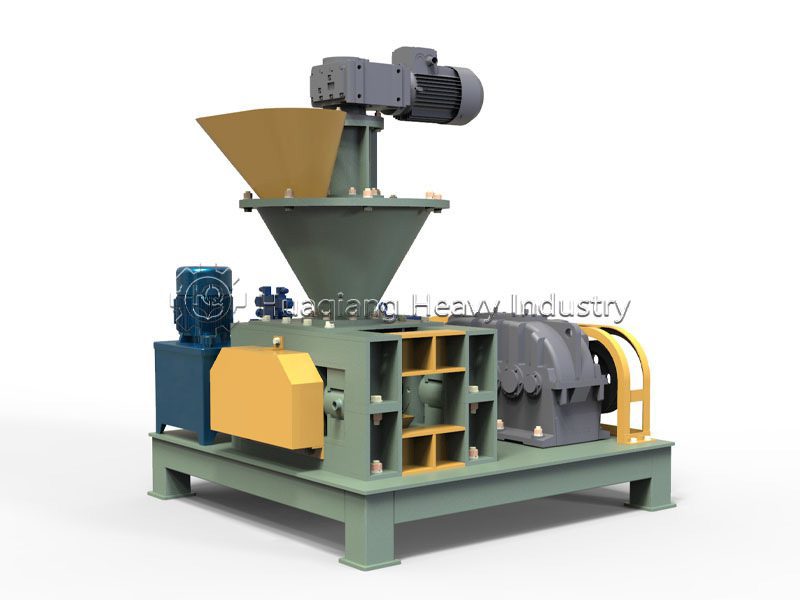
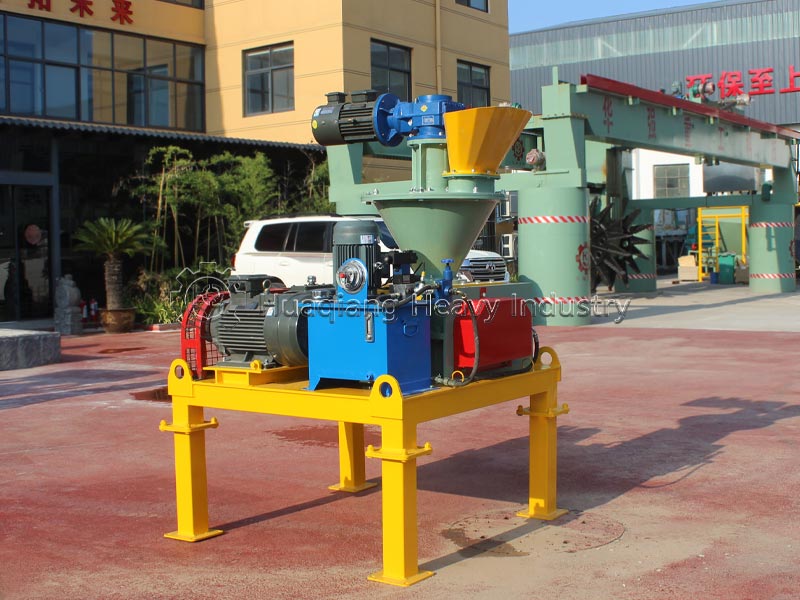
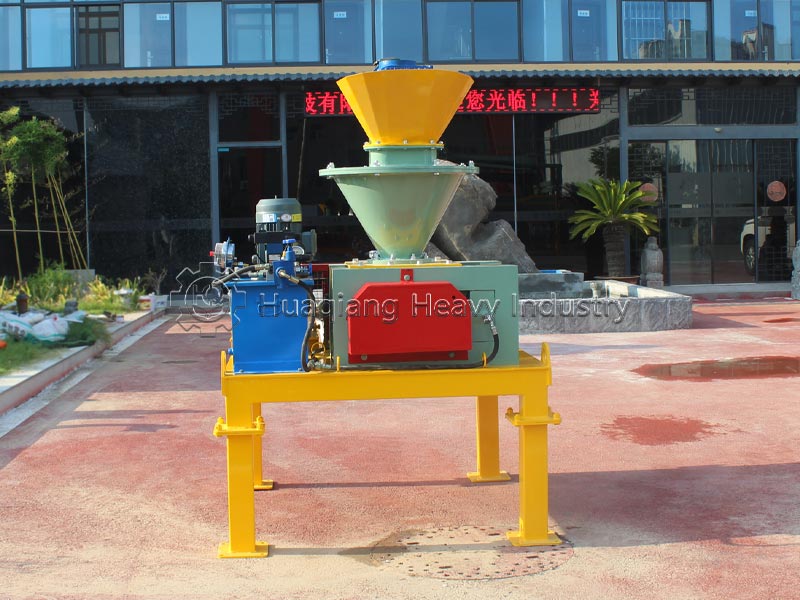
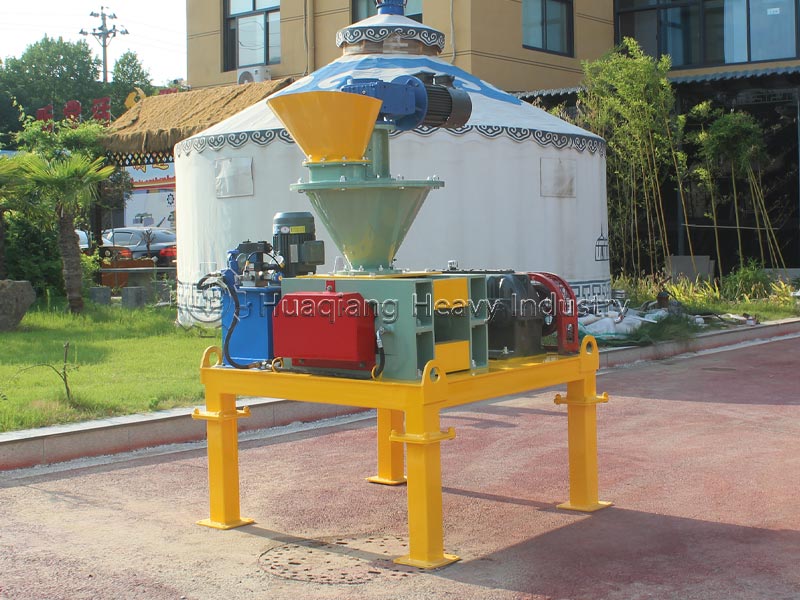
The hydraulic roller granulator is a high-pressure forming device widely used in mature dry granulation processes. Powered by a hydraulic system, it utilizes counter-rotating rollers to directly compress powdered materials into granules, eliminating the need for water addition and drying steps required in wet granulation, thereby offering a streamlined and efficient process. Valued for its stable pressure output, high granule density, and precise operational control, this hydraulic model is a preferred choice for users seeking consistent product quality and large-scale continuous production. The equipment can operate independently or integrate seamlessly into automated production lines, providing a reliable, eco-friendly, and cost-effective solution for powder granulation.
Granulation Process for Hydraulic Roller Press Granulator
In the raw material preparation stage, various powdered materials are metered according to the formula and thoroughly mixed, with fineness and moisture content controlled to meet process specifications. The mixed powder is conveyed via a hoist to the hopper above the granulator and fed quantitatively by a variable-frequency screw feeder.
During the extrusion and forming stage, the powder enters the gap between the twin rollers and is compressed into a dense state under stable high pressure exerted by the hydraulic system; simultaneously, it fills the pockets on the roller surfaces to form uniform briquettes. An accumulator maintains constant pressure within the hydraulic system, ensuring that every briquette is formed under identical pressure conditions, resulting in consistent granule density.
In the crushing and sizing stage, the extruded briquette sheets fall into the crusher/granulator below, where low-speed toothed rollers gently break them into individual granules, minimizing excessive pulverization and fine dust generation. The sized material then enters a vibrating screen for classification.
During the screening and material return stage, a double-deck vibrating screen separates the material into finished granules, oversized lumps, and fines. Qualified granules are conveyed to the coating and packaging section; oversized lumps are returned to the granulator for reprocessing; and fines are returned to the feed hopper to mix with fresh material for re-granulation. This creates a closed-loop cycle, ensuring high overall utilization of the powder material.
Process Advantages of Hydraulic Roller Press Granulator
Operates via a dry process at ambient temperature, requiring zero energy for drying. The material is formed via extrusion at ambient temperature without the need for added moisture or steam heating. This eliminates the capital investment and energy consumption associated with equipment such as dryers, hot-blast stoves, and coolers required in wet processes, significantly reducing the total energy consumption per ton of product while avoiding exhaust gas treatment issues associated with hot-air drying.
Pressure is precisely controllable, ensuring consistent granule quality. The hydraulic system allows for stepless adjustment and closed-loop control of extrusion pressure; once set, the pressure is automatically maintained via an accumulator, remaining unaffected by minor fluctuations in feed rate. This feature ensures high batch-to-batch consistency in quality metrics—such as granule density, strength, and dissolution rate—thereby meeting standardized production requirements.
The system accommodates a wide range of materials and allows for flexible formula switching. By changing roller shells with different pocket shapes and adjusting hydraulic pressure, a single machine can handle various materials and product specifications, enabling rapid production transitions between compound fertilizers, organic-inorganic compound fertilizers, and chemical powders, resulting in high equipment utilization.
It offers outstanding environmental benefits with no “three wastes” (wastewater, waste gas, and solid waste) emissions. The entire process is water-free, generating no wastewater; ambient-temperature operation produces no smoke or dust, and the inclusion of a dust removal system ensures a clean workshop environment, complying with increasingly stringent environmental regulations.

Application in Fertilizer Production Lines
In compound fertilizer production lines, the batching system weighs and mixes nitrogen, phosphorus, and potassium base fertilizers with fillers according to the formula; a hoist then conveys the mixture to a buffer hopper above the hydraulic roller granulator. The granulator compresses the powder into granules. After sizing and screening, qualified granules enter a coating machine for anti-caking treatment before final metering and packaging. The entire production line can be equipped with a PLC control system that interlocks hydraulic pressure, feed rate, and main unit rotation speed to achieve automated operation.
In organic-inorganic compound fertilizer production lines, fermented and matured organic materials are mixed with inorganic fertilizers before entering the hydraulic roller granulator. Because the process utilizes dry, ambient-temperature extrusion, the beneficial bacterial flora and the activity of organic matter within the organic materials are preserved; the resulting granules combine the rapid-release characteristics of inorganic fertilizers with the long-lasting soil-improving functions of organic fertilizers. For the production line, it is only necessary to add organic material crushing and fermentation stages prior to granulation; the remaining configuration is essentially the same as that of a compound fertilizer line.
Application Scope for Hydraulic Roller Press Granulator
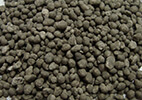
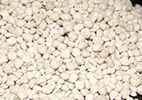
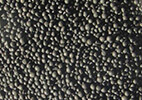
In the agricultural fertilizer sector, it is suitable for the granulation of high, medium, and low-concentration compound fertilizers, organic-inorganic compound fertilizers, bio-organic fertilizers, humic acid fertilizers, magnetized fertilizers, and various specialty formula fertilizers. The resulting granules feature high strength and resistance to caking, making them ideal for mechanized application and long-distance transport.
In the chemical industry, it is used to granulate chemical powders such as catalysts, desiccants, pigments, additives, zinc oxide, calcium chloride, soda ash, and activated carbon, thereby improving material flowability and performance while reducing dust pollution.
In the metallurgical and mining sectors, it performs cold-press granulation or pelletizing on powdered materials—such as concentrate fines, dust-collector ash, mill scale, and ferrosilicon powder—facilitating subsequent smelting or recycling and enabling resource value enhancement.
In the feed and pharmaceutical industries, it is used for binder-free granulation of powdered materials such as feed additives, vitamin carriers, and Traditional Chinese Medicine powders, ensuring ingredient uniformity and granule integrity.
In the fields of environmental protection and waste resource recovery, it processes industrial dust and waste residue powders, achieving solidification and stabilization through granulation to facilitate transport, storage, or further processing and utilization.
Hydraulic Roller Press Granulator Parameters
| Size | DGZ-1 | DGZ-2 | DGZ-3 | |
| Capacity | 1-1.5t/h | 2-3t/h | 3-4.5t/h | |
| Granulator rate | ≧85%
| ≧85%
| ≧85%
| |
| Power | 15kw | 30kw | 37kw | |
| Material moisture | 2%-5%
| |||
| Granulation temperature | Normal temperature | |||
| Particle | Diameter | 4-10(mm) | ||
| Strength | 6-20N(Compression crushing)
| |||
| Shape | Oblate sphere | |||
Have Any Problem? Please, Contact
Integrity
Adhere to honesty and trustworthiness, be responsible to customers, employees, partners, and society, and establish long-term trust relationships.
Win win
Establish win-win relationships with all stakeholders such as customers, suppliers, and employees to share the fruits of enterprise development.