
Rotary Drum Granulator
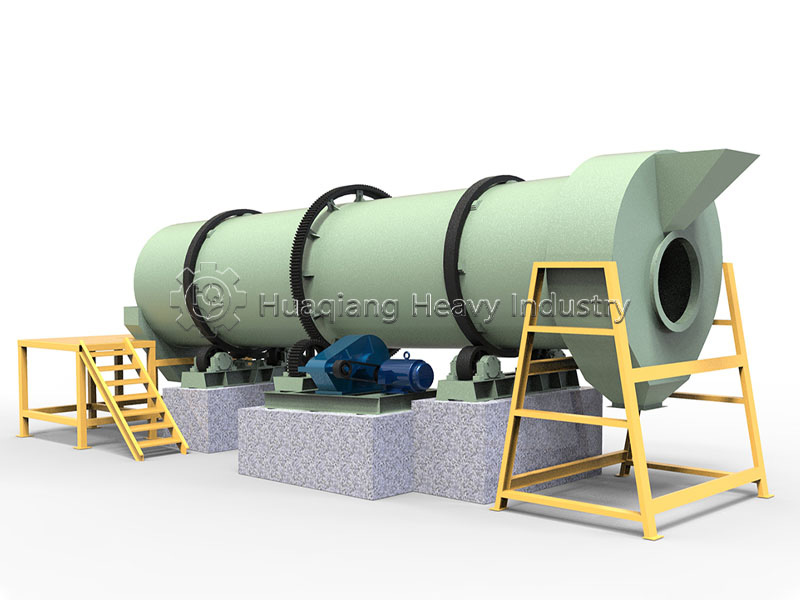
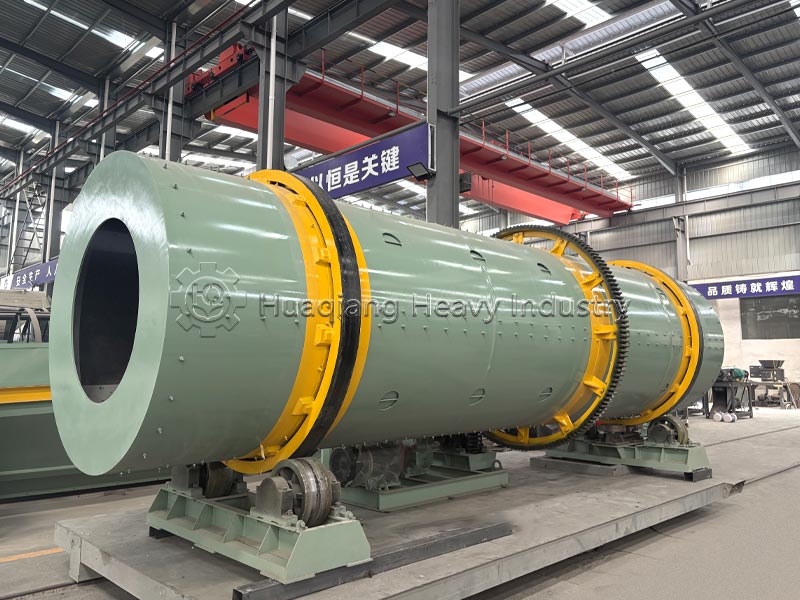
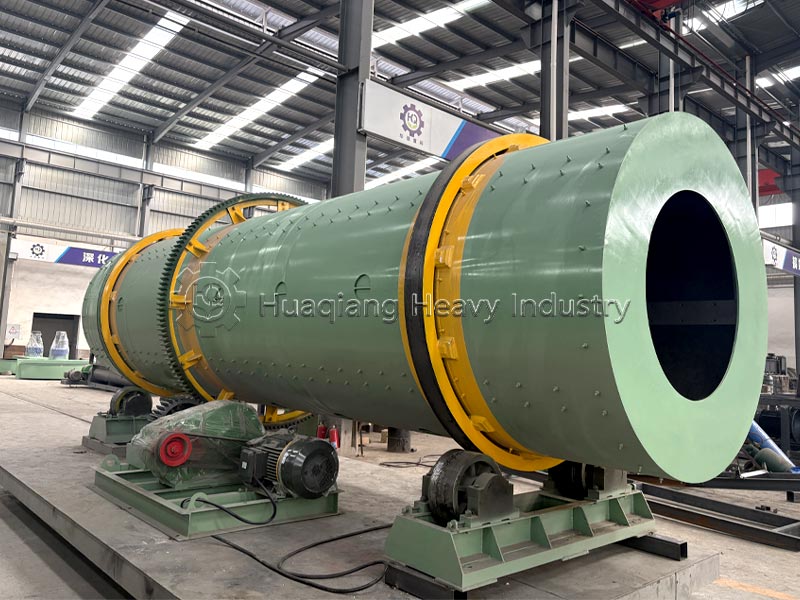
The rotary drum granulator is the core granulation equipment in large-scale compound fertilizer production lines. It utilizes steam heating and the rotation of the drum to cause powdered materials to tumble and agglomerate into spherical granules. This machine offers high single-unit capacity and robust continuous operation capabilities, easily achieving daily outputs of hundreds or even over a thousand tons per line. The granulation process takes place entirely within the drum; once steam is introduced and the drum begins to rotate, the materials tumble and bond naturally, emerging as uniform, well-rounded granules. Despite its large size, the equipment features a clear structural design, well-defined operating parameters, and standardized maintenance procedures. For large fertilizer enterprises pursuing scaled, continuous, and automated production, the rotary drum granulator is a reliable choice backed by extensive industrial validation.
Working Principle for Rotary Drum Granulator
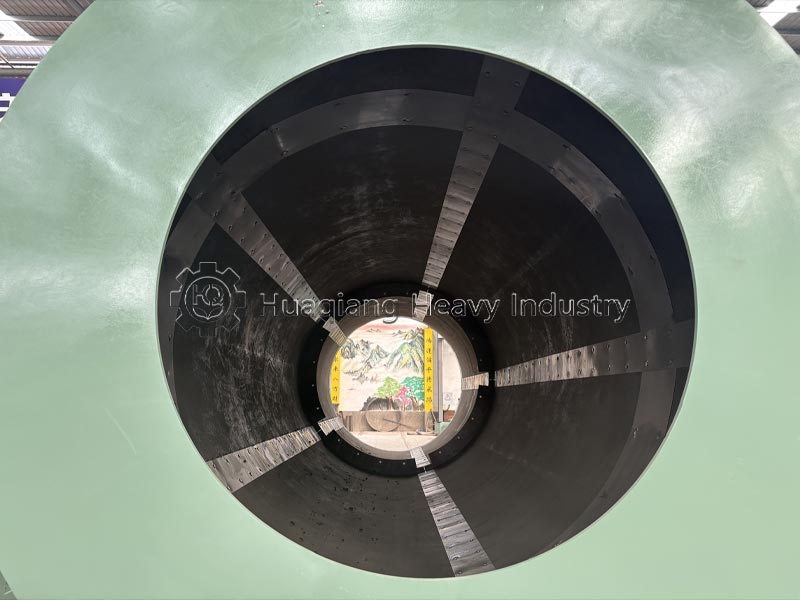
The granulation mechanism relies on the specific movement of materials within the rotating drum and the thermochemical reactions triggered by the introduction of steam. The drum is installed at a specific inclination and rotates at a constant speed. Powdered material is continuously fed into one end; friction against the inner drum wall lifts the material to a certain height, after which gravity causes it to roll down the slope, creating a continuous “curtain” of material. Simultaneously, low-pressure saturated steam is evenly injected into the material bed. As the material heats up to 50–70°C, chemical reactions occur between certain fertilizer components, generating a liquid phase. This liquid phase acts as a natural binder, evenly coating the surface of the powder particles and allowing the loose powder to gradually agglomerate into granules through tumbling and collision. As the granules grow and densify, the drum’s inclination and continuous rotation drive them toward the discharge end, where they exit the drum for subsequent processing.
Suitable Raw Materials for Rotary Drum Granulator
The rotary drum granulator primarily processes various types of compound fertilizers and demonstrates broad adaptability to different raw material formulations.
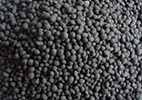
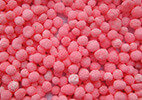
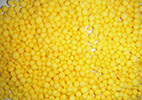
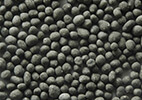
High-concentration compound fertilizers: Powdered mixtures of base fertilizers—such as urea, monoammonium phosphate (MAP), diammonium phosphate (DAP), potassium chloride, and potassium sulfate—are the primary materials processed by this granulator. Under the influence of steam, the materials react vigorously, generating sufficient liquid phase to ensure excellent granulation results. Ammonium phosphate-based compound fertilizers: Formulations utilizing monoammonium phosphate (MAP) or diammonium phosphate (DAP) as core ingredients; the rotary drum granulation process is highly mature for these materials, yielding round, high-strength granules.
Urea-based compound fertilizers: When urea-containing powder mixtures are heated by steam, the high solubility of urea facilitates the formation of a liquid phase, enabling rapid granulation.
Organic-inorganic compound fertilizers: When the organic matter content is 30% or less, the mixture undergoes rotary drum granulation; granulation is achieved through the liquid phase generated by the reaction of the inorganic components.
Selected straight fertilizers: Materials such as ammonium chloride and ammonium sulfate can be granulated individually to improve their commercial appearance.
Chemical powders: Chemical raw material powders requiring agglomeration granulation to enhance flowability and ease of use.
Basic Raw Material Requirements
Fineness: The fineness of the powder entering the drum significantly affects granulation quality. Generally, at least 60% of the material should pass through a 60-mesh sieve, with a higher passing rate for an 80-mesh sieve being preferable. Insufficient fineness leads to rough granule surfaces and low strength; excessive coarseness may even prevent proper granulation.
Moisture content: The initial moisture content of the powder before entering the drum is typically controlled between 3% and 8%. If moisture is too low, insufficient liquid phase is generated upon steam injection, slowing granulation; if moisture is too high, the material tends to clump and stick to the drum walls, disrupting equipment operation.
Reaction activity: Rotary drum granulation relies on chemical reactions between material components under heat to generate a liquid phase. The chemical compatibility of the raw materials must be carefully designed to ensure the formation of an appropriate amount of liquid-phase binder within the 50–70°C temperature range; this is a critical prerequisite for process feasibility.
Uniformity: The uniformity of the mixed ingredients directly affects nutrient distribution and granulation consistency. Uneven mixing leads to localized granulation rates that are too fast or too slow, resulting in inconsistent granule sizes and nutrient content.
Production Capacity Range for Rotary Drum Granulator
Rotary drum granulators are available for production lines ranging from small/medium-scale to ultra-large-scale; users can select the appropriate model based on their planned production capacity.
| Model | Diameter(mm) | Length(mm) | Inclination(°) | Rotation Speed(r/min) | Capacity(t/h) | Motor Power(Kw) |
| ZG1.2*4.0 | 1200 | 4000 | 2.5 | 17 | 1-3 | 5.5 |
| ZG1.5*6.0 | 1500 | 6000 | 2.5 | 11.5 | 3-5 | 7.5 |
| ZG1.8*7.0 | 1800 | 7000 | 2.5 | 11.5 | 6-10 | 18.5 |
| ZG2.0*8.0 | 2000 | 8000 | 2.5 | 11 | 10-15 | 22 |
| ZG2.2*12 | 2200 | 12000 | 2.5 | 10.5 | 15-20 | 37 |
Have Any Problem? Please, Contact
Integrity
Adhere to honesty and trustworthiness, be responsible to customers, employees, partners, and society, and establish long-term trust relationships.
Win win
Establish win-win relationships with all stakeholders such as customers, suppliers, and employees to share the fruits of enterprise development.