
Windrow Compost Turning Machine
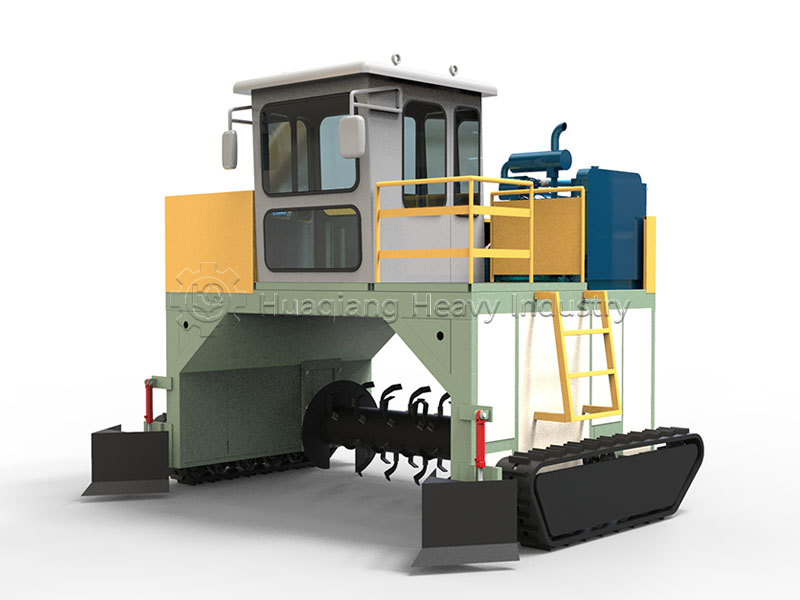
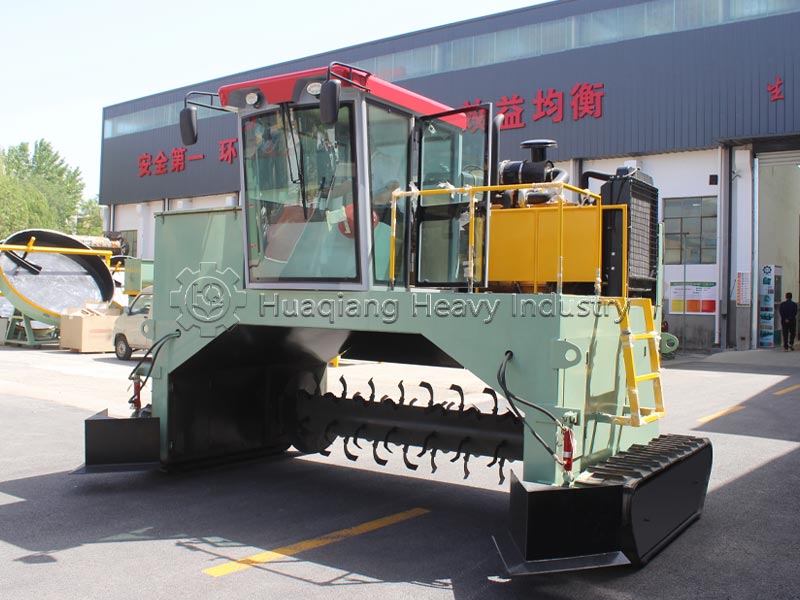
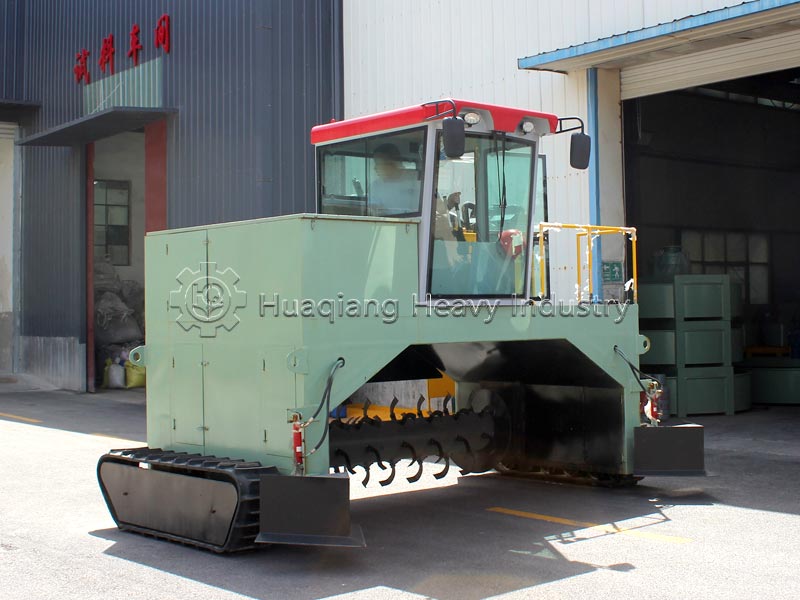
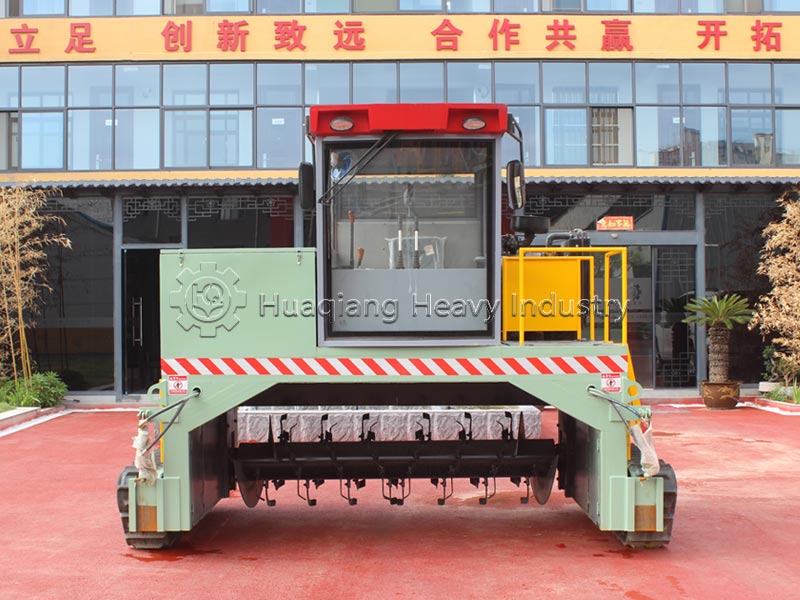
The crawler-type compost turner is a self-powered, self-propelled piece of equipment designed for the windrow composting process. It features a crawler undercarriage and a transverse turning drum, allowing it to straddle the windrow and turn the material as it moves forward. Its key advantage is its independence: powered by a diesel engine, it requires no external power supply, enabling composting operations in locations far from electrical infrastructure. The large ground contact area of the crawler tracks ensures stable operation even on soft ground following rainfall. The turning drum spans the full width of the windrow, turning the entire pile in a single pass—offering higher operational efficiency than wheel-type turners that cut into the pile layer-by-layer from the side. For small-to-medium-scale composting projects with moderate throughput, average site conditions, and a need for equipment mobility, the crawler-type compost turning machine offers a practical solution that combines efficient turning with excellent site adaptability.
What is the fermentation process associated with the crawler-type compost turner?
Material preparation. Livestock manure is mixed in specific proportions with bulking agents such as crushed straw or rice husks. After adjusting the moisture content, the mixture is piled into windrows on the ground. The windrows are shaped with a trapezoidal cross-section, with height and base width dimensions matched to the turner’s operating parameters. The windrows are laid out in straight lines to facilitate the equipment’s straddling movement.
After the windrow is formed, the material enters a natural heating phase; aerobic microorganisms multiply rapidly, raising the internal temperature above 50°C within two days. The windrow compost turner performs its first turning operation: the machine mounts one end of the windrow, the diesel engine drives the tracks forward along the pile, and the turning drum scoops material from the base and throws it backward. As the material falls back onto the pile after making full contact with the air, the entire windrow shifts backward, simultaneously facilitating oxygen supply and moisture evaporation.
The high-temperature fermentation phase lasts 7 to 10 days, with turning performed daily to move cooler outer material into the hot inner zone, maintaining internal temperatures between 50°C and 70°C. Following the high-temperature phase, the material enters the maturation stage; temperatures gradually subside, and the turning frequency is reduced to once every two or three days. After 15 to 20 days of turning operations, the material gradually moves from the start of the windrow to the end; once decomposition is complete, it is cleared away for subsequent processing stages.
What raw materials can the windrow compost turning machine process?
Livestock manure, including chicken, pig, cattle, sheep, and duck manure. Pig manure has high moisture content and tends to clump; the turner’s drum exerts strong turning force, effectively breaking up these clumps. Cattle manure is fibrous and loose in texture; the drum’s tearing action helps loosen fibers and accelerates decomposition.
Crop straw materials. Corn, rice, and wheat straw are shredded and mixed with manure to form windrows; the drum further breaks down fibers during turning, promoting a homogeneous mixture. Harder bulking agents such as rice husks, peanut shells, and sugarcane bagasse are also suitable.
Spent mushroom substrates (bags and residues) are de-bagged, broken up, and formed into windrows; the crawler-type compost turner performs daily turning to supply oxygen, converting the residue into organic fertilizer feedstock. Materials from landscaping—such as wood chips, fallen leaves, and grass clippings—can be processed in large volumes via windrow composting, where the turner’s wide working width offers significant efficiency advantages.
Industrial organic by-products—such as sugar mill filter mud, distillers’ grains, cassava residue, and herbal medicine residue—as well as biogas digestate and dewatered sludge, can be mixed with straw bulking agents and processed through high-temperature aerobic windrow fermentation for harmless disposal and resource recovery.
What are the requirements for fermentation materials used with windrow compost turners?
Moisture content is a critical parameter for successful windrow fermentation. The ideal moisture content for the windrow is 55% to 65%; a simple test involves grabbing a handful of material and squeezing hard—moisture should seep between the fingers without dripping. If moisture content is too high, permeability suffers, anaerobic conditions easily form within the windrow, and the material tends to stick to the drum, hindering the throwing action. If moisture content is too low, microbial activity is inhibited, and the temperature rises slowly. Fresh manure typically has high moisture content and requires the addition of dry bulking agents—such as straw powder—to adjust the moisture to an appropriate level.
The carbon-to-nitrogen (C/N) ratio influences microbial metabolic rates; the optimal range is between 25:1 and 30:1. Manure-based feedstocks are high in nitrogen, while straw-based materials are high in carbon; mixing them in the correct proportions ensures smooth fermentation. An excessively high C/N ratio leads to slow decomposition and prolonged processing times, whereas a ratio that is too low results in nitrogen loss through ammonia volatilization.
Regarding particle size, long-fiber materials like straw should be shredded to lengths of less than 10 cm before windrow formation. Excessively long fibers tend to tangle around the turning drum and tines, increasing operational load and compromising the uniformity of the turning process; however, over-shredding should be avoided, as retaining some fiber helps maintain the windrow’s permeability.
Materials fed into the windrow must be free of large stones, metal parts, plastics, and other hard foreign objects. If such debris enters the drum’s turning zone, it can strike the tines and cause damage. Screening and removing impurities from raw materials prior to fermentation is a fundamental measure for protecting the equipment.
What is the processing capacity of a windrow compost turning machine?
The capacity of a windrow compost turning machine depends on the width and depth of the turning drum and the machine’s travel speed; various models are available to meet processing requirements ranging from tens to hundreds of tons of windrow compost per day.
| Model | HQ-FD 2500 | HQ-FD 2600 | HQ-FD 3000 |
| Width(mm) | HQ-FD 2500 | 2600 | 3000 |
| Height(m) | 500-1000 | 500-1100 | 500-1200 |
| Stack spacing (m) | 1.0-1.2 | 1.0-1.2 | 1.0-1.2 |
| Max Particle Size (mm) | 250 | 250 | 250 |
| Power | R4102 Turbocharged 90HP Diesel Engine | R4105 Turbocharged 105HP Diesel Engine | R6105 Turbocharged 136HP Diesel Engine |
| Rated power speed(r/min) | 2200 | 2200 | 2200 |
| Working speed(m/min) | 6-18 | 6-18 | 6-18 |
| Driving speed(m/min) | 50 | 50 | 50 |
| Processing capacity(m3/h) | 400-600 | 600-800 | 1000-1200 |
| Overall size(m) | 3.64×2.6×2.7 | 3.75×2.6×2.7 | 4.36×2.75×2.95 |
Have Any Problem? Please, Contact
Integrity
Adhere to honesty and trustworthiness, be responsible to customers, employees, partners, and society, and establish long-term trust relationships.
Win win
Establish win-win relationships with all stakeholders such as customers, suppliers, and employees to share the fruits of enterprise development.