
Unique characteristics of the BB fertilizer production process
The BB fertilizer production process differs fundamentally from that of compound fertilizer; it is not merely a matter of degree, but a distinct difference in process logic.
The most fundamental unique feature is that it is a purely physical process, involving no chemical reactions. In the production of compound fertilizers, raw materials undergo dissolution, chemical reaction, and recrystallization during the granulation stage, resulting in nutrients being chemically bonded within the granules. In contrast, BB fertilizer production involves simply blending finished, granular components in specific proportions, with each granule retaining its original form and composition. Nutrient uniformity depends entirely on the precision of the blending process, rather than the natural homogenization that occurs through chemical reactions.
A second unique feature follows from this: there is no granulation stage. While compound fertilizers must be granulated to form commercial-grade particles, the raw materials for BB fertilizers are already granular. By eliminating steps such as granulation, drying, and cooling, the BB fertilizer production process is significantly shortened. This not only reduces capital investment and energy consumption but also prevents high-temperature damage to the raw material granules—specifically protecting the coatings on slow- or controlled-release fertilizers and the functional viability of biological agents.
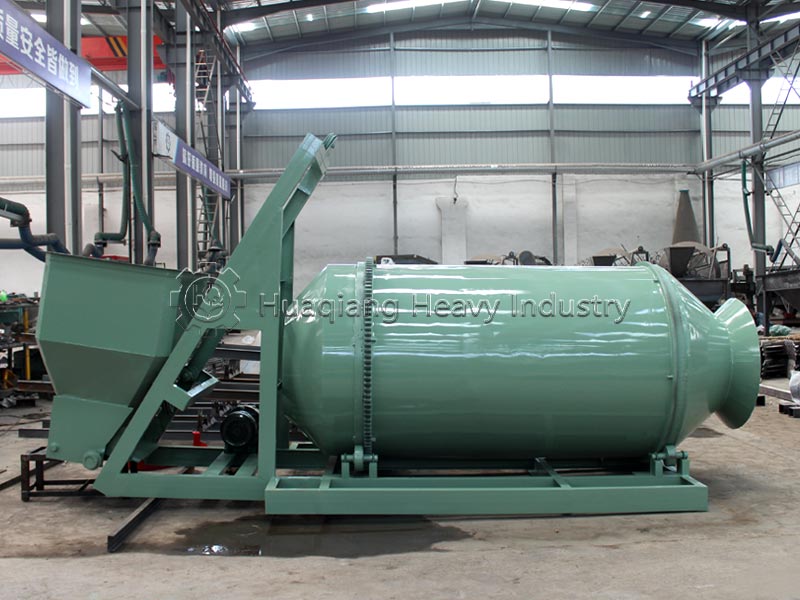
A third unique feature is the extreme flexibility in formula adjustment. Changing the formula for compound fertilizers often requires adjusting granulation process parameters or even replacing equipment. For BB fertilizers, one simply modifies the proportioning parameters in the blending system—a switch that can be completed in minutes. This allows for rapid responses to the diverse needs of local soils and crops, facilitating small-batch, multi-variety production.
A fourth unique feature is that the core challenge lies in preventing segregation rather than facilitating granule formation. While compound fertilizer production focuses on how to agglomerate powders into spheres, BB fertilizer production focuses on ensuring that granules with varying specific gravities remain uniformly distributed throughout the blending, conveying, and packaging stages. Factors such as the angle of chutes, the design of discharge ports, and the material levels in storage hoppers can all trigger segregation; consequently, this is the aspect that requires the most meticulous consideration in the design of a BB fertilizer production line.
In summary, the uniqueness of BB fertilizer production lies in replacing chemical reactions with physical blending, substituting rigid manufacturing processes with flexible formulation, and prioritizing segregation prevention over granulation control.