
Types of fertilizers and raw material requirements for bulk blending fertilizer machine
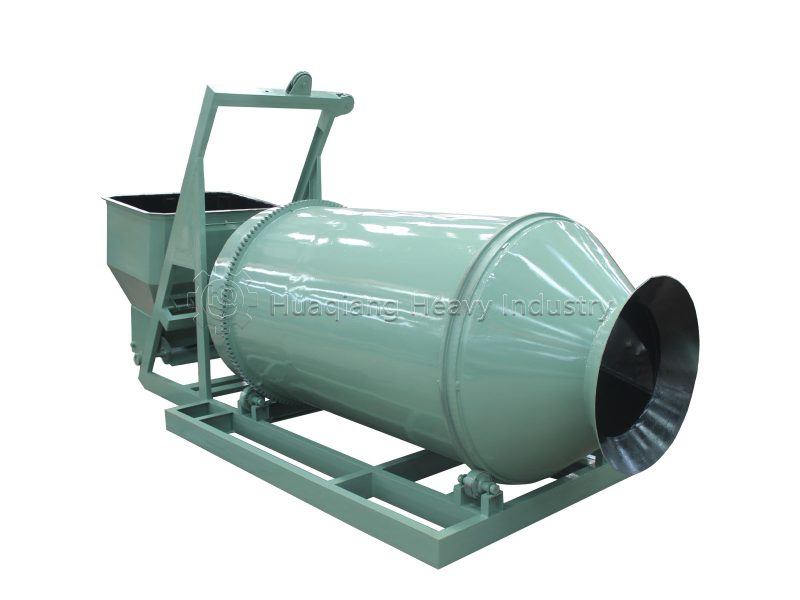
Bulk blending fertilizer machine is designed for physical mixing. The materials to be processed must be granular, possess good flowability, and have similar particle sizes and specific gravities. The process does not alter the physical form of the particles, nor does it trigger any chemical reactions.
Basic NPK Blended Fertilizers: These are produced by blending granular raw materials—such as urea, monoammonium phosphate (MAP), diammonium phosphate (DAP), potassium chloride, or potassium sulfate—according to specific formulations. This allows for the creation of various product systems, including chloride-based, sulfate-based, or nitrate-sulfate-based fertilizers. Total nutrient content can be adjusted between 25% and over 45%, and switching between formulations simply requires updating the batching parameters.
Crop-Specific Blended Fertilizers: These are tailored to the nutrient requirements of specific crops, such as rice, corn, wheat, fruit trees, or vegetables, by adjusting the NPK ratios and the combination of raw materials. While these products are typically produced in smaller batches, there is a wide variety of them; the rapid changeover capability of bulk blending equipment is ideally suited for this type of production.
Blended Fertilizers with Secondary and Micronutrients: These involve adding granular secondary or micronutrients—such as borax, zinc sulfate, or magnesium sulfate—or encapsulated additives to basic granular fertilizers. Since these components are usually added in small quantities, they must first be pre-mixed with a carrier before entering the main mixer to ensure an even distribution of the micronutrients.
Slow- and Controlled-Release Blended Fertilizers: These consist of a blend of slow- or controlled-release granules (e.g., resin-coated or sulfur-coated urea) and conventional, fast-acting granular fertilizers. Because these materials can be sensitive to mechanical stress, the mixing speed and duration must be carefully controlled to prevent damage to the coatings.
Organic-Inorganic Blended Fertilizers: Organic components must be in the form of dry granules. Organic materials with high moisture content or excessive stickiness are unsuitable for direct processing in bulk blending fertilizer equipment, as they can easily cause blockages.
It should be noted that powdered materials, highly moist or sticky substances, raw materials with significant disparities in particle size, and fragile granules are not suitable for direct processing in NPK blending machine. When selecting equipment, it is essential to first evaluate particle compatibility before determining the types of formulations to be produced; this ensures both mixing uniformity and high product quality.