
These NPK compound fertilizers are best suited for double roller press dry granulation technology
Double roller press dry granulation technology distinguishes itself through core advantages such as requiring no water addition, utilizing high-pressure molding, and ensuring low consumption while preserving nutrient content. Since it eliminates the need for drying, it maximizes nutrient retention; however, its suitability depends on the specific raw material characteristics and formulations of the NPK compound fertilizers in question. The following categories represent the types with the highest degree of compatibility:
NPK compound fertilizers containing hygroscopic raw materials are the most suitable candidates. These fertilizers typically utilize ingredients such as monoammonium phosphate (MAP), diammonium phosphate (DAP), and potassium chloride. Since these raw materials are prone to moisture absorption and caking—which can lead to nutrient loss—the water-free nature of the dry granulation process offers a definitive solution. By relying on high-pressure direct molding, the technology effectively mitigates moisture-related issues at the source, producing dense granules that are ideally suited for storage and transportation.
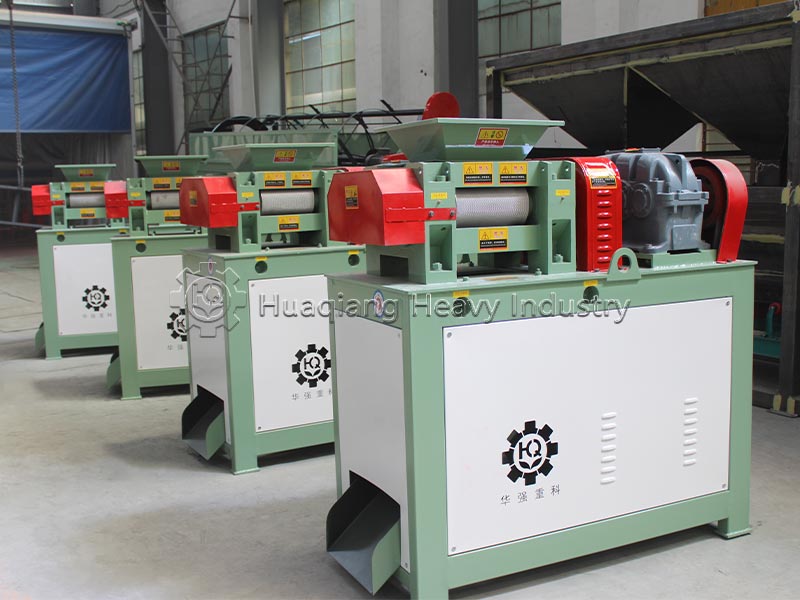
Organic-inorganic compound NPK fertilizers are also highly compatible. These fertilizers combine organic raw materials with elemental nitrogen, phosphorus, and potassium fertilizers. Given the high thermal sensitivity of organic materials, dry granulation—which requires no high-temperature drying—prevents the degradation and loss of organic matter. Furthermore, the process features low energy consumption, making it well-suited for small-to-medium-scale NPK fertilizer production lines that seek to balance both fertilizer efficacy and economic efficiency.
General-purpose NPK compound fertilizers with medium-to-low nutrient concentrations, as well as small-batch custom formulations, are also appropriate candidates. Medium-to-low concentration formulations offer broad compatibility across various raw materials, eliminating the need for complex equipment adjustments. For small-batch, multi-formula custom fertilizers, the technology’s inherent advantage of easy product changeovers allows for rapid formula switching, thereby significantly boosting production efficiency.
In summary, the NPK compound fertilizers best suited for double roller press dry granulation technology are those characterized by highly hygroscopic raw materials, a need to preserve heat-sensitive nutrients, or a requirement for flexible production changeovers. By leveraging the dry granulation process’s core advantages—namely low energy consumption and superior nutrient preservation—these fertilizers can be produced with maximum efficiency.