
Four common misconceptions about NPK compound fertilizers that many people easily overlook
NPK compound fertilizers are commonly used in agricultural planting. Produced using NPK fertilizer production lines and granulation technology, they are suitable for various crops. However, many growers have misconceptions about them, leading to improper use that wastes fertilizer, negatively impacts crop growth, and damages the soil. Below, we debunk four of the most common misconceptions to help you use fertilizers scientifically.
Misconception 1: The higher the nutrient content, the better. Many people believe that the higher the NPK content in compound fertilizer, the better the fertilizer effect. In reality, excessive nutrient content can easily lead to excessive vegetative growth, root burn, and soil nutrient imbalance. The appropriate ratio should be selected based on the crop’s nutrient requirements and soil fertility; blindly pursuing higher nutrient levels is not advisable.
Misconception 2: A universal fertilizer can replace all fertilizers. Many people stop applying organic fertilizers and micronutrient fertilizers after using compound fertilizers. In reality, compound fertilizers only supplement NPK. Long-term use as a single source can lead to nutrient deficiencies in crops. Combining them with organic fertilizers and using fertilizer production equipment for thorough mixing is necessary to balance nutrients.
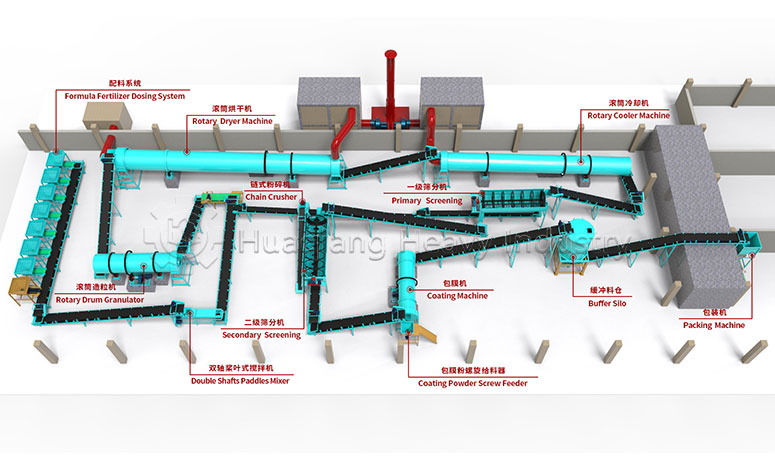
Misconception 3: The more you apply, the higher the yield. The common misconception is that “more fertilizer equals more yield.” Excessive application not only increases costs but also leads to soil compaction, nutrient loss, and inhibited crop growth. Applying fertilizer only as needed is key to improving quality and increasing yield.
Misconception 4: The more uniform the granules, the better the fertilizer effect. While uniform granules are a characteristic of high-quality compound fertilizers, they are not the only standard. The core factors are nutrient ratio, dissolution rate, and utilization rate. Granules produced using standardized fertilizer granulation technology, combined with scientific application methods, are the most effective.
In summary, avoiding these misconceptions and applying fertilizer rationally based on crop needs and soil conditions is crucial to maximizing the value of compound fertilizers and promoting healthy crop growth.