
NPK fertilizer granule size control determines fertilizer efficacy and application experience
In NPK fertilizer production lines, granule size control is crucial for NPK compound fertilizer granulation technology. It directly affects fertilizer dissolution rate, nutrient release efficiency, and also relates to storage, transportation, and field application effects. Scientific control of granule size using fertilizer production equipment is essential to producing high-quality NPK compound fertilizers suitable for different crops.
Specific Particle Size Standards: 2-4mm is suitable for field crops, 1.5-3mm for fruits and vegetables, with a particle size uniformity of over 85%. Excessively large particle sizes can lead to delayed nutrient release, while excessively small sizes can cause moisture absorption, clumping, and uneven application.
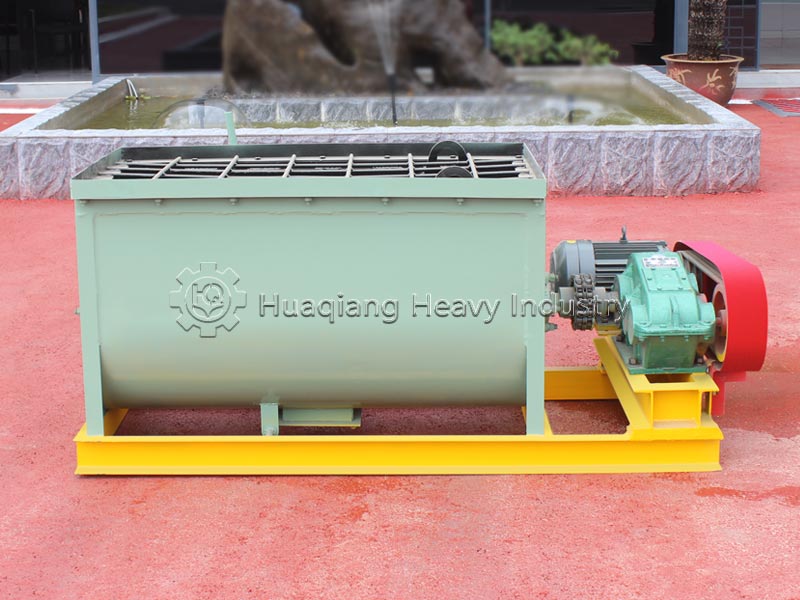
The Granulation Process is the Core of Control: Regulating the fertilizer granulator speed, feed rate, and moisture content, along with mixing the raw materials using a fertilizer mixer, is essential. Excessive speed can produce fine powder, while insufficient speed results in overly large granules. Uneven feeding leads to inconsistent particle sizes, requiring precise control through coordinated equipment.
Further details on precise control are needed for accurate NPK fertilizer production. The screening process is the final quality control step: after granulation, unqualified particles are removed by a grading and screening device. Qualified particles are sent to the drying and cooling stage, while unqualified particles are returned to the mixer for reprocessing, thus improving the finished product qualification rate.
Furthermore, parameters need to be fine-tuned according to the characteristics of the raw materials to avoid the influence of raw material ratios and humidity on particle size. In summary, particle size control must be implemented throughout the entire granulation and screening process, relying on standardized equipment and technology to balance fertilizer efficacy and ease of application, thereby helping to improve the quality and efficiency of the production line.