
NPK fertilizer granulator machine and BB fertilizer mixers: Two process paths
In the fertilizer processing field, NPK fertilizer granulator machines and BB fertilizer mixers represent two distinct production paths: one achieves nutrient integration through chemical fusion, while the other achieves raw material assembly through physical mixing. Understanding the differences between the two helps in making a rational choice of process.
NPK granulation is a form of “chemical synthesis.” Nitrogen, phosphorus, and potassium raw materials undergo partial reactions within the granulator using steam or water, or are tightly bound together through extrusion. Each granule contains all three elements simultaneously, resulting in uniform nutrient distribution and making it impossible to distinguish the original raw materials.
BB fertilizer mixing, on the other hand, is a form of “physical mixing.” Urea, ammonium phosphate, potassium salts, and other granular raw materials are added to the mixer according to a specific ratio and mixed evenly by the agitation of the blades. Different colored raw material granules are still clearly distinguishable in the finished product, and nutrient uniformity depends on the mixing quality and particle size consistency.
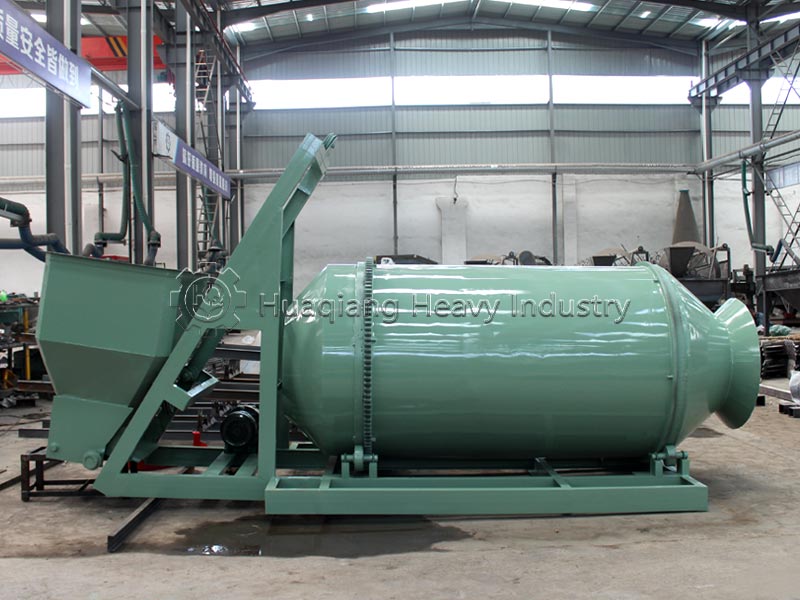
NPK granulation is typically a system: centered around a rotary drum granulator, it is complemented by drying, cooling, and screening processes. The material residence time is long, requiring precise control of temperature and moisture.
BB fertilizer mixer is much simpler, with a batch mixing completed in minutes. It requires no heating or drying, has low energy consumption, and its investment cost is far lower than that of a granulation production line.
NPK compound fertilizer has uniform granules and stable nutrients, making it suitable for mechanized precision fertilization and large-scale field planting, but its formula adjustment flexibility is lower.
BB fertilizer is known for its flexibility; its formula can be prepared on-site based on soil testing results, and it can be used immediately after mixing. It is particularly suitable for cash crops, fruit and vegetable cultivation, and differentiated fertilization for small plots.