
Why are rotary drum granulators so widely used? Unlocking the key to their universal applicability
In the field of fertilizer granulation, rotary drum granulators are utilized across a diverse range of product categories—including organic fertilizers, NPK compound fertilizers, potash fertilizers, and urea. From small-scale workshops to large-scale industrial plants, these machines are a ubiquitous presence.
Exceptional adaptability stands as their core advantage. Rotary drum granulators are compatible with a wide variety of raw materials; whether processing organic inputs such as livestock manure and crop straw, compound fertilizer ingredients like nitrogen, phosphorus, and potassium, or even highly hygroscopic substances like potash and urea, the granulation process can be seamlessly adapted through simple process adjustments.
Flexible Efficiency and Capacity. These machines ensure continuous and stable operation, with production capacity that can be readily adjusted to meet specific manufacturing demands. They are equally capable of supporting batch production in small-to-medium-sized workshops and facilitating large-scale processing in major industrial facilities, all while delivering high granulation rates and producing granules of superior quality.
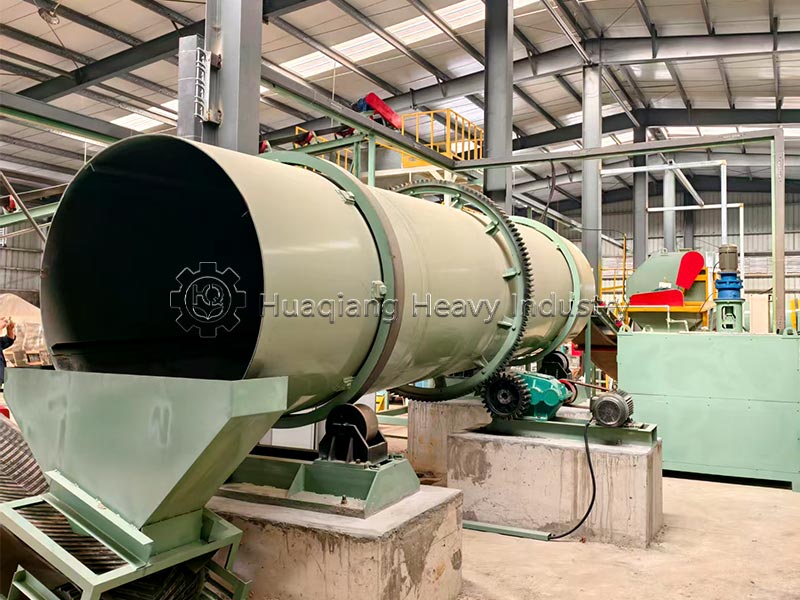
Ease of Maintenance and Outstanding Cost-Effectiveness. The rotary drum granulator features a relatively simple structural design, resulting in a low failure rate. Routine maintenance typically involves only checking the liner plates and lubrication system, keeping operational and maintenance costs to a minimum. Furthermore, their energy consumption is moderate; compared to other granulation equipment, they do not require complex auxiliary systems.
Moreover, the technology behind these granulators is mature and user-friendly. They can be flexibly integrated with auxiliary equipment—such as dryers and fertilizer coating machines—to extend and enhance production capabilities. In summary, by virtue of their core strengths—namely “universal raw material compatibility,” “scalability across all production volumes,” and “exceptional cost-effectiveness”—rotary drum granulators have established themselves as the “universal workhorse” of the fertilizer granulation sector, making their widespread application a logical and inevitable outcome.