
Detailed guide to pre-granulation preparations for organic fertilizer using a flat die pelleting machine
Renowned for its operational flexibility and high adaptability, the flat die pelleting machine serves as a core piece of equipment in small-to-medium-scale organic fertilizer production. However, the preparatory work undertaken prior to granulation directly determines the quality of the finished product and overall production efficiency; therefore, it is essential to comprehensively address three key dimensions—equipment, raw materials, and the operating environment—to ensure a smooth and uninterrupted production process.
Equipment inspection constitutes the primary step. It is necessary to systematically inspect the flat die pelleting machine’s die holes and pressure rollers for signs of wear, and to clear any residual debris from the die holes to prevent clogging. Furthermore, the transmission and lubrication systems must be checked, and specialized lubricating oil added to ensure the equipment runs smoothly under no-load conditions, free from abnormal noises or mechanical jamming. Concurrently, safety protection devices—such as emergency stop buttons and protective guards—should be inspected to ensure they are intact and fully functional, thereby eliminating potential safety hazards.
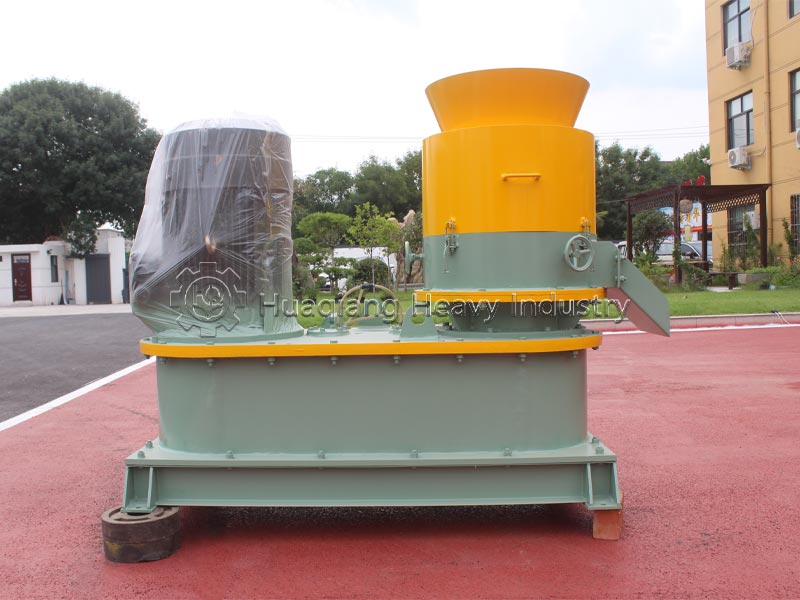
Raw material pretreatment is a critical component of the process. Raw materials—such as livestock and poultry manure, as well as crop straw—must be crushed to an appropriate particle size, and any stones or impurities removed to prevent equipment abrasion. Additionally, the moisture content of the raw materials must be adjusted to within the 20%–30% range; material that is too dry tends to clump, while material that is too wet is prone to sticking to the die. This moisture level can be fine-tuned through methods such as sun-drying or by adding dry filler materials. Simultaneously, the raw materials must be thoroughly mixed to ensure a uniform distribution of nutrients throughout the batch.
Environmental and auxiliary preparations must not be overlooked. It is advisable to select a production site that is well-ventilated and dry, as excessive humidity can negatively impact the formation of the fertilizer granules. Furthermore, containers for receiving the processed material and tools for screening should be prepared in advance, and designated areas for stacking raw materials should be clearly planned to ensure a smooth and efficient feeding process. By diligently completing these preparatory steps, one can fully leverage the advantages of the flat die pelleting machine, thereby guaranteeing the efficient and high-quality production of organic fertilizer.