
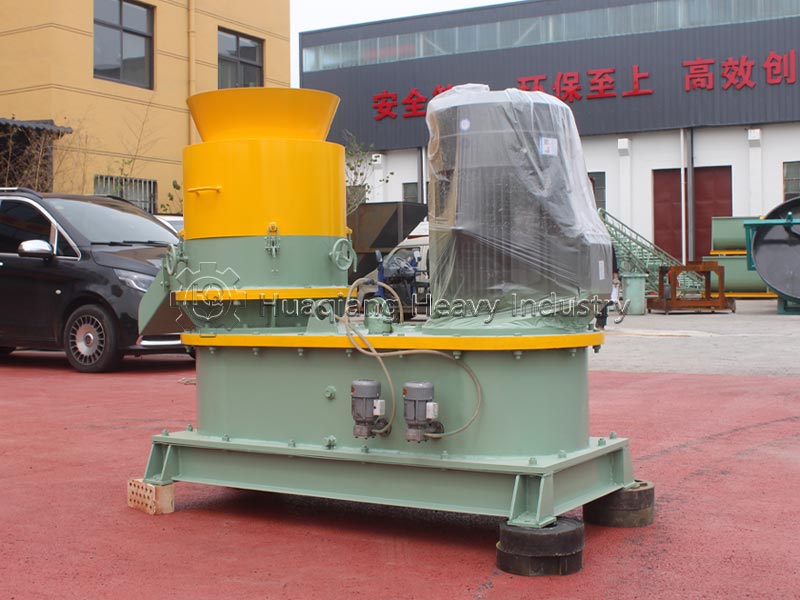
Flat die pelleting machine: Master these material preparation steps to double your granulation success rate
The quality of the granulation produced by a flat die pelleting machine depends 70% on the thoroughness of the material preparation. Given that flat die pelleting machines feature dense die holes and concentrated pressure from their press rollers, the material’s particle size, moisture content, and purity directly impact the molding rate; furthermore, improper material conditions can lead to equipment wear and clogging. The following are the key practical steps for effective material preparation.
Step 1: Crushing and Impurity Removal. Raw organic fertilizer materials (such as livestock and poultry manure, crop stalks, etc.) must be crushed to a particle size of less than 5mm; materials with high coarse fiber content require even finer processing. This prevents coarse, hard particles from jamming the die holes or wearing down the press rollers. Simultaneously, the material must be screened to remove impurities—such as stones and metal fragments—to prevent damage to the equipment components.
Step 2: Precise Moisture Control. The optimal moisture content for flat-die granulation ranges from 20% to 30%. If the moisture level is too high, the material tends to stick to the die and clog the machine; conversely, if it is too low, the material becomes difficult to form into granules. Moisture levels can be fine-tuned through air-drying or by adding dry additives (such as wheat bran). The ideal consistency is achieved when a handful of the material can be squeezed into a clump that holds its shape, yet crumbles apart easily when released.
Step 3: Thorough Mixing. For the production of compound fertilizers, organic fertilizer must be thoroughly blended with nitrogen, phosphorus, potassium, and trace elements. For pure organic fertilizers, fully composted material must be mixed with uncomposted material. This ensures uniform distribution of nutrients and moisture, thereby preventing inconsistencies that could negatively affect the granulation results.
Reminder: Materials should be pre-processed thoroughly in advance to avoid the need for last-minute adjustments, which can compromise production efficiency and granule quality. By diligently completing the preparatory steps outlined above, you can ensure your flat die pelleting machine operates at peak efficiency and consistently produces high-quality granules.