
(FAQ)What are the characteristics of NPK fertilizer produced by double roller press granulators?
As a representative technology for dry granulation, double roller press granulator imparts distinct characteristics to the resulting NPK compound fertilizer regarding physical form, nutrient structure, and application performance.
In terms of physical properties, the most notable features of roller-extruded NPK fertilizer are high granule hardness and high compressive strength. Raw materials are formed through high-pressure bonding (crystal bridging), resulting in a dense granule structure that resists pulverization and minimizes losses during transport and storage. The granules are uniform and consistent in size, making them ideal for precise application via mechanized equipment. With a moisture content generally below 2%, the product is resistant to moisture absorption and caking, resulting in a longer shelf life.
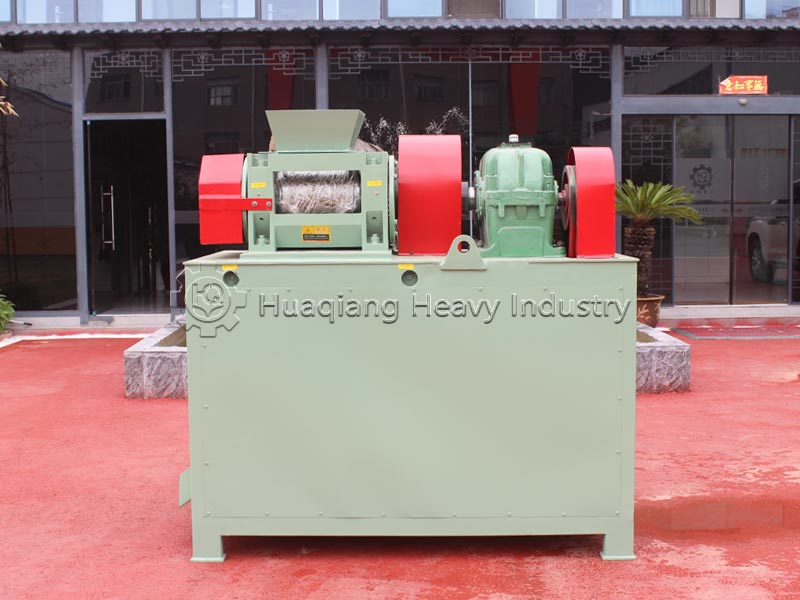
Regarding chemical properties, nutrient content is flexibly adjustable, allowing for great freedom in formulation. The production process eliminates the need for high-temperature drying, thereby retaining nearly all active ingredients from the nitrogen, phosphorus, and potassium raw materials and minimizing nutrient loss. Various formulations—such as high-nitrogen, high-phosphorus, or high-potassium types—can be precisely achieved by adjusting raw material ratios. The double roller press granulator process is highly compatible with secondary and trace elements; nutrients like boron, zinc, and magnesium can be directly incorporated during extrusion, facilitating the production of comprehensive, balanced-nutrition fertilizers.
From an agronomic perspective, the fertilizer offers steady nutrient release and long-lasting efficacy. The dense granule structure ensures a moderate dissolution rate in the soil, preventing excessive early-stage nutrient supply that could cause “fertilizer burn” while guaranteeing a continuous nutrient supply throughout the crop’s growth cycle. Granular fertilizer also reduces losses due to volatilization and leaching, thereby improving fertilizer use efficiency; it is particularly well-suited for field crops and cash crops with long growing seasons.
In terms of production economics, the process is streamlined and energy-efficient, eliminating the need for drying and cooling stages and offering significant cost advantages. Overall, high hardness, low moisture content, flexible formulation, and steady fertilizer efficacy are the four core characteristics of roller-extruded NPK fertilizer.