
Three types of granulators, three material profiles: Consider your raw materials before selecting a model
While organic fertilizer granules machines, chicken manure pellet machines, and NPK fertilizer granulator machines all fall under the category of granulation equipment, they are suited for vastly different materials.
“Organic fertilizer granules machines” is a broad term covering various machine models. For instance, the pan granulator is suitable for moderately cohesive powdered materials—such as decomposed livestock manure or humus—with a moisture content of 25%–35%; it produces highly spherical granules but is unsuitable for raw materials with high crude fiber content. The double roller press granulator employs a dry granulation process, making it ideal for powdery materials with low moisture content. Meanwhile, flat die and ring die pelleting machines excel at processing high-fiber materials like sawdust and rice husks.
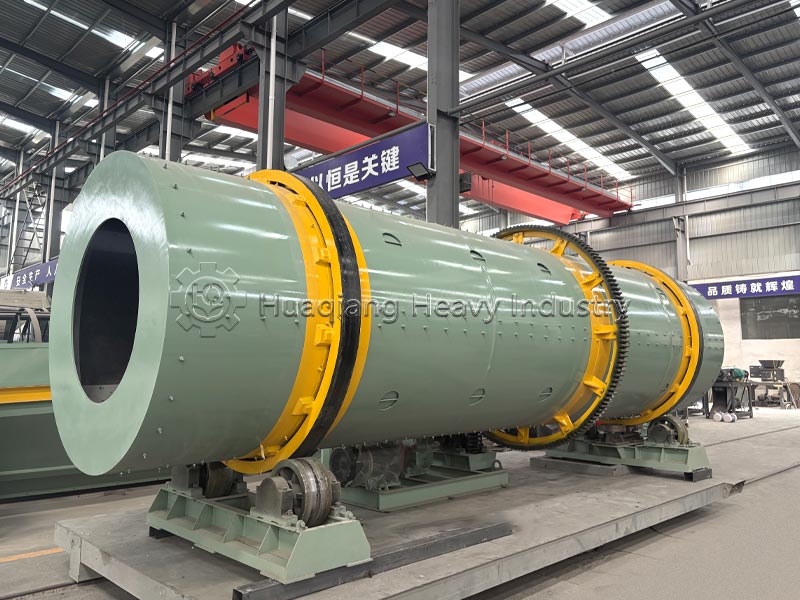
The “chicken manure pellet machine” is not a specific machine model but rather a category defined by the raw material. Fresh chicken manure has a high moisture content (60%–80%), high viscosity, and high nitrogen levels. The ideal equipment for processing chicken manure is the stirring-tooth granulator; it can directly process manure with 40%–55% moisture content without pre-drying, achieving a pelletization rate of over 90%. In contrast, a pan granulator requires the manure to be fermented and decomposed first—reducing moisture to 30%–35%—to prevent it from sticking to the pan.
NPK fertilizer granulator machines operate on a completely different principle. The double roller press granulator is the standard choice for NPK compound fertilizer production; it uses high-pressure rollers to compress dry powder into sheets, which are then crushed and screened into granules. This process requires neither added water nor drying, making it suitable for low-moisture materials such as powdered compound fertilizers and mineral powders.
In summary, organic fertilizer granulators constitute a diverse “family” of machines. The key to selecting the right model lies in first determining the moisture content, fiber content, and viscosity of your raw materials, and then choosing the equipment that best matches those characteristics.