
(FAQ)What types of blended fertilizers (BB fertilizers) can a BB fertilizer production line process?
The core value of a BB fertilizer production line lies in its flexibility: using the same set of equipment, one can switch production to create various blended fertilizers tailored to different crops, soil types, and growth stages simply by adjusting raw material ratios. This formulation flexibility is unmatched by compound fertilizer production lines.
In terms of nutrient composition, the production line most commonly processes basic nutrient-type blended fertilizers. By mixing granular raw materials—such as urea, monoammonium phosphate (MAP), potassium chloride, and potassium sulfate—in specific proportions, manufacturers can produce general-purpose fertilizers with adjustable N-P-K content. To meet the needs of specific crop growth stages, formulations can also be adjusted to create high-nitrogen (N ≥ 30%) or high-potassium (K₂O ≥ 40%) products.
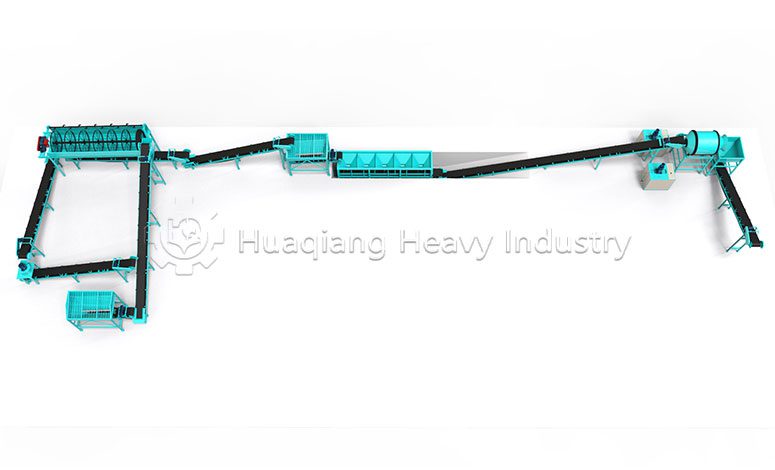
Beyond basic nutrients, the production line can further process functional blended fertilizers. Secondary and micro-nutrients (such as calcium, magnesium, sulfur, zinc, and boron) can be added to create enriched blends; humic acid or fermented organic materials can be incorporated to produce organic-inorganic blended fertilizers; and microbial agents—such as Bacillus subtilis or phosphate-solubilizing bacteria—can be added to create bio-blended fertilizers.
Specialized products represent the category where BB fertilizer production lines demonstrate the greatest value. Tailored formulas can be designed to meet the specific nutrient requirements of crops such as rice, wheat, vegetables, and fruit trees. Additionally, formulations can be adjusted based on soil conditions—such as acidic or saline-alkali soils—to achieve a “customized fertilizer for every specific site and crop” approach.
Switching formulations on a BB fertilizer production line typically requires only an adjustment of the batching system parameters, without the need to replace core equipment, and a single line can achieve an output of 5 to 30 tons per hour. This flexibility enables enterprises to respond rapidly to the diverse needs of regional markets and cover a broader product range at a lower cost.