
The role of fertilizer granules compaction machines in NPK production
In an NPK fertilizer production line, an extruder is more than just a standalone shaping device; it serves as a critical pressure-forming node. Its operational performance is directly influenced by the state of the material arriving from upstream (mixing) and the rate of material recycling from downstream.
Upstream integration determines stability. Fertilizer compaction machines are highly sensitive to moisture content and particle fineness—parameters governed by the proportioning and mixing stages. Significant fluctuations in moisture post-mixing can lead to inconsistent extrusion, causing material to either stick to the rollers or fail to bind properly. Stable extrusion relies, first and foremost, on precise control during the preceding processes.
Pressure must be matched to material characteristics. High-concentration formulations, which often contain fewer adhesive components, require higher pressure to achieve effective compaction. Conversely, for formulations containing organic matter or secondary/micronutrients, excessive pressure can over-compact the material, hindering subsequent crushing. Furthermore, the gap between the rollers and their rotational speed must be calibrated to the material’s fineness; applying high pressure to insufficiently fine material will only accelerate equipment wear.
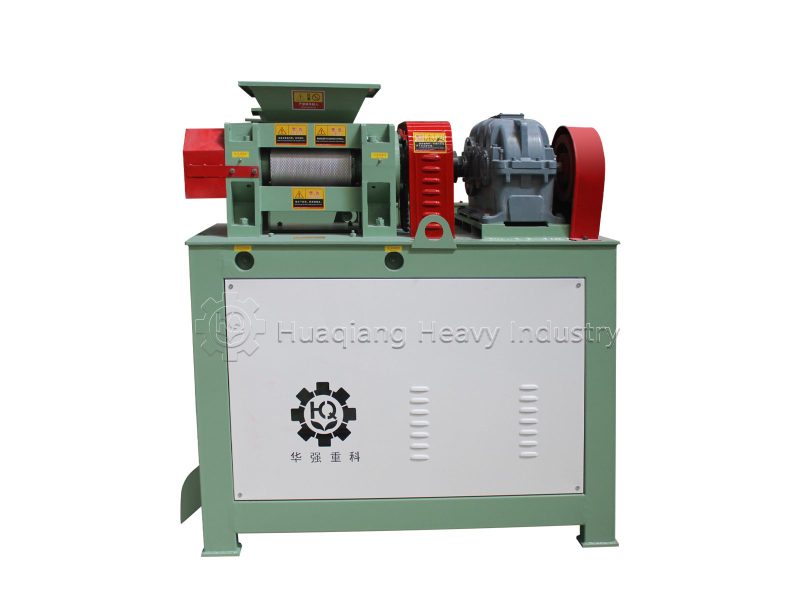
The downstream recycle ratio serves as a key operational indicator. After extrusion, the resulting sheets or strips are crushed and screened; on-specification granules are sent for packaging, while the undersized fines are recycled back into the process. A high recycle ratio suggests poor forming efficiency, signaling a need to re-examine moisture levels, particle fineness, and pressure settings. Conversely, an unusually low recycle ratio may indicate over-extrusion, which can result in excessively hard granules and increased energy consumption.
Production throughput and synchronization are equally vital. The processing capacity must be balanced with the upstream mixing stage and the downstream screening and packaging operations. If the feed rate is too high, the compactor becomes overloaded, leading to a decline in granule strength; if the feed rate is too low, the machine may frequently run idle, resulting in unnecessary energy waste.
In summary, the performance of a fertilizer granules compaction machine is not determined by the machine’s individual specifications alone, but rather by its ability to maintain a stable operational rhythm and a closed-loop parameter system in coordination with the preceding and subsequent stages of the production line.