
Can urea granulation technology improve agricultural productivity?
Urea, as a core nitrogen fertilizer in agriculture, has an application efficiency that directly impacts crop yield and quality. Urea granulation technology, through morphological optimization and process upgrades, addresses pain points from multiple dimensions and is a key technological support for boosting productivity.
Granulation technology optimizes urea characteristics. After screening raw materials with uniform particle size using a fertilizer screener machine, powdered urea is converted into granular urea with uniform particle size and moderate strength through processes such as rotary drum granulation and spray granulation. This solves the problem of caking during transportation and storage, and also extends the nutrient release cycle. Granular urea releases nitrogen slowly after being applied to the soil, reducing high-temperature volatilization losses, avoiding waste, and providing continuous fertilization.
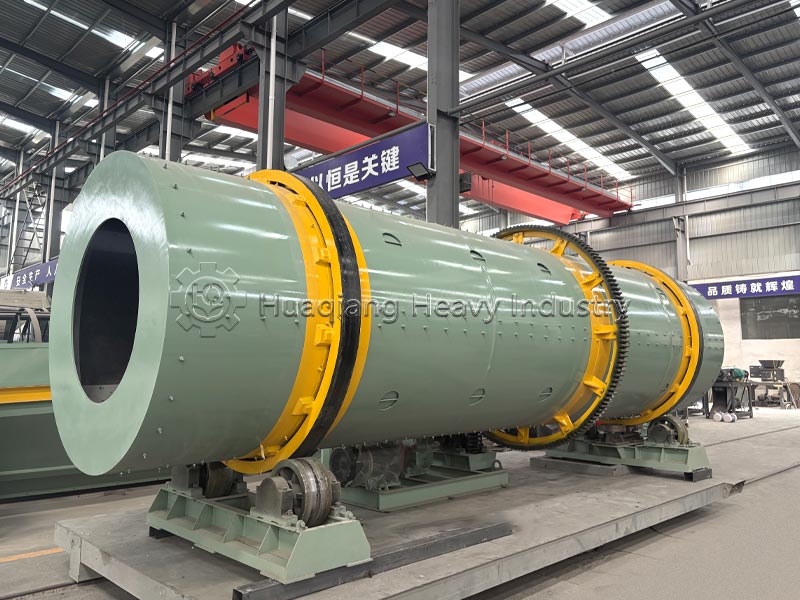
Granulation technology improves application efficiency. Granular urea is compatible with mechanized fertilization equipment, enabling precise broadcasting and band application, significantly improving efficiency, adapting to large-scale planting bases, and reducing labor input; uniform granules prevent localized nutrient excess that can burn seedlings, ensuring crop growth. Some granulation processes add slow-release agents and efficiency enhancers, extending fertilizer efficiency and reducing the number of fertilizations, indirectly lowering planting costs.
Granulation technology contributes to green agriculture. Granular urea reduces nitrogen loss and pollution to soil and water bodies, aligning with the needs of green transformation; its stable characteristics facilitate mixing with phosphorus and potassium using a fertilizer mixer to produce compound granular fertilizers, achieving balanced fertilization and improving crop yield and quality. High-quality granular urea allows crops to fully absorb nutrients and grow robustly, directly boosting yield per unit area and contributing to increased agricultural productivity.