
(FAQ)Is a granulation process necessary for an NPK blending fertilizer production line?
NPK blended fertilizer is produced by mixing various granular raw materials—such as nitrogen, phosphorus, and potassium fertilizers—in specific proportions. Unlike the production of traditional compound fertilizers, the manufacturing of blended fertilizers typically relies on pre-existing granular raw materials, requiring only proportioning and mixing. Therefore, a granulation process is not a mandatory component of an NPK blending fertilizer production line.
1.Production without granulation
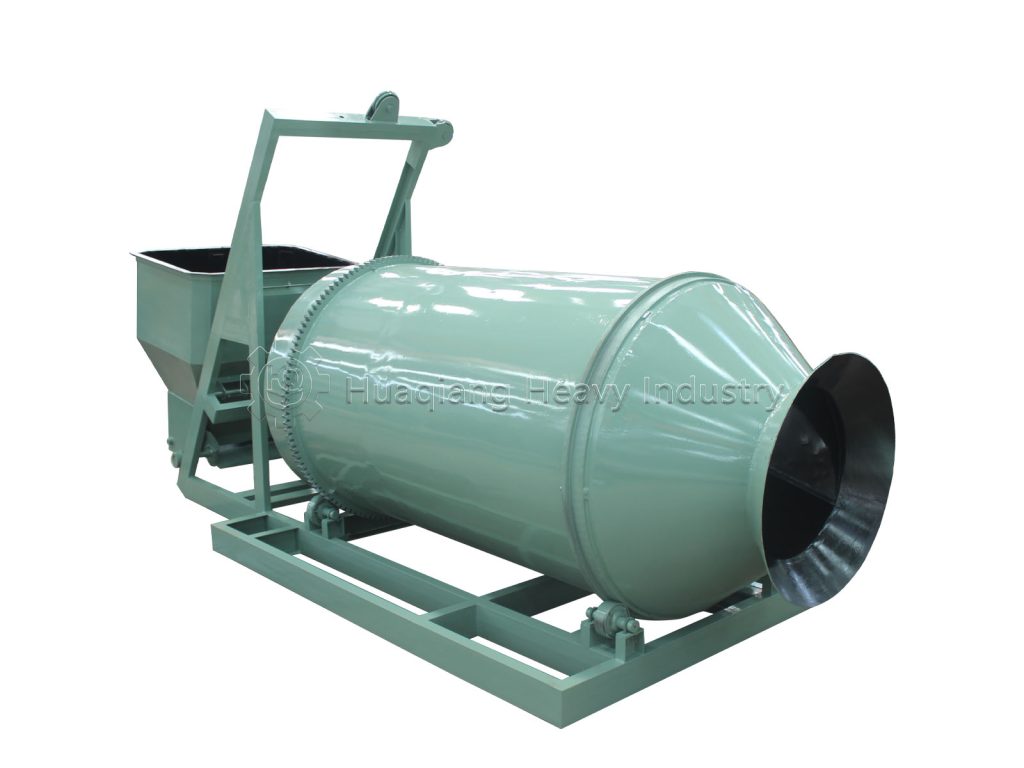
If the urea, phosphate, and potash fertilizers used are already in the form of granular raw materials that meet specific standards, the production process generally involves only raw material screening, automated proportioning, conveying, mixing, and packaging. By thoroughly blending these materials using a BB fertilizer mixer, one can obtain an NPK blended fertilizer that meets the required formulation.
2.When is a granulation process required?
A granulation step should be considered if the raw materials are primarily in powder form, or if there is a need to process various ingredients into compound granules of a uniform specification. Techniques such as roller compaction (granulation) can be employed to transform powdered materials into granules, thereby improving the product’s appearance and facilitating subsequent packaging and transportation.
3.How to determine the production line configuration?
Deciding whether to include granulation equipment depends not only on the scale of production but also on the particle size, density, and flowability of the raw materials, as well as the intended use of the final product. If the goal is to produce standard granular bulk-blend (BB) fertilizers, a process focused on proportioning and mixing is sufficient. Conversely, if the objective is to produce compound fertilizer granules with specific particle sizes and shapes, the appropriate granulation equipment must be integrated.
In summary, an NPK blending fertilizer production line does not necessarily require a granulation process. Designing the production workflow based on the characteristics of the raw materials and the intended product positioning helps avoid unnecessary equipment investment while enhancing both production efficiency and product quality.