
Where are NPK blended fertilizers primarily used?
The application of NPK blended fertilizers follows a clear logic: they are most effectively deployed wherever there is a specific, differentiated demand for nutrients. The practical implementation of these applications relies heavily on the production capabilities provided by NPK blending fertilizer production line.
Field crops represent the core market. Rice, wheat, corn, rapeseed, cotton, and peanuts are the primary sectors for blended fertilizer consumption. In the wheat-corn rotation regions of the north, these fertilizers are frequently used as a basal (base) application, while in the rice-growing regions of the south, the nitrogen-to-potassium ratio is often adjusted to address local potassium deficiencies. Given the large scale of these cultivation areas and the consistent demand for fertilizer, the high processing capacity and continuous feeding capabilities of bulk blending machine are an ideal fit.
Cash crops represent a high-value extension of the market. Crops such as fruit trees, vegetables, tea, flowers, and medicinal herbs are highly sensitive to nutrient ratios, making the advantages of customized blending particularly pronounced. Fruits and vegetables now account for over 40% of the total application of blended fertilizers. Because these crops often require frequent formula adjustments, the flexibility of NPK blending machine—specifically its ability to switch formulations and allow for easy, thorough cleaning between batches—is crucial.
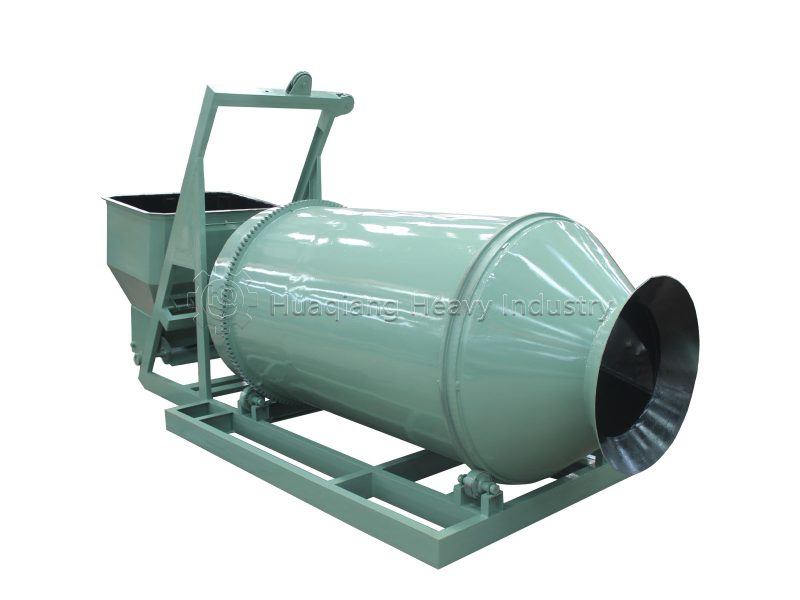
Controlled-environment (facility) agriculture represents a specialized, precision-oriented sector. In greenhouses and orchards, the use of controlled-release or slow-release blended fertilizers is becoming increasingly common. These settings require frequent fertilization and precise control over nutrient release; therefore, blending equipment must ensure consistent mixing uniformity while protecting the integrity of the granules—preventing damage to any specialized coatings.
Application is primarily as a basal fertilizer. Blended fertilizers are mostly applied as a base dressing—whether through furrow application, spot (hole) application, or broadcasting—with care taken to maintain a distance of 8 to 10 centimeters from seeds or root systems. Certain formulations may also be used for early-stage top-dressing.
In summary, the use of NPK blended fertilizers is concentrated in three key areas: large-scale field crop fertilization, quality-focused fertilization for cash crops, and precision nutrient management in controlled-environment agriculture. Ultimately, the selection and operational efficiency of NPK blending and bulk blending fertilizer machine are the decisive factors in whether these applications can be successfully and consistently implemented.