
Is the double roller press granulator suitable for processing phosphate fertilizers?
Many fertilizer manufacturers often wonder: is the double roller press granulator suitable for processing phosphate fertilizers? The answer is a resounding yes; in fact, it is the preferred equipment model for small to medium-sized phosphate fertilizer processing operations. Phosphate fertilizers—such as monoammonium phosphate (MAP), diammonium phosphate (DAP), and superphosphate—are often hygroscopic, prone to caking, and corrosive in nature. The double roller press dry granulation technology is specifically designed to effectively address these very challenges.
This equipment requires no water addition throughout the entire process; instead, it relies on high-pressure extrusion to directly form dry phosphate fertilizer powder into granules. This fundamentally prevents issues such as moisture absorption, caking, and nutrient loss that typically occur when phosphate fertilizers come into contact with water. Furthermore, it eliminates the need for a drying stage—thereby significantly reducing energy consumption—while simultaneously minimizing the degradation of fertilizer nutrients caused by high temperatures.
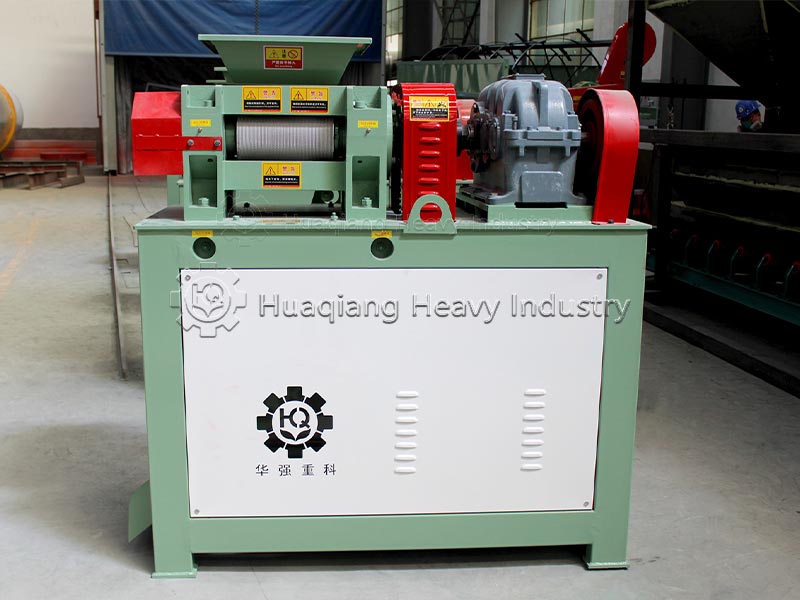
The machine is compatible with a wide variety of phosphate fertilizer types, ranging from high-concentration fertilizers like MAP and DAP to conventional varieties such as superphosphate and calcium-magnesium phosphate. By adjusting the roller pressure and the gap between the mold rollers, the equipment can be precisely configured to meet the specific hardness requirements of different phosphate fertilizer products.
In practical operation, several points require attention: it is essential to select corrosion-resistant mold rollers and processing chambers to withstand the corrosive nature of phosphate fertilizers; additionally, raw materials must be pre-treated to remove any existing lumps or impurities, ensuring a uniform feed rate and maximizing the granulation yield. In summary, the double roller press granulator offers ease of operation and low energy consumption, making it a highly cost-effective choice for small to medium-sized phosphate fertilizer plants.