
Six key points to remember when applying DAP: Avoiding pitfalls and enhancing efficiency
Diammonium phosphate (DAP) is a high-concentration, fast-acting nitrogen-phosphorus compound fertilizer with outstanding fertilizer effects and wide application. However, improper application can easily lead to root burn and nutrient loss. To maximize its effectiveness, it must be applied in conjunction with fertilizer production equipment and the matching fertilizers produced by the NPK fertilizer production line. The key points are as follows:
Avoid mixing with alkaline fertilizers. DAP is weakly acidic and will react with alkaline fertilizers such as lime and wood ash, causing nitrogen volatilization and phosphorus solidification, reducing fertilizer efficiency. The interval between application should be no less than 7 days.
Strictly control the dosage. Excessive application will cause nitrogen-phosphorus imbalance, leading to excessive vegetative growth, decreased crop resistance, and root burn. For field crops, apply 15-25 kg per acre; for fruit and vegetable crops, adjust according to soil fertility.
Pay attention to the application method; avoid surface application. DAP is volatile and should be applied deep in furrows or holes, then covered with soil, keeping it at least 10 cm away from the crop roots to avoid direct contact.
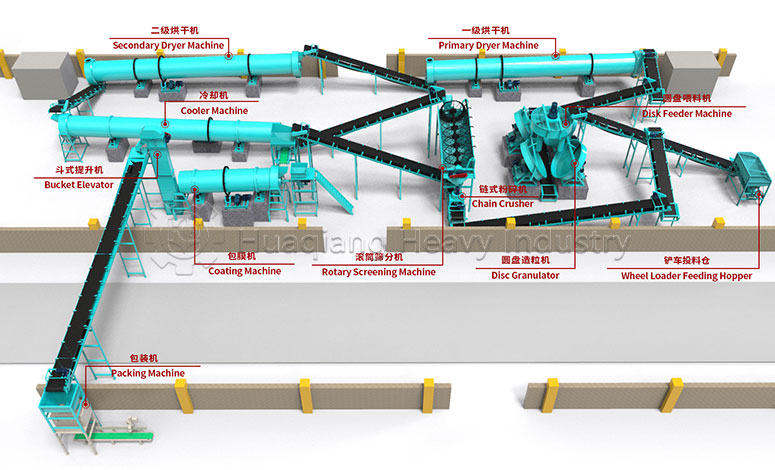
Avoid long-term, single-use application. Long-term single-use can lead to phosphorus accumulation in the soil and inhibit the absorption of micronutrients. It should be combined with NPK compound fertilizer or organic fertilizer, and mixed thoroughly using a fertilizer mixer before application.
Choose appropriate crops and soil types. DAP is suitable for most crops, but should be used with caution on chlorine-sensitive crops and in acidic soils. In acidic soils, a small amount of alkaline fertilizer can be added to neutralize the acidity.
In summary, the key to applying DAP is controlling the dosage, choosing the right method, and using it in appropriate combinations, while avoiding contraindications, to maximize its seedling-strengthening and yield-increasing effects and protect soil fertility.