
Rotary drum granulators vs. Double roller press granulators: A comparative guide for urea fertilizer processing
Urea fertilizer is highly hygroscopic and prone to decomposition at high temperatures; therefore, its granulation process requires a careful balance between preserving fertilizer efficacy and ensuring high-quality granule formation. As two of the most widely adopted types of equipment in the industry, rotary drum granulators and double roller press granulators differ significantly in their suitable applications and processing outcomes.
Granulation Process and Nutrient Retention: Rotary drum granulators utilize a wet granulation process, requiring the addition of water and binders; consequently, the formed granules must undergo a drying stage, during which high temperatures may lead to minor decomposition of the urea. In contrast, double roller press granulators employ a dry granulation process that requires no drying; the low-temperature forming method maximizes the retention of urea nutrients and minimizes material loss.
Production Scale and Efficiency: Rotary drum granulators offer high production capacity and stable operation, making them ideal for medium-to-large-scale industrial production; however, switching between product types or adjusting settings can be a complex and time-consuming process. Double roller press granulators feature simple operation, rapid product changeovers, and low energy consumption, making them better suited for small-to-medium-scale production or specialized small-batch customization requirements.
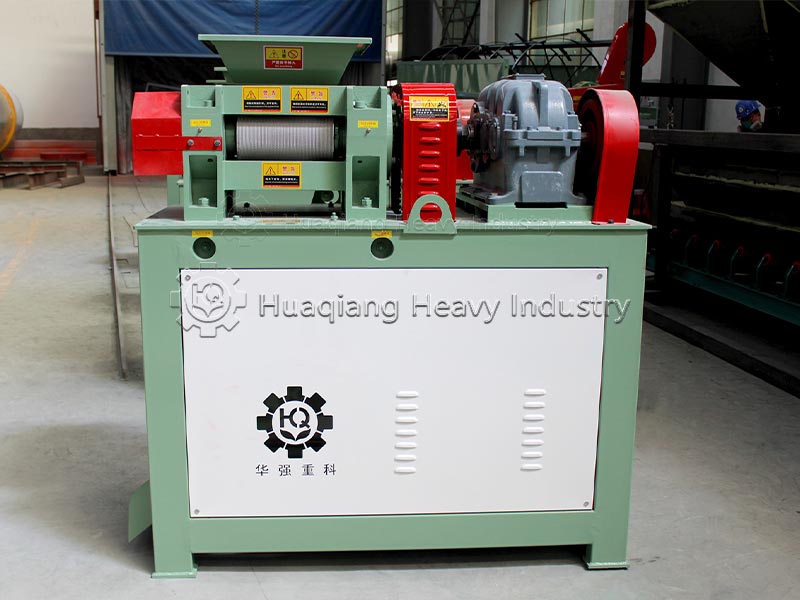
Maintenance and Adaptability: Rotary drum granulators require maintenance of an associated drying system, and wear and tear are primarily concentrated on the drum liners, resulting in slightly higher overall maintenance costs. Double roller press granulators eliminate the drying stage, simplifying maintenance—typically requiring only the periodic replacement of the pressure rollers—though they do impose stricter requirements regarding the particle size of the raw urea feedstock.
In Summary: For large-scale production operations prioritizing the aesthetic quality and physical appearance of the finished product, the rotary drum granulator is the preferred choice. Conversely, for small-to-medium-scale operations where the primary focus is on maximizing the retention of fertilizer efficacy, the double roller press granulator is the more suitable option. By selecting the appropriate equipment based on specific operational needs, manufacturers can achieve highly efficient production while simultaneously enhancing the quality of their finished products.