
Is coating essential for rotary drum-granulated fertilizers? Assess the scenario to avoid unnecessary costs
When processing fertilizers using a rotary drum granulator, many industry professionals face a dilemma: does the finished product require an additional coating? The answer is not absolute; coating is not a mandatory requirement. The decision hinges primarily on the type of fertilizer, its storage and transport requirements, and its intended application scenario. While the granules produced by a rotary drum granulator possess inherent high density, the varying characteristics of different fertilizers determine whether coating is necessary to further optimize their quality.
Coating is recommended in the following scenarios: First, for fertilizers with high hygroscopicity (such as urea, potassium chloride, and diammonium phosphate). Although the rotary drum granulator can effectively control moisture during the molding process, these fertilizers remain prone to moisture absorption and caking during long-term storage or transport; a coating creates an insulating layer that locks in moisture and prevents caking. Second, for fertilizers destined for long-distance transport or extended warehousing, coating enhances the granules’ abrasion resistance—thereby reducing material loss—and prevents compaction during storage.
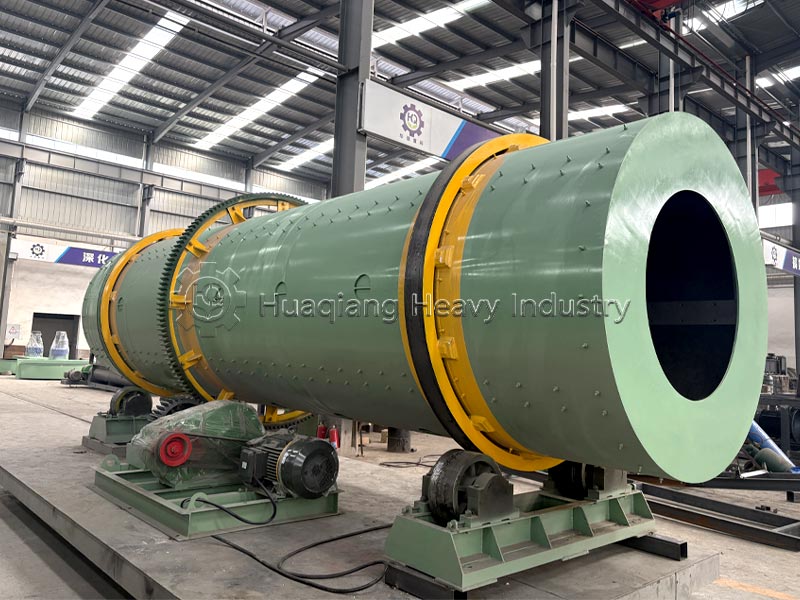
Conversely, scenarios where coating is unnecessary are equally clear: If the fertilizer exhibits high stability and low hygroscopicity—and is intended for short-term use or short-distance transport immediately after production (such as certain organic compound fertilizers)—the dense granules produced by the rotary drum granulator are already sufficient to meet requirements; in such cases, coating would merely increase costs. Additionally, fertilizers positioned for small-scale production or low-cost markets generally do not require deliberate coating.
It is important to note that the primary functions of coating are to prevent caking, minimize material loss, and enhance stability; coating does not, however, improve the fertilizer’s actual nutrient efficacy. Blindly applying a coating will simply inflate production costs. In summary, the decision of whether to coat fertilizers produced by a rotary drum granulator must be made by carefully weighing the specific characteristics of the fertilizer against actual operational requirements; a needs-based approach ensures an optimal balance between product quality and economic efficiency.