
Flat die pelleting machine safety and operability: Key insights from a practical perspective
Flat die pelleting machines, due to their compact structure and suitability for small- to medium-scale production, are commonly used equipment for organic fertilizer and small-scale NPK granulation. Their safety and operability directly affect production efficiency, personnel safety, and equipment lifespan; these two aspects are interconnected and indispensable.
The core of safety lies in avoiding mechanical and electrical risks. The pressure rollers and die discs are high-speed rotating components, and their protective devices must be kept in good working order. Disassembly or contact during operation is strictly prohibited. Regularly check the sealing of transmission components to prevent material jamming and overload. Ensure proper grounding to prevent electric shock due to aging circuits. Enhanced protection is required in humid environments.
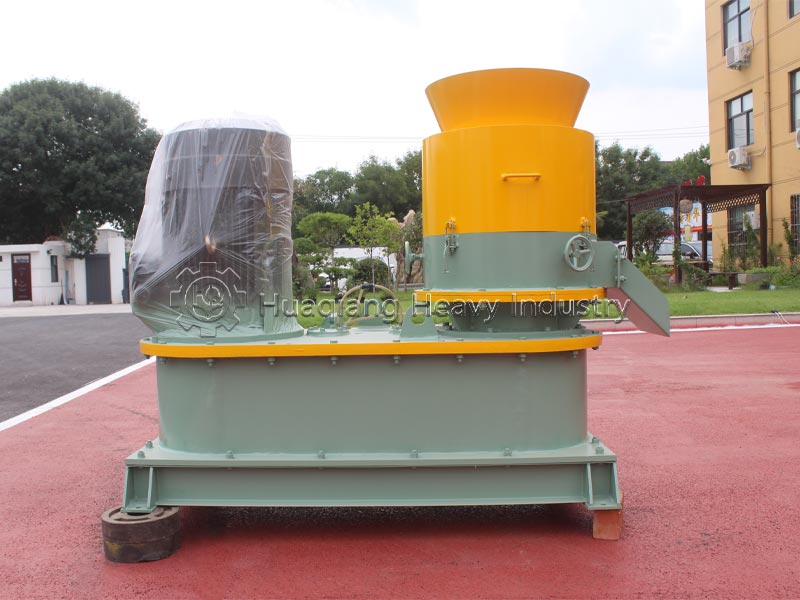
The advantage of operability lies in its simplicity and ease of use, making it suitable for non-professionals. The flat die pelleting machine has a simple structure, and parameters such as speed and pressure are intuitively adjustable, requiring no complex training. Before starting, check for raw material impurities and equipment lubrication; after starting, gradually adjust the settings. Daily maintenance is simple, and replacement of vulnerable parts is convenient, lowering the operating threshold for small- to medium-scale producers.
In summary, the safety of a flat die pelleting machine is ensured by standardized operation and regular maintenance, while its operability relies on its simple structure; the two complement each other. Only by ensuring safety and adhering to operating procedures can its advantages be fully realized, guaranteeing both production safety and efficiency.