
Core equipment configuration of bio-organic fertilizer production line
With the global focus on green planting and ecological soil restoration, bio-organic fertilizer has become a mainstream agricultural fertilizer product. It contains active beneficial microorganisms and organic nutrients, which can improve soil structure, enhance soil fertility and promote healthy crop growth. Standardized and large-scale production relies on a complete bio-organic fertilizer production line to ensure stable viable bacteria content and uniform finished fertilizer quality.
The core molding unit of the entire production line adopts professional organic granulation equipment. Organic fertilizer granules machine and fertilizer granule making machine are two common names for this core molding device. The two terms refer to the same functional equipment, with different naming habits in global fertilizer processing fields, both dedicated to processing fermented bio-organic raw materials into standard solid granules.
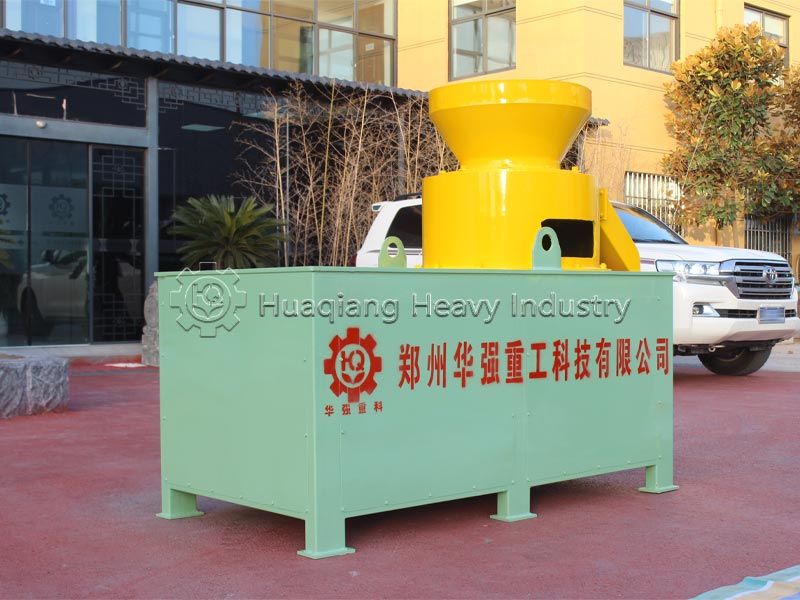
Adapted to the characteristics of bio-organic materials, this granulation equipment adopts mild physical molding technology. It avoids high-temperature and high-strength extrusion that may damage active bacteria, effectively retaining the activity of beneficial microorganisms in raw materials. The machine can stably process decomposed livestock manure, crop straw and microbial bacterial agents, producing full and uniform fertilizer granules that meet commercial production standards.
Coordinated with supporting procedures such as raw material fermentation, stirring, screening and low-temperature drying, the granulation equipment completes the key molding link of the bio-organic fertilizer production line. The standardized production process not only improves material utilization and production efficiency, but also ensures consistent granule size, stable nutrient proportion and high viable bacteria rate of batch products.
A complete bio-organic fertilizer production line centered on professional granulation equipment solves the problems of irregular finished products and unstable bacterial activity in traditional manual processing. It supports standardized, large-scale and eco-friendly production of bio-organic fertilizers, providing reliable production conditions for modern green ecological agriculture.