
Why roller granulator has multiple names in fertilizer dry granulation?
In the dry fertilizer granulation industry, practitioners and buyers often encounter different professional terms referring to the exact same processing equipment. Many people feel confused about these overlapping names in procurement and production. In fact, fertilizer roller granulator, fertilizer compaction machine and fertilizer granules compaction equipment all describe the same dry extrusion granulation unit, merely named from structural, functional and technological perspectives respectively.
The most standard equipment name is fertilizer roller granulator, which is defined by its core mechanical structure. The whole device relies on double roller extrusion as the power source. It uses two precisely arranged rotating rollers to squeeze loose fertilizer powder into solid particles. This structural naming is widely recognized in equipment manufacturing and industrial standards, serving as the official title of the dry granulation device.
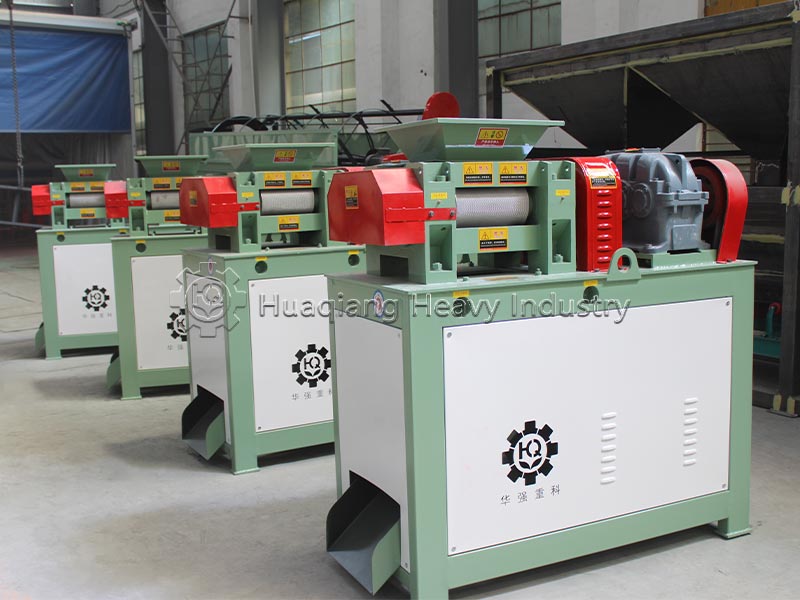
From the perspective of production function, this device is universally called a fertilizer compaction machine. Unlike wet granulation that depends on adhesion, this equipment realizes particle forming entirely through physical compaction. Its core function is to compact fluffy, flowable fertilizer powder into dense and firm granules. This functional naming is favored by production technicians, focusing on its core processing capability in dry fertilizer production lines.
In terms of processing principle, the equipment’s core technology is summarized as fertilizer granules compaction. This professional term refers to the whole technological process of physical extrusion, density improvement and particle molding completed by the roller granulator. It covers the complete technical logic from raw material feeding to finished particle forming, and is commonly used in fertilizer process design and technical documentation.
Unifying these three terms helps avoid equipment selection errors and communication barriers. This integrated dry granulation equipment requires no water or binders, produces high-hardness uniform granules, and reduces nutrient loss. With reliable performance, it has become a fundamental device for modern dry-process organic fertilizer and compound fertilizer production.