
The critical role of fertilizer mixer machines in roller press granulator production lines
Although fertilizer mixer machines do not directly produce granules in a roller press granulator production line, they serve as a core component in ensuring line stability and product quality.
Achieving uniform mixing and preventing nutrient segregation. Raw materials for roller compaction—comprising nitrogen, phosphorus, potassium, and trace elements—vary significantly in specific gravity and particle size; without thorough mixing, uneven distribution is highly likely. Through powerful agitation, the mixer ensures nutrient uniformity across the material, laying the foundation for the production of high-quality fertilizer granules.
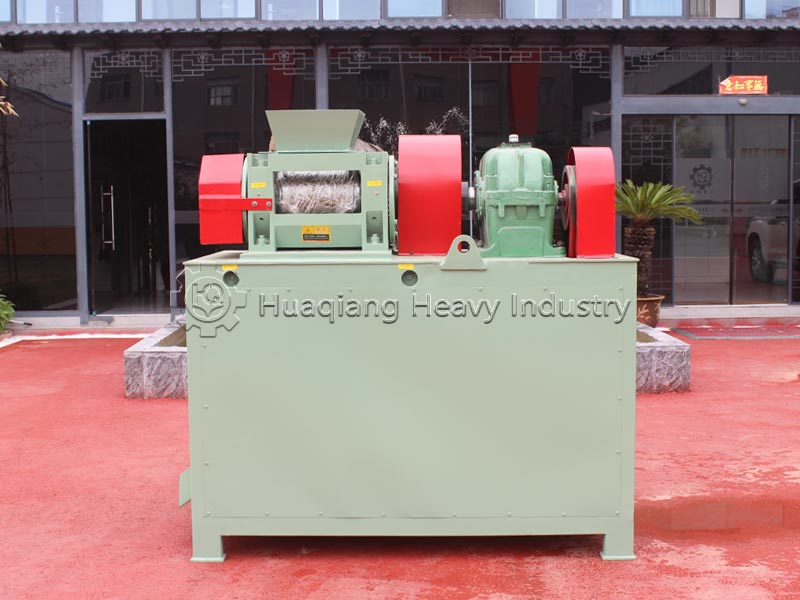
Precisely regulating moisture to meet dry process requirements. Roller compaction is a dry process with strict moisture constraints. Excessive moisture causes material slippage or roller adhesion during compression, while insufficient moisture results in loose, poorly formed granules. Modern mixers serve not only as blending tools but also as critical moisture control units; by precisely maintaining the mixture’s moisture content below 8%, they ensure smooth extrusion and granulation.
Facilitating degassing and forced feeding to enhance granulation efficiency. By agitating the material, the mixer expels entrapped air from the powder, thereby increasing bulk density. Simultaneously, it prevents material “bridging” or clogging within the hopper, ensuring a uniform and steady feed into the double roller press granulator.
In summary, the fertilizer mixer machine acts as the “quality guardian” of the roller press granulator production line. Through precise mixing and moisture control, it transforms raw materials with diverse properties into a homogeneous, compliant feedstock, directly determining both final product quality and production line stability.