
Disc granulation technology: Process principles and production line configuration
Disc granulation is an agglomeration-based granulation process centered on an inclined, rotating disc; it is widely used in the production of compound fertilizers, organic fertilizers, and organic-inorganic blended fertilizers. The process works by tumbling materials within the rotating disc; as water or steam is sprayed, fine particles gradually agglomerate into spheres through capillary forces and mechanical collisions. Size classification occurs naturally during the rolling motion—smaller particles continue to grow, while granules meeting size specifications spill over the disc rim.
The disc granulation process typically involves the following steps: raw materials are crushed, proportioned, and pre-mixed before being fed into the disc granulator. During granulation, the spray location, water volume, and atomization quality must be precisely controlled to facilitate the formation and gradual growth of granule nuclei. Wet granules are then dried to remove moisture, cooled, and separated by a screening machine to isolate qualified granules. Undersized fines and off-spec granules are recycled back into the system, while qualified granules may undergo coating if required before final quantitative packaging.
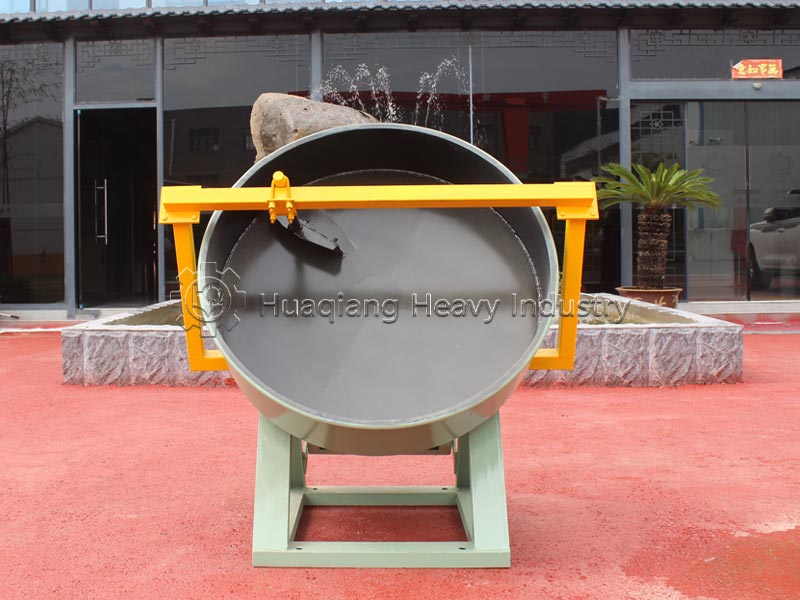
A complete disc granulation production line typically comprises a feeding system, mixer, disc granulator, dryer, cooler, screening machine, material recycling system, coating machine, packaging machine, and dust removal system. Its technical advantages include simple equipment structure, low investment costs, intuitive operation, and the production of well-rounded granules; it is particularly suitable for small-to-medium-scale production and frequent switching between product formulations. Key process control factors include feeding uniformity, moisture stability, and the coordination between the disc’s inclination angle and rotational speed. Timely adjustments are necessary when fluctuations in material fineness or moisture content occur, as these can otherwise compromise the granulation rate and granule strength.
Overall, disc granulation technology is mature, offers flexible configuration, and provides excellent cost-effectiveness, making it highly suitable for small-to-medium-scale fertilizer processing.