
Characteristics of blended fertilizers (BB fertilizers) produced via BB fertilizer production lines
BB fertilizer production lines can manufacture a wide variety of blended fertilizers, with each type possessing distinct requirements regarding formulations, raw materials, and processing techniques.
Basic NPK blended fertilizers are the most common type. They offer flexible formulation adjustments, with total nutrient content ranging from 25% to over 45%. Various raw material systems—such as those based on chlorides, sulfates, or nitrate-sulfates—can be combined. Switching between different product types requires only an adjustment to the batching parameters, keeping costs relatively low. However, these products are highly susceptible to segregation; if raw materials with significant differences in specific gravity are mixed, they tend to separate. Consequently, protective measures must be implemented at the chute and packaging stages.
Crop-specific blended fertilizers are highly targeted, produced in smaller batches, and encompass a wide range of varieties. Formulations are tailored to specific crops—such as rice, corn, fruit trees, or vegetables—by adjusting the NPK ratios. A single production line may switch between multiple formulations within a single day. This necessitates a batching system with rapid response times and easy cleaning, while also requiring operators to possess strong proficiency in formulation management.
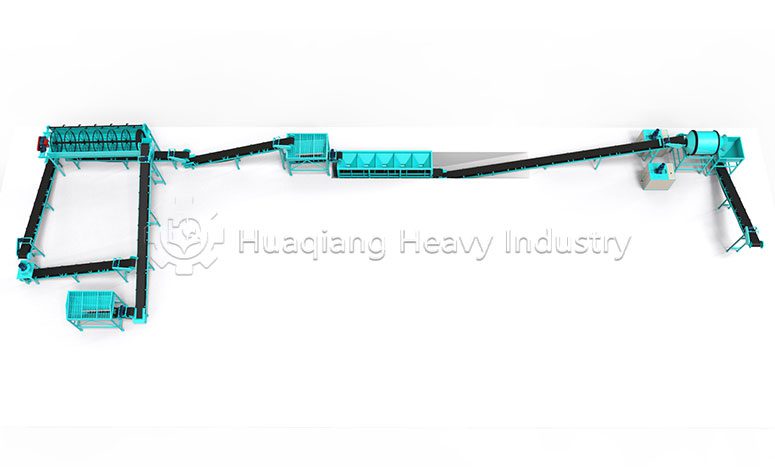
Blended fertilizers containing secondary and micronutrients require high uniformity, despite the small quantities of these additives. Micronutrients such as borax, zinc sulfate, or magnesium sulfate can easily become unevenly distributed if added directly into the main fertilizer mixer machine. Typically, they must first be pre-mixed with a carrier before entering the main production line; the accuracy of measurement during this pre-mixing stage is critical.
Slow- or controlled-release blended fertilizers contain sensitive granules that require careful control of mixing intensity. Components like resin-coated or sulfur-coated urea can easily break during the mixing process, which disrupts their intended release cycle. For these products, the mixer must operate at a low speed with a short mixing duration, and care must be taken during discharge and transport to avoid forceful impacts.
Organic-inorganic blended fertilizers require that the organic components be dried and granulated prior to mixing. Organic materials with high moisture content or high viscosity can easily clog equipment, necessitating prior processing into a granular form.
In summary, different types of blended fertilizers place varying demands on production lines. To ensure consistent product quality, enterprises should tailor their production systems—focusing on batching precision, mixing intensity, and anti-segregation design—based on the specific characteristics of their primary product offerings.