
The unique impact of flat die pelleting machines in the processing of bio-organic fertilizer
The impact of a flat die pelleting machine on the processing of bio-organic fertilizer extends beyond merely compressing powdered material into granules; it influences product performance by altering both the formation mechanism and the internal structure of the granules.
Impact on the survival rate of functional microorganisms: A key metric for bio-organic fertilizer is the count of viable, effective microorganisms. Flat die pelleting machine is a cold-extrusion process; material remains in the die for only a short duration, with temperature increases typically limited to just a few degrees Celsius. Unlike wet granulation methods—which necessitate high-temperature drying—the flat-die process minimizes the risk of microbial inactivation due to heat. Once the granules exit the machine, they require only cooling and screening, keeping the loss of functional microorganisms to a minimum.
Impact on organic matter structure and nutrient release: High-pressure extrusion physically modifies the fibrous structure of organic materials, creating a dense, capillary-like network within each granule. Upon application to the soil, these granules absorb water and gradually disintegrate. This allows for a more controlled, steady release of organic matter and nutrients compared to powdered forms, which helps prevent rapid nutrient loss and facilitates gradual uptake by soil microorganisms.
Impact on the physical properties of granules: Flat-die extrusion produces dense, cylindrical granules with high compressive strength, making them resistant to breakage during packaging and transport. Once applied to the field, the granules absorb water, swell, and eventually break apart—unlike certain high-temperature sintered granules that may fail to disintegrate over long periods. This characteristic—robustness during storage and transport, combined with disintegration upon soil contact—is highly beneficial for practical field application.
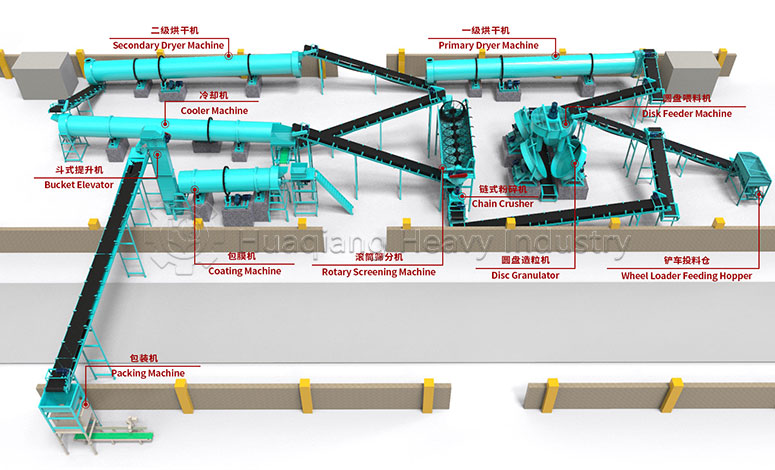
Impact on energy consumption and the production chain: Flat die pelleting machine eliminates the need for a drying stage. Consequently, bio-organic fertilizer production lines no longer require hot-air furnaces or large-scale dryers, leading to a reduction in both energy consumption and capital investment for auxiliary equipment. For small- to medium-scale bio-organic fertilizer projects, this translates to shorter construction timelines and lower operating costs.
In summary, the flat die pelleting machine exerts a multifaceted influence on the processing of bio-organic fertilizer: it preserves microbial viability, modifies granule structure, streamlines the production chain, and ultimately enhances the product’s performance in the field.