
What are the shortcomings of using a rotary drum granulator for processing organic fertilizer?
Rotary drum granulators are commonly used in the mass production of compound fertilizers, and many manufacturers also use them for organic fertilizer processing. However, this equipment uses a wet pelleting process, which is more suitable for the characteristics of chemical fertilizer materials. It has low compatibility with the high fiber, high moisture content, and high impurity content of organic fertilizers, resulting in significant shortcomings in actual production and restricting production efficiency and finished product quality.
Firstly, it has poor raw material compatibility and low tolerance for errors. Rotary drum granulators have strict requirements on the moisture content and fineness of raw materials, while organic fertilizers are mostly processed from livestock manure and straw, which have large moisture fluctuations and high coarse fiber content. Slight deviations in raw material parameters can lead to problems such as low pelleting rate, excessive loose material, and uneven particle size, making it difficult to adapt to the complex raw material conditions of organic fertilizers.
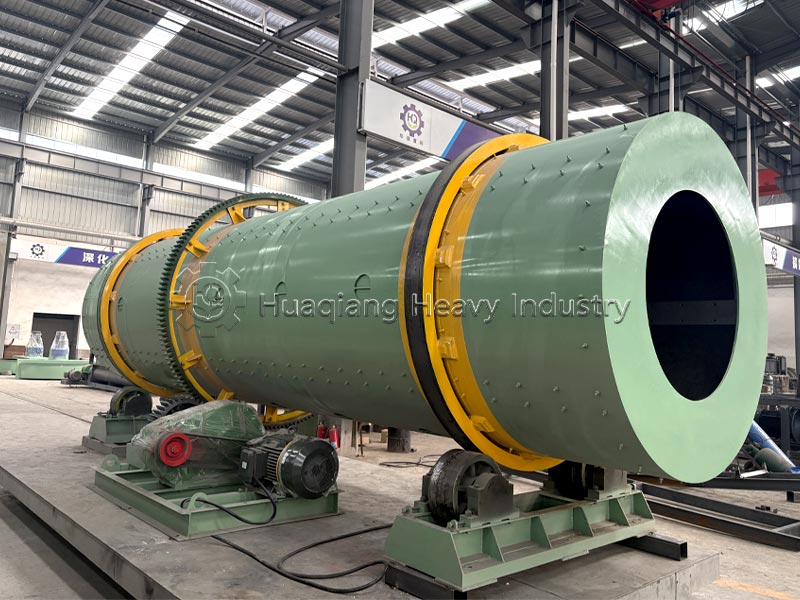
Secondly, the finished product has insufficient stability and weak marketability. The equipment relies on wet bonding and molding, and the organic matter in organic fertilizers is loose and lacks viscosity. The resulting granules have low hardness and large pores, making them prone to powdering and cracking during stacking and transportation. Furthermore, the finished product is highly hygroscopic, easily clumping and moldy during long-term storage, failing to meet the storage and transportation standards for commercial organic fertilizer.
Thirdly, it has high energy consumption and cumbersome maintenance. The wet process requires a complete set of drying and cooling equipment, significantly increasing production energy consumption. Additionally, the fibrous material of organic fertilizer easily adheres to the equipment walls, and acidic components can corrode the equipment’s inner walls, requiring frequent shutdowns for cleaning and maintenance, severely impacting continuous production.
In summary, rotary drum granulators are more suitable for the production of chemical fertilizers with stable physical properties. For large-scale organic fertilizer production, prioritizing the selection of targeted granulation equipment is crucial to avoiding various production pain points.