
Disc granulation technology paired with a double axis paddle mixer: Is it a good match?
In the production of organic fertilizers and NPK compound fertilizers, many industry professionals often wonder: Is disc granulation technology compatible with a double axis paddle mixer? The answer is a resounding yes; the combination creates a highly efficient “pre-treatment-to-granulation” synergy that effectively compensates for the limitations inherent in using either piece of equipment alone.
The key to this compatibility lies in their complementary functions, which precisely address the raw material challenges associated with disc granulation. Disc granulation places strict demands on feed materials, requiring them to be uniform, loose, and possess an optimal moisture content; failure to meet these criteria often results in low granulation rates and inconsistent particle sizes—precisely the issues that a double axis paddle mixer is designed to resolve.
The double axis paddle mixer performs preliminary mixing, gentle crushing, and moisture control on the raw materials. It breaks down large agglomerates and precisely adjusts the moisture content to the specific range required for disc granulation, thereby preventing material segregation or clumping—issues that could otherwise lead to blockages or poor granulation results within the disc granulator.
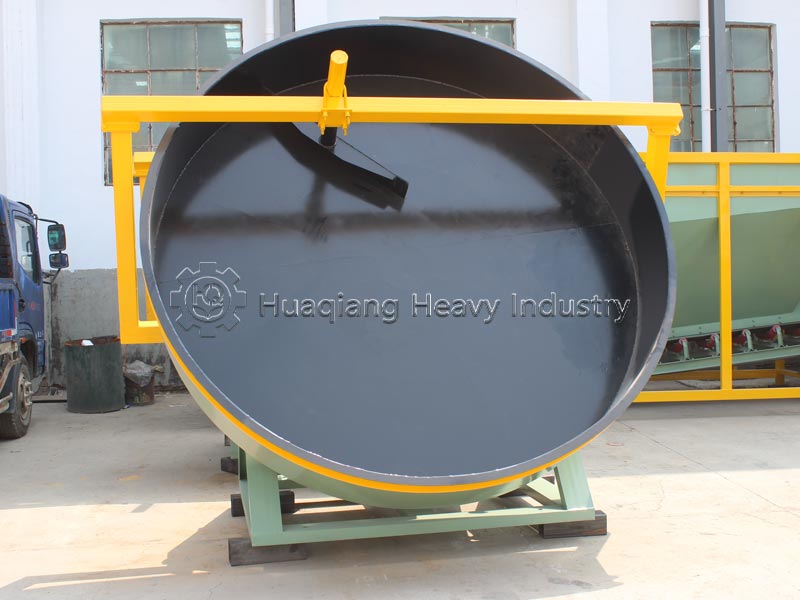
This combination not only boosts granulation efficiency but also reduces equipment wear and tear. Since the pre-treated raw materials are loose and uniform, they require less extensive tumbling once they enter the disc granulator to achieve their final shape; this minimizes abrasion on the disc liner while simultaneously enhancing the roundness and quality of the finished granules. In practical operation, a seamless workflow can be achieved simply by adjusting the mixer’s rotation speed and discharge settings to align with the specific requirements of the disc granulation process.
In summary, the compatibility between these two technologies is exceptional. By effectively resolving the raw material challenges inherent in disc granulation while simultaneously leveraging the unique strengths of each machine, this pairing streamlines the production process and significantly enhances the quality of the final product.