
NPK blended fertilizer processing technology: Rational layout of rotary drum granulator and BB fertilizer mixer
In the large-scale processing of NPK blended fertilizers, rationally planning the process sequence and production layout of the rotary drum granulator and BB fertilizer mixer is crucial for stabilizing production capacity and improving finished product quality.
The two machines complement each other, each performing its specific function, and cannot replace the other. The rotary drum granulator, as a pre-processing unit, uses a wet process to form regular granules from powdered nitrogen, phosphorus, and potassium raw materials, solidifying the nutrient structure, effectively avoiding raw material segregation, and significantly improving the appearance and storage life of the finished fertilizer.
The BB fertilizer mixer focuses on refined post-processing, uniformly mixing the formed granulated fertilizer with micronutrients and functional additives, optimizing the fertilizer formula, compensating for the single-nutrient deficiency of single-granulated fertilizers, and ensuring uniform nutrient content and precise proportions in each batch of finished product.
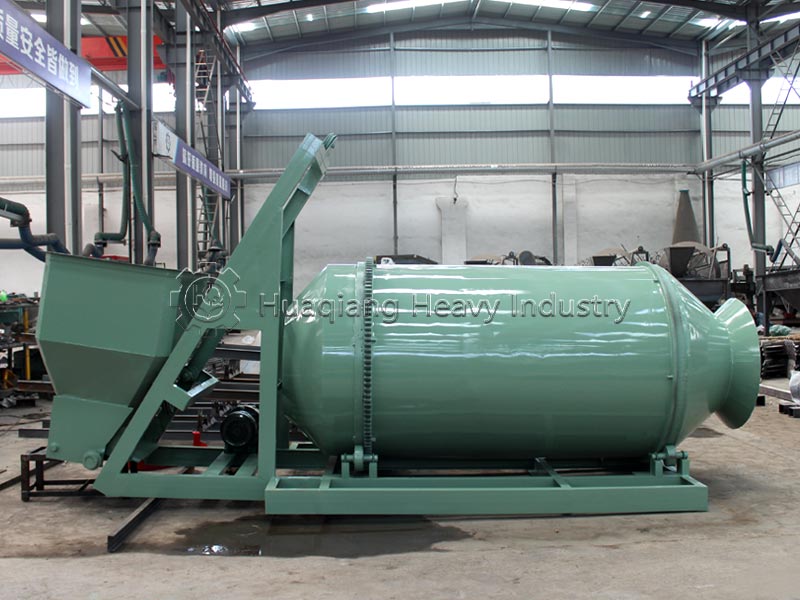
Standardized production must adhere to the core principle of “granulation first, mixing later.” Raw materials undergo rotary drum granulation, drying, cooling, and shaping to ensure uniform particle size and hardness. They are then fed into a BB fertilizer mixer for blending and proportioning, effectively resolving common production problems such as mixed particles and uneven nutrient distribution.
In terms of layout, it is recommended that the two machines be connected in a straight line to shorten material transfer distances and reduce material breakage and loss. Simultaneously, matching the granulation and mixing capacity speeds and staggering equipment start-up and shutdown effectively avoids material accumulation and blockage.
A scientifically coordinated process flow between the two machines combines the advantages of uniform particle size and storage/transportability with flexible formulation and balanced nutrient distribution, significantly improving the quality of the finished NPK blended fertilizer.