
Dry fertilizer production: Fertilizer roller granulator and compaction process explained
Traditional wet granulation requires extra water, binders and supporting drying equipment, bringing higher production costs and unavoidable nutrient loss. For cost-saving and eco-friendly production, dry granulation has become a mainstream choice for modern fertilizer plants. This article focuses on core dry granulation devices and compaction technology for fertilizer manufacturing.
Fertilizer roller granulator acts as the core host of dry granulation lines. It adopts double-roller extrusion technology to turn powdery NPK materials and decomposed organic fertilizer powder into solid particles directly. Featuring stable running performance and low failure rate, this machine perfectly solves the difficult granulation problem of low-viscosity fertilizer raw materials that cannot be molded via wet processing. It fits most medium and large fertilizer production lines well.
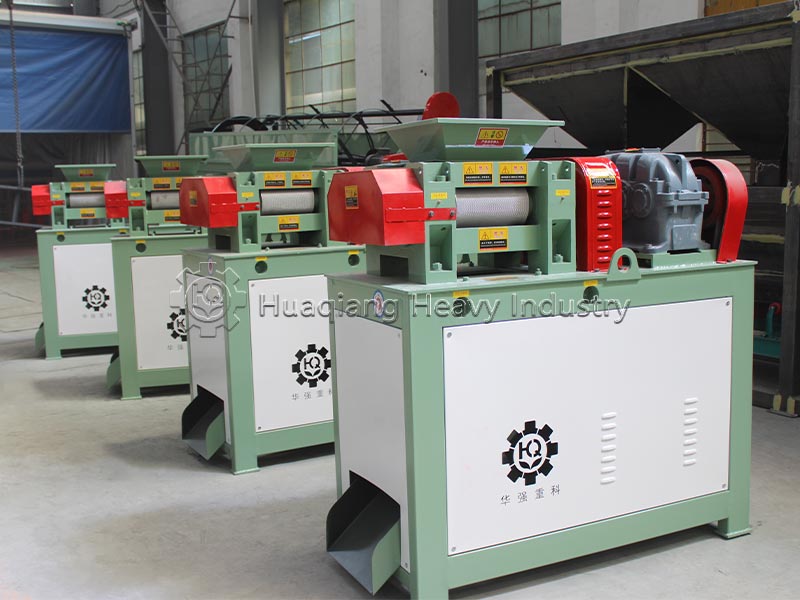
Fertilizer granules compaction is the core physical molding principle of dry granulation. This whole-process pressure molding needs no liquid binder or high-temperature drying. Pure mechanical pressure bonds loose powder into firm granules without damaging original fertilizer nutrients. It effectively prevents nutrient volatilization, moisture absorption and caking, keeping fertilizer particles intact during long transport and long-term storage.
Fertilizer compact machine is essential auxiliary post-processing equipment. Primary particles produced by fertilizer roller granulator often have uneven hardness and slight powder falling. This supporting machine conducts secondary fine compaction to improve particle density and surface finish, greatly improving the commercial grade of finished fertilizer products.
The matched combination of fertilizer roller granulator and compact machine builds a complete dry granulation production line. It cuts drying costs, reduces floor space and produces no wastewater. With low energy consumption and stable output, this integrated solution is highly cost-effective for organic fertilizer and compound fertilizer manufacturers worldwide.