
The critical role of crushing and mixing in bio-organic fertilizer production
Raw materials for bio-organic fertilizer—such as livestock manure, biogas residue, spent mushroom substrate, and crop straw—are characterized by high moisture content, high viscosity, and complex composition, placing specific demands on crushing and mixing equipment.
The crusher serves as the first critical step in ensuring material uniformity. Raw materials often form large clumps; if fed directly into the mixing or granulation stages, this leads to uneven mixing and molding difficulties. Half-wet material crushers designed for materials utilize specialized blades and anti-sticking mechanisms to reduce material particle size to the 20–40 mesh range. Particles that are too coarse are difficult to mix thoroughly later on, while those that are too fine increase extrusion resistance or cause the material to become sticky. Properly controlling particle fineness is a prerequisite for the smooth operation of subsequent processes.
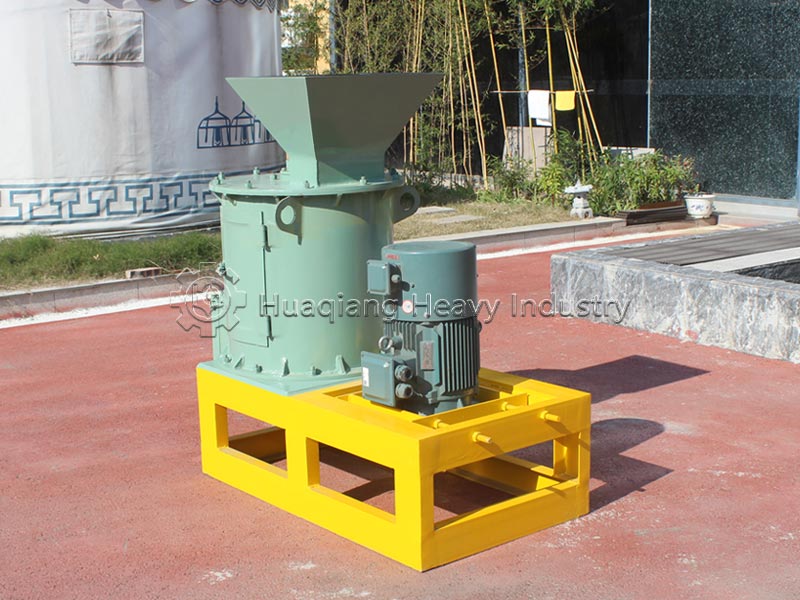
The mixer ensures the uniform distribution of microbial inoculants and nutrients. Since functional microbial inoculants are added in small quantities, they must be thoroughly blended with the bulk organic materials to guarantee consistent viable microbe counts across product batches. The fertilizer mixer machine must balance uniformity with gentle handling to avoid excessive shear forces that could destroy microbial activity; simultaneously, it facilitates moisture adjustment and carbon-to-nitrogen (C/N) ratio balancing, creating stable conditions for fermentation or granulation.
Crushing and mixing operations must be well-coordinated. Crushed material should be fed directly into the fertilizer mixer machine without prolonged storage to prevent moisture loss or re-clumping. The crusher’s throughput capacity should match the mixer’s output to avoid fluctuations in material supply. Only through this synergy can uniform, high-quality material be provided for the subsequent granulation or fermentation stages.
In summary, crushing and mixing are indispensable preliminary steps in bio-organic fertilizer production process. The proper selection and maintenance of this equipment help improve mixing uniformity, preserve microbial activity, stabilize product quality, and enhance production efficiency.