
Key aspects of synergistic operation: Double shaft paddle mixer and roller press granulator production line
The combination of a double shaft paddle mixer and a fertilizer compaction machine forms a typical dry granulation production line. The mixer transforms various raw materials into a homogeneous feed with appropriate moisture content, while the roller compactor shapes the powder under high pressure. The entire line eliminates the need for drying, making it ideal for applications prioritizing energy efficiency and process simplicity.
The production process is as follows: raw materials are metered and batched before entering the double shaft paddle mixer, where forced convection by the paddles ensures rapid mixing and moisture adjustment. The properly mixed material is evenly fed into the roller compactor, pressed into sheets or strips under high pressure between the rollers, and subsequently crushed, granulated, and screened to yield the target granules. Fine powder recovered from screening is recycled.
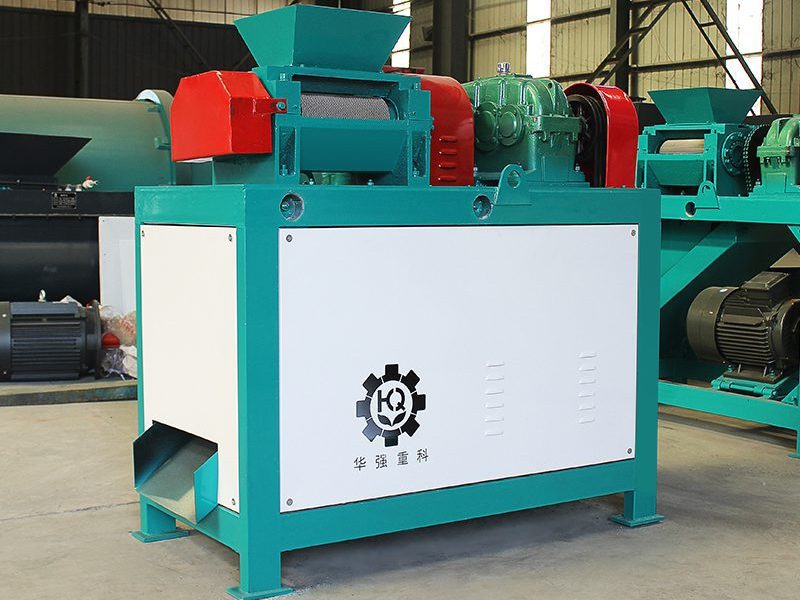
Three factors are critical to the synergy between the two units. First is mixing uniformity; the double shaft paddle mixer offers high speed and uniformity, ensuring even distribution even with materials of widely varying specific gravities. Inadequate mixing leads to significant fluctuations in nutrient content within the granules after compaction. Second is moisture control; roller compaction is highly sensitive to moisture levels—excessive moisture causes slippage and roller adhesion, while insufficient moisture results in loose, friable granules. The mixer precisely adjusts moisture during the process, ensuring the material is in a stable state before entering the compactor. Third is material fineness and feed continuity; uniform fineness and the absence of large impurities improve the granulation yield. The mixer’s throughput must match the compactor’s capacity to prevent feed fluctuations. Mixed material should not be stored for extended periods and should proceed to the granulation stage promptly.
Regarding maintenance, attention must be paid to paddle wear and material residue within the mixer, while the roller compactor requires regular inspection of roller surface wear and the hydraulic system. Proper coordination between the two units ensures stable operation of the entire roller press granulator production line, resulting in high granulation yields and superior granule quality.