
An analysis of the relationship between NPK fertilizer granulator machines and production technology
In an NPK compound fertilizer production line, the granulator serves as the execution point where production technology is put into practice. Upstream decisions—such as formula design, raw material characteristics, and product positioning—must ultimately be transformed into specific granular forms by the granulator.
Different production technologies impose distinct requirements on granulators. Drum granulation relies on cylinder rotation and steam humidification, necessitating precise control over material residence time. Disc granulation depends on the adjustment of the disc’s inclination angle and rotational speed, making it highly sensitive to feed uniformity and the effectiveness of moisture atomization. Extrusion granulation is a dry process; its core relies on the wear resistance and pressure stability of the high-pressure roll surfaces, requiring strict pre-control of material moisture and fineness. High-tower granulation integrates the granulator with the melt system, where the nozzle structure and cooling conditions directly determine the sphericity of the granules.
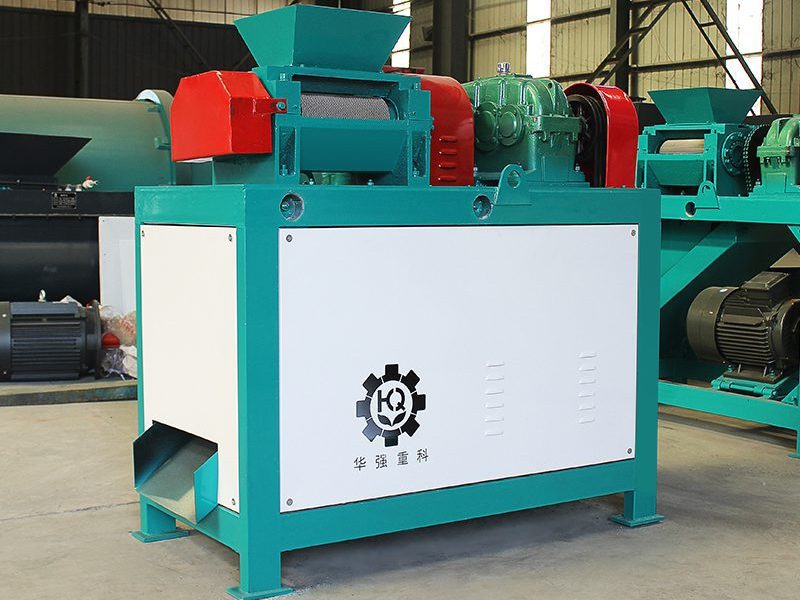
Conversely, the condition of the granulator constrains the performance of the NPK fertilizer production technology. If molds or roll surfaces become worn, granule strength will decline even if the formula and process parameters remain unchanged. Wear on mixing paddles can lead to uneven material mixing, thereby affecting the granulation rate. Therefore, once the technical scheme is determined, the selection, maintenance, and operational protocols for the granulator must be aligned accordingly.
In actual operation, the compatibility between the NPK fertilizer granulator machine and the production technology is reflected in three areas: capacity matching (throughput must be coordinated with batching, drying, and screening); process parameter matching (moisture, temperature, and pressure must be set according to the granulator’s characteristics); and material characteristic matching (raw material fineness, viscosity, and specific gravity must fall within the granulator’s optimal operating range).
In summary, the technical scheme determines the direction, while the granulator determines the final outcome. Only through their synergy can compound fertilizer products with high granule strength and uniform nutrient distribution be consistently produced.