
Selection considerations for three common mixers in fertilizer production
In fertilizer processing, BB fertilizer mixers, double shaft paddle mixers, and horizontal ribbon mixers are three common types of mixing equipment; each features distinct structural designs and mixing mechanisms, making them suitable for different applications.
BB fertilizer mixers are specifically designed for bulk blended fertilizers. Their primary objective is to rapidly blend granular materials—such as urea, ammonium phosphate, and potash—that vary significantly in specific gravity and particle size, all without compromising the integrity of the granules. Operating at low speeds with a gentle tumbling action, these mixers effectively minimize granule breakage, making them ideal for production lines where the visual quality of the finished product is paramount.
Double shaft paddle mixers are characterized by forced convection. Two counter-rotating shafts equipped with paddles generate intense shear and convective forces within the mixing chamber, achieving high mixing uniformity—often with a coefficient of variation below 5%—in a short timeframe. They are particularly well-suited for blending powders or granules with significant differences in specific gravity and are widely used in the pre-mixing stages of compound and blended fertilizer production.
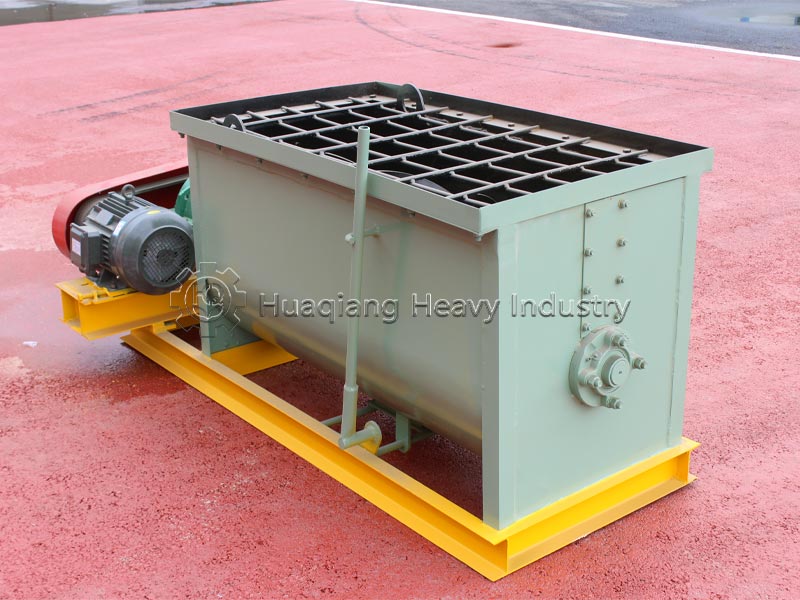
Horizontal ribbon mixers achieve blending through the relative motion of inner and outer ribbon agitators. This gentle process exerts minimal shear force on the materials, making the equipment suitable for powders, granules, and even semi-wet materials with some degree of viscosity. In the production of organic fertilizers, bio-organic fertilizers, and products requiring the addition of trace microbial agents or additives, this gentle mixing method helps preserve the integrity of functional ingredients.
Regarding equipment selection, these three types are not mutually interchangeable. BB fertilizer mixers focus on granular blending while prioritizing granule integrity; double shaft paddle mixers prioritize efficiency and uniformity, making them ideal for formulations with significant density variations; and horizontal ribbon mixers excel due to their gentle mixing action and broad versatility. Enterprises should select the appropriate equipment based on raw material characteristics, product positioning, and mixing precision requirements.