
The role of the flat die pelleting machine in bio-organic fertilizer production lines
Bio-organic fertilizer production lines primarily utilize organic waste—such as livestock manure, crop straw, and spent mushroom substrate—as raw materials; the quality of the final product hinges on its organic matter content and the viability of functional microorganisms. Consequently, the entire production line must be configured around the principles of low-temperature processing, gentle handling, and the preservation of microbial activity. The flat die pelleting machine embodies these principles during the granulation stage.
A typical bio-organic fertilizer production line comprises fermentation and turning equipment, a half-wet material crusher, a mixer, a flat die pelleting machine, cooling and screening equipment, and an automatic packaging machine. The flat die pelleting machine performs the critical task of transforming powdered organic material into marketable granules. Situated between the upstream processes of crushing and mixing and the downstream processes of cooling and packaging, the granulator relies on the material conditions established by the preceding steps to ensure effective granulation.
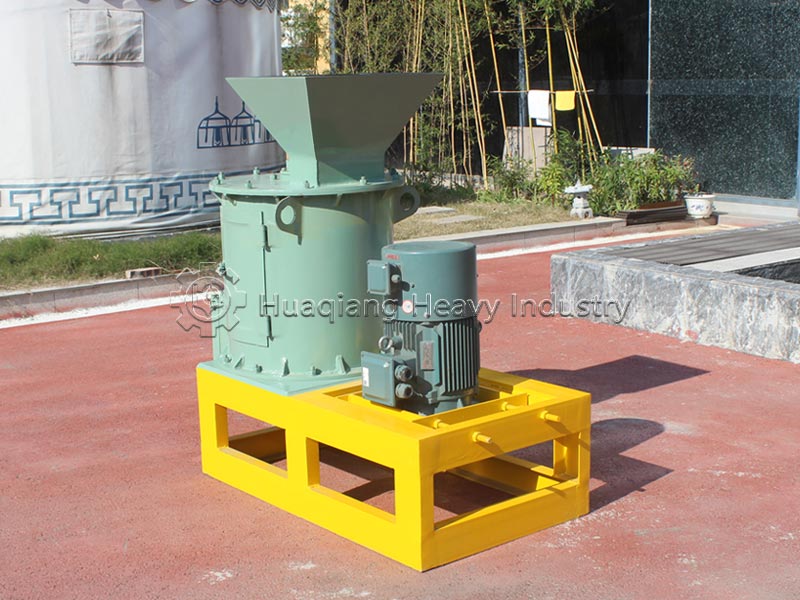
The unique value of the flat die pelleting machine lies in its ambient-temperature, dry-extrusion process. Materials are forced into shape between pressure rollers and the die without the need for added water or high-temperature drying. This integrates seamlessly with other equipment in the line: the half-wet material crusher processes material to the optimal fineness, the mixer adjusts moisture levels and ensures the even distribution of microbial agents, and the flat die pelleting machine shapes the product under mild conditions, thereby preventing the loss of functional microorganisms that would occur in high-temperature environments.
From a synergistic perspective, the granulator’s production capacity must match that of the upstream crushing and mixing equipment to prevent fluctuations in material supply. To ensure a stable granulation rate and adequate granule strength, crushing fineness is typically controlled between 20 and 40 mesh, while moisture content is maintained between 20% and 30%. Following granulation, the pellets undergo cooling and screening; qualified products are packaged, while undersized fines are recycled back into the process.
In summary, the flat die pelleting machine serves as the pivotal link between powder processing and finished product packaging within the bio-organic fertilizer production line; its selection and operational status directly determine the product quality and production efficiency of the entire line.