
Flat die pelleting machine vs. Rotary drum granulator: Choosing the right equipment for organic fertilizer processing
Organic fertilizer raw materials are mostly livestock manure, straw, etc., which are loose, have uneven moisture content, and contain many impurities. Flat die pelleting machines and rotary drum granulators, as commonly used equipment, have significantly different suitable scenarios and processing effects. Precise selection can greatly improve efficiency.
Raw Material Compatibility and Molding Effect: Flat die pelleting machines require high-quality raw material crushing, processing it into fine particles with thorough decomposition. The granules are dense and strong, but easily jammed by coarse impurities. Rotary drum granulators have a higher tolerance for raw material errors and can process coarse particles and materials containing a small amount of impurities, producing rounded particles, but require a drying device.
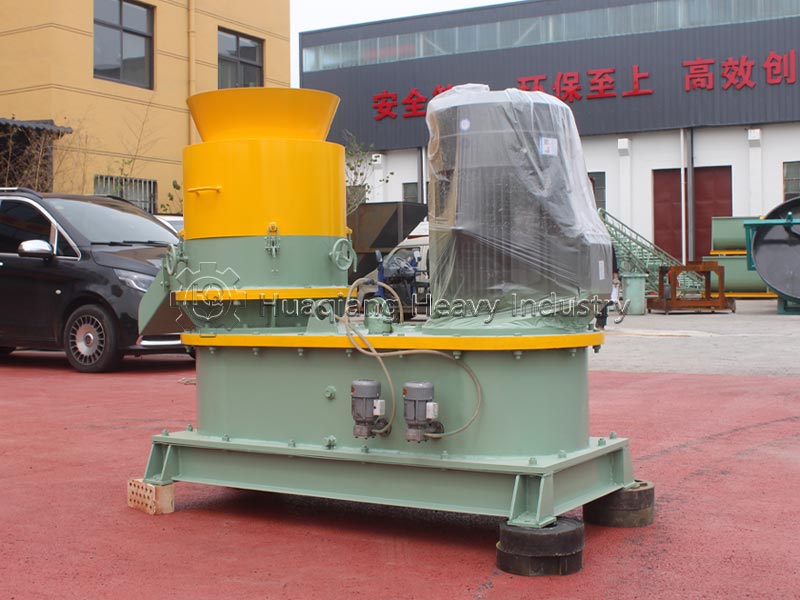
Scale and Efficiency: Flat die pelleting machines have a compact structure, small footprint, and moderate capacity, suitable for small and medium-sized workshops and family farms. Rotary drum granulators can operate continuously, have high capacity, and are suitable for large-scale production in large organic fertilizer processing plants.
Maintenance Costs: Flat die pelleting machines have easily replaceable and inexpensive wear parts, such as the die plate and pressure rollers; rotary drum granulators require maintenance of the drum liner and drying system, making maintenance slightly more complicated and requiring higher initial investment.
In summary, for small- to medium-scale organic fertilizer processing with fine raw materials, flat die pelleting machines offer better cost-effectiveness; for large-scale production with complex raw materials, rotary drum granulators are more efficient and suitable.