
The key differences between rotary drum granulators in processing NPK blended fertilizer and compound fertilizer
While rotary drum granulators can process both NPK blended fertilizer and compound fertilizer simultaneously, their processing logic and technological requirements differ significantly, often causing confusion among industry professionals. Accurately distinguishing the key processing points is crucial to ensuring product quality.
Different Raw Material Processing and Process Focus: Compound fertilizer processing requires the nitrogen, phosphorus, and potassium raw materials to be pulverized and mixed thoroughly, with the addition of binders and controlled temperature and humidity to promote a slight chemical reaction. The rotary drum granulator’s primary function is to drive the raw material combination and granulation. NPK blended fertilizer processing does not require chemical reactions; it only involves mixing the individual fertilizer raw materials. The drum primarily performs physical granulation and prevents stratification, without the need for binders.
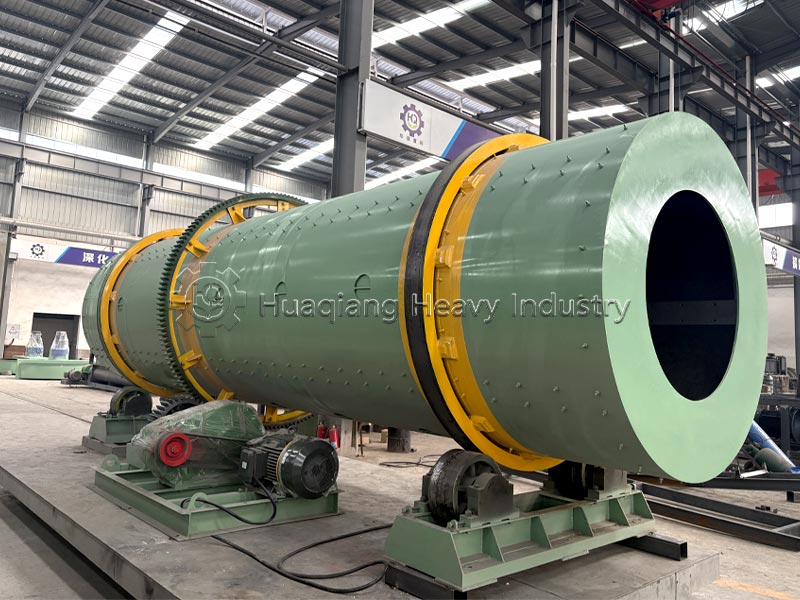
Different Molding Parameter Controls: Compound fertilizer granulation requires strict control of drum speed, temperature, and humidity to ensure dense granules and uniform nutrient distribution. NPK blended fertilizer molding requirements are less stringent; the focus is on controlling particle size consistency to prevent stratification during storage and transportation. Strict control of speed and humidity is not necessary.
The characteristics of the finished product differ from subsequent processing: compound fertilizer has uniform granules and high nutrient integration, and can be directly packaged; NPK blended fertilizer requires secondary screening to avoid uneven particle size, and some require simple coating to prevent moisture absorption.
In summary, the core difference between the two lies in whether a chemical reaction is required. During processing, the process parameters of the rotary drum granulator must be adjusted accordingly to meet the production needs of different fertilizers and ensure the quality of the finished product.